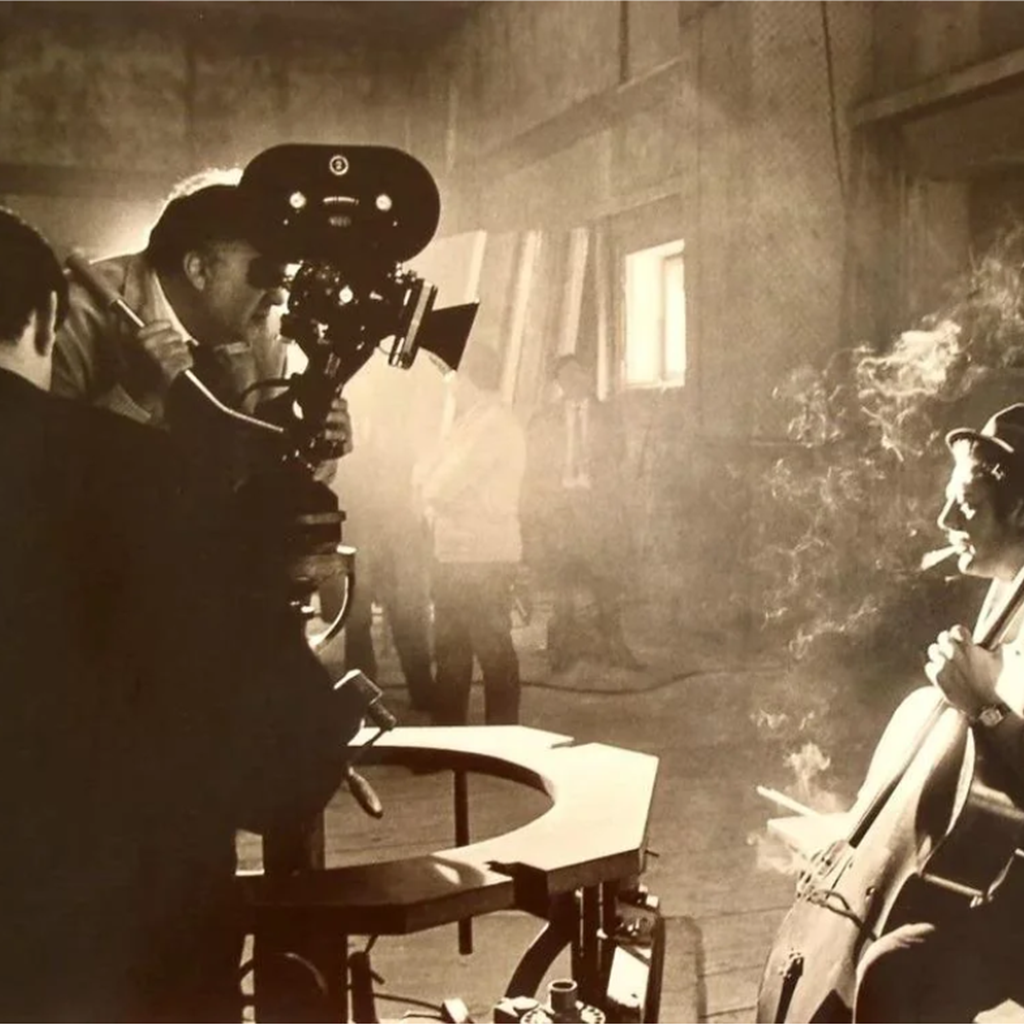

Gorgias (483–375 BCE) wrote his Encomium of Helen (“in praise of Helen”) as a sort of exercise in the use of language, an example piece, if you will, to attract potential students of rhetoric. We might classify it, in Aristotelian terms, as an epideictic, a “praise and blame” piece of writing. Jean Cocteau, whose treatment of poetry is unwittingly evocative of Gorgias’, writes poetry, plays and novels, and creates his visual art, film and painting, more than two millennia later.
What begins as an ostensible defence of Helen of Troy, Gorgias’ Encomium of Helen swiftly becomes a profound exploration of how Gorgias himself engaged with and challenged the inherited poetic tradition. Gorgias uses the literary treatment of Helen, the paradigmatic poetic subject, as a vehicle through which he critiques poetry’s relationship to truth, psychological effect on audiences and epistemological foundations. However, Gorgias’ writing has unexpected afterlives.
For much of the literature that constitutes the Encomium’s literary reception, Gorgias is a conscious reference. However, in the case of Cocteau, there is little evidence that he was even aware of the text. Instead of suggesting that Cocteau derives influence from Gorgias, I propose that Cocteau’s treatment of poetry in film, particularly The Testament of Orpheus, suggests a similar intellectual aim as well as a similarity to Gorgias in his conceptualisation of poetry as an art.
Gorgias’ writing on rhetorical forms illuminates our readings millennia on. Derrida’s engagement with the φάρμακον in “Plato’s Pharmacy” demonstrates the enduring philosophical relevance of Gorgias’ analysis of language’s power, drawing directly on his use of metaphor in the Encomium. Perhaps the most interesting instance of reception is the way a reading of Gorgias’ text illuminates Jean Cocteau’s 1960 film about poetry, The Testament of Orpheus. One of the most thorough engagements with Gorgias’ concepts in the 20th century, Cocteau’s film exemplifies many of his arguments and sheds light on their original nuance. Both Cocteau and Gorgias use mythological subjects for wider philosophical exploration; both portray poetry as a physically bewitching force; both operate in a self-reflexive form wherein the work demonstrates what it discusses.
In Gorgias’ work, he positions himself as both theorising about and demonstrating persuasion’s power. In Cocteau’s, he is the poet operating within the poetic medium to defend the poetic medium. Particularly striking is the fact that both Cocteau and Gorgias adopt a legal framework in which rhetoric is defended. In his film, Cocteau must justify the value of his poetic vision before judges, structurally parallel to Gorgias’ defence of Helen, or Helen as an embodiment of rhetoric. Both works explore how poetry functions in parallel motion to vision. Both consider whether artistic creation constitutes truth or falsehood in a legal structure. Cocteau’s apparent belief that acknowledging artifice allows for a deeper truth sheds light on how Gorgias might see his self-reflexive text as functioning.
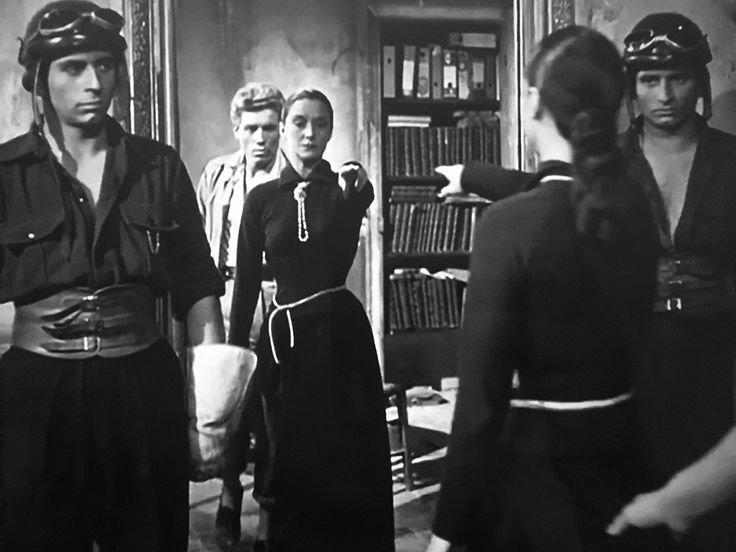
In Testament of Orpheus, Cocteau literally stages his own trial. Playing himself — poet, artist and filmmaker — he faces judges who demand he justify his surrealist imagery, his mythological obsessions and his refusal of realist conventions. Is this legitimate art or mere charlatanism? The structure mirrors Gorgias precisely. While Helen might appear to be the focus of Gorgias’ work at first glance, it soon becomes clear that she functions as far more than its subject. He spends more time discussing logos than Helen herself, using her as a guise to explore rhetoric’s nature. His assertion that the work was merely a paignion — a trifle, a plaything — signals that something else is at stake. Upon comparison, we realise that Cocteau treats Orpheus in a very similar way. Cocteau returned obsessively to Orpheus throughout his career, but the myth served as a vehicle inasmuch as it provided narrative content. The relationship between poetry and death; the artist’s struggle to justify vision in a sceptical world. These are things the framework of the Orphic myth allows Cocteau to explore.