
It’s been a long, long war. Like the majority of my generation, my memories of peacetime are sparse and foggy. I remember the day I made my Instagram account, in the afterglow of the summer of 2012. The skeuomorphic icon of the colourful camera, the grainy photos of my guinea pigs uploaded for my zero followers, the quirky lettering at the top of the page. It all feels like a dream of a dream. The raw excitement of being able to manifest a presence for myself beyond the bounds of my physical existence was electric, yet something which all generations after mine will know as a fact of life.
Over the following years, my feed shifted gradually from blurry photographs of my friends and ridiculous “repost if you love your mum” copypastas to the inevitable tide of sponsored content and political commentary. Being a vaguely liberal-minded early teenager, the opening salvos of what was to become the culture war whizzed by very close to my head. I was in the habit of following accounts that reposted viral posts from Tumblr, that nest of left-wing wargaming and culture war talking points.
The first echoes of what was to become the central conflict of our culture furtively revealed themselves. Post after post of long-winded opinions on the validity and sensitivity of one term over another scrolled past my eyes. Endless takedowns of this or that celebrity’s stance on social issues cemented in my mind that it was this platform that would give one’s speech and actions an impact beyond the immediate time and place. A seething, isolated corner of the internet was rallying its troops and, as we all now know, was ready to burst its banks and flood mainstream culture.
Most of us meant well. Of the users who bought into the hyper-aware, internet-forged perspective on civil rights, the majority were on the bandwagon because they believed they were doing the right thing. The feedback loop of ever-increasing status and self-congratulation merely sweetened the deal for those who already had an interest. Furthermore, in those early years, few had hitched their wagon financially to the rise of the Social Justice Warrior.
Without realising it, the internet (and increasingly popular culture at large) had sewn itself into what Will Storr, in his 2021 book The Status Game: On Human Life and How to Play It, identified as a “Status Goldrush”. The concept posits the idea that the global reach of the internet gives us all the opportunity to achieve huge gains in personal status through public displays of virtue, ideological adherence, and proactive participation in cultural movements. As a result of what Storr identifies as the inherent human quality of craving social status, any opportunity to achieve attention, validation, and moral prestige will inevitably attract a huge following, leading to a meteoric rise and spectacular downfall in whichever idea has given its adherents such an opportunity.
In his recent HBO special Panicked, comedian Marc Maron makes the wry observation that the left “annoyed the average American into fascism”. While obviously overly flippant, the comment seems to distil into a single sentence the phenomenon which has had political analysts scrambling since the earthquakes of 2016. As a result of the increasing influence online discourse had on debates in the wider world, real-life policy was being affected by the collaborative efforts of strangers and their keyboards. The mind goes back to Justin Trudeau’s infamous correcting of a reporter’s “mankind” to “peoplekind” and its accompanying smug grin—a moment which seems entirely alien to us in the cynical year of 2025.
Perhaps, amidst the whirlwind of change in the status quo, we have failed to notice the passing of this particular political moment. It seems as though everything since the pandemic has been one coordinated race to the bottom, but in the age of “anti-woke” (I’ve avoided using the term until now), “woke”’s absence from any meaningful place in mainstream politics has gone unmourned.
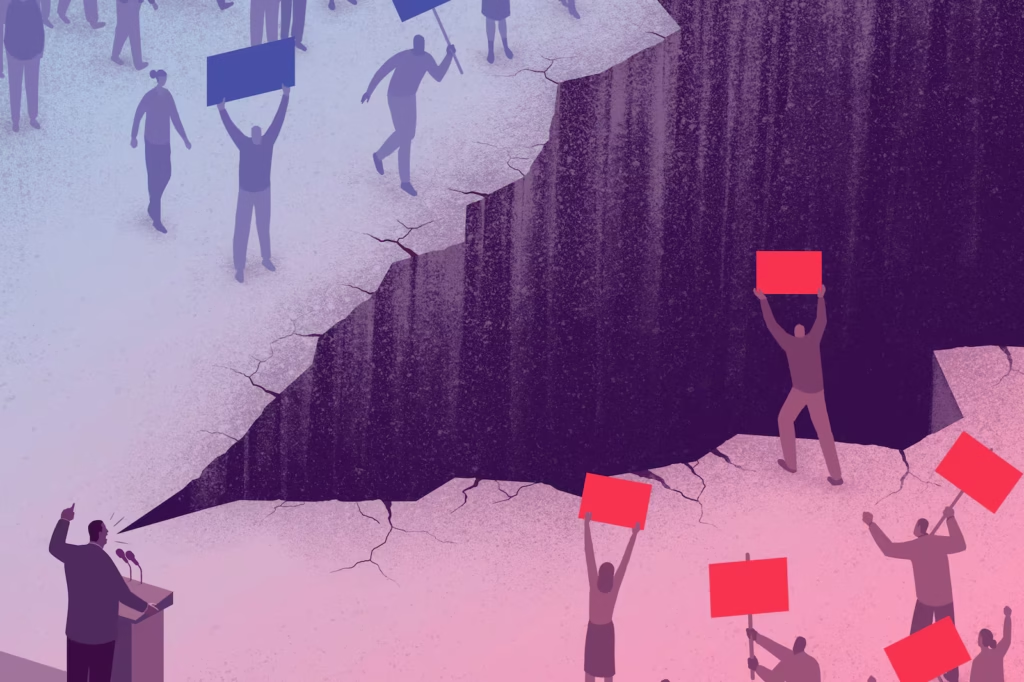
Now, following left-wing politics’ undeniable trouncing in terms of tangible political power (i.e. the rise of MAGA in the US and the sliding of the UK’s Labour Party into right-wing pandering), a new paradigm has emerged. The right-wing’s victory lap has given rise to a new generation of left-wing politicians who seem, unlike the traditional means of opposition, to be listening to the needs of the people. The faces of this new left have finally been revealed to us as NYC Mayor Zohran Mamdani and Green Party Leader Zack Polanski. Their relentless clawing of conversation back from the lofty ideological debates that found their origins in the cesspits of early-2010s internet forums has finally exposed the weak underbelly of right-wing populism.
In past years, it seemed as though the insistence of left-wing leaders to base their campaigning on ideology alone would lead to the stymying of any momentum their movement may gain among their traditional working-class base. Rather than present this soft underbelly to their political opponents, the likes of Mamdani and Polanski take social equality as a given, instead pushing hard on issues such as affordability and cross-party dialogue for the greater good of their constituents.
Therefore, 2025 may be seen as a turning point by future generations. Following a wave of pinkwashing and disguising a lack of bold policy under a veneer of social justice, the left has finally brought its messaging back to what matters to people. This move has been vindicated by the immense hope which has been placed in the aforementioned politicians. A left reminiscent of the American New Deal and British Post-war Consensus seems once again to be on the cards, and all we can do as voters and onlookers is pray that they don’t mess it up.