

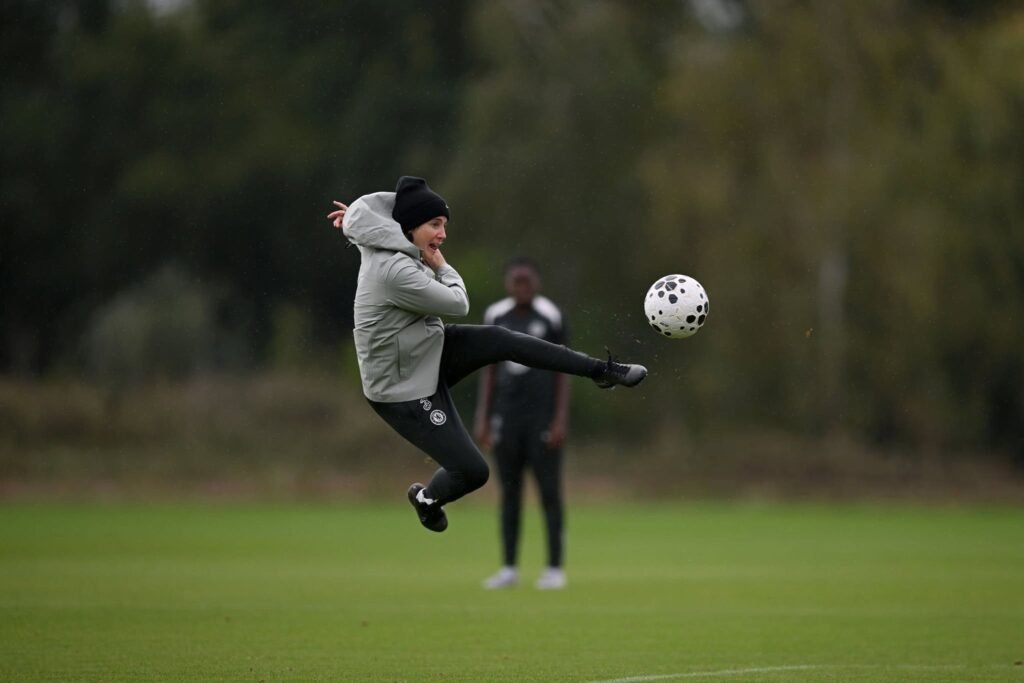
In 1921, women were banned from playing football. The FA at the time stated, “the game of football is quite unsuitable for females and ought to not be encouraged”. Now the current record for highest attendance in football is held at 91,648 — the match being Barcelona vs Wolfsburg in 2022 at the iconic stadium Camp Nou. So how did we get here? And better yet, with the growth in attendance, does this mean the attitude towards women’s sport has changed for the better?
For starters, the lionesses won the Euros again last year, beating Spain on penalties. The final had an attendance of 34,203, with a TV audience of 16.2 million in the UK alone. Throughout the tournament, as described by The Sporting News, “England’s triumph was a collective effort, individual brilliance shines through the magnitude of these tournaments”. A main example is that goalkeeper Hannah Hampton got everyone talking about how her saves throughout the penalty shootouts at the tournament played a huge contribution in leading England to their victory. Tournaments like Euros 2025 and the Euros 2022 have inspired women and girls to partake in sport. As written in 2024 by the FA, “In the past four years the number of women and girls playing football has increased by 56 per cent”. The FA proceeded to set a target of having 75% of schools providing equal access to football. According to the FA, “That target was met in 2023 and has now been surpassed, with 77 per cent of schools offering equal access”.
Regardless of these achievements, in 2026 girls’ dream rates of partaking in sports have declined ever since Women in Sport started reporting these figures. Furthermore, as reported by Women in Sport as part of the Let Her Dream findings, “The number of girls who dream of reaching the top in sport has dropped from 38% in 2024 to just 23% in 2025”. This shows a huge gap between boys and girls where “53% of boys dream of becoming top sports people”. Figures like this show that even though important milestones have been reached, girls are sending a clear message that the progress is not fast enough. Concerning figures like these present a strong message — as much as increased visibility is vital and helps inspire girls and boys to be more active, and has also opened doors to a variety of opportunities in sports, girls want to feel valued, supported and represented. Until gaps of opportunity and belonging are addressed, these figures and attitudes will never change.
As stated earlier, women’s football was banned in 1921 then proceeded to be lifted in 1970, which demonstrated the low point of how overly masculine the sport was at that time. This ban still hangs over the heads of women’s sport so much so that, as Chelsea legend Karen Carney stated in an interview with Joe discussing the ban, “If you were doing your thing as a supermarket chain and you’re neck and neck with your rivals but then you weren’t able to operate for 50 years — How would it affect your business?” A Three UK report called The Play Gap estimates that “the corresponding value of WSL [Women’s Super League] 2024–2025 season is £85.7m, and if women’s football had not been banned, it would be worth £123.2m (a 44% increase)”. This demonstrates how if the ban had not occurred over 100 years ago, then women’s football would be in a far better place and progressing more. Progress and visibility have inspired girls to be more active and get involved in the women’s game; it sparks belief, however visibility does not stop the barriers that allow girls to partake in sport and feel valued enough to do so.
Sexism and misogyny are a huge barrier, not only in football but in sport in general. Firstly, the difference between the two is key when analysing this as a barrier in sport: sexism is about active discrimination such as the actions people take, whereas misogyny is contempt for and prejudice against women. A report by the BBC highlights this: “Female footballers are being abused by clubs on TikTok”. A study conducted, as part of this report, by the University of Stirling, Chester Business School, Bournemouth University, Durham Business School and the University of Manchester investigated the TikTok accounts of Manchester United Women and Burnley FC between 2 September 2021 and 16 March 2022. The findings were concerning — four themes followed the offensive comments:
- “Sexism: Belittling players’ skills and mocking fact that women play football professionally”.
- “Misogyny: Aggressive comments showing hatred and animosity towards the women”.
- “Sexualisation of women: lurid comments about their appearance, reducing them to objects of sexual desire”.
- “A demand for a male only space where the club should only post about male players”.
Dr Emma Kavanagh, an associate professor in sport psychology and safe sport at Bournemouth University, said: “This study shows how urgent it is for football clubs to address longstanding issues of toxic fan behaviours”. This then leads to a lack of confidence as well as potential players feeling less valued and therefore less likely to participate.
While there are ways girls and women get involved in football, there are also obstacles here as well. One avenue is by joining grassroots clubs which are the heart and soul of football; they are non-league and elite clubs that offer opportunity for people to partake in football. However, there is a struggle at the moment to keep these clubs thriving as presented by campaign group Team Grassroots, as there are funding shortages, mainly in less affluent areas. Funding is required to maintain their facilities and run their teams, which then means a lot of these clubs rely on membership fees and sponsorships — the downside to this being that membership and sponsorships are unreliable forms of income. For example, prices may have to rise in different types of fees to be able to accommodate referee fees, coaching courses and insurance; the rise in fees therefore shutting out families on low income, meaning excluding people through no fault of their own. A burnout of volunteers has also occurred; volunteers are made up of parents, former players and locals who quite simply just love the beautiful game. These volunteers have multiple responsibilities and roles, therefore stretching people thin, and with the demand for coaches, specifically qualified ones with child safeguarding training and coaching techniques, this has placed additional pressure on the workforce.
Beyond this, many prominent women’s clubs often lose money; as cited in Bloomberg, one of the well-known clubs Sheffield United has lost “£31.8 million” and Bristol City has lost “£28.1 million”. In turn, there were several recommendations made in regards to solving these issues, including making the clubs commercial entities like the US model, as opposed to being simple offshoots of men’s clubs that they are at present. In addition to this, there was a review which discussed: “The new financial measures were recommended in a review that called for the raising of minimum standards within the game, including making it fully professional”. This report was published by former England and Great Britain footballer turned pundit Karen Carney, including ten recommendations, some of which are: “FA hands over the responsibility for running the Women’s Super League and Championship to NewCo, it must now place more focus on the development of grassroots clubs and the rest of the women’s football pyramid and the Government, local authorities, the FA and Premier League — must come together to increase investment to accommodate meaningful access for women and girls to play sport”.
As Barclay argues, “we can embrace the positive aspects of masculinity and femininity whilst finding effective strategies, to mitigate the harms of both” by “championing values and policies that lead to a fair and free society for all”. There are ways to tackle all these challenges and barriers. But it is going to require a lot of work. Whilst acknowledging the legendary achievements of the lionesses and record-breaking viewership, whether in stadiums or on TV, to help tackle the issue of sexism and misogyny as stated in Women in Sport, “It will take men and women working together to tackle misogyny and sexism in sport”. In addition, more conversations need to be had about the women’s football ban in 1921; through this it will raise awareness of previous discrimination in the field and the triumphs that have come since, making such victories even more cherished. Overall, while the women’s game features many challenges, as its popularity grows and more people start to gain interest and take part, there will be a natural community who will always thrive to solve these issues and take down these barriers.