
On 13 January, Mark Zuckerberg announced the appointment of Dina Powell McCormick as president and vice chairman of Meta. Powell McCormick — who previously served on Meta’s board of directors and was a key advocate for deeper ai integration across the company’s platforms — brings an extensive background as a senior finance executive. Her appointment, however, has drawn attention not only for her corporate credentials but also for her close political ties.
Powell McCormick is a longstanding ally of President Donald Trump, having served in his first administration as a national security adviser. Trump was quick to praise the decision, posting on Truth Social that she was a “great choice” who had “served the Trump Administration with strength and distinction”. The move has been widely interpreted as part of a broader pattern of major social media firms aligning themselves more closely with the current US administration, particularly as debates over regulation and free speech intensify.
With an average of around three billion monthly users across Facebook, Instagram and WhatsApp, Meta sits at the centre of the global information ecosystem. Powell McCormick’s new role places her in charge of the company’s overarching strategic direction — a move that comes amid a visible thaw in relations between Zuckerberg and Trump. After Trump was banned from Meta’s platforms following the Capitol attack on 6 January 2021, the two have since met on several occasions, including at the White House. Zuckerberg has appeared increasingly keen to reset relations following Trump’s return to office, even standing as one of the prominent billionaires at his inauguration last year.
Meta is not the only platform navigating a closer relationship with political power. Another prominent figure at Trump’s inauguration was Elon Musk, the owner of X (formerly Twitter). While Musk and Trump have exchanged public spats over the past year, their relationship now appears at least outwardly cordial. Since acquiring X in 2022 for $44 billion, Musk’s stewardship of the platform has been marked by controversy — one of his earliest decisions being to reinstate thousands of previously banned accounts. This included Trump’s own profile alongside a number of high-profile far-right figures such as Andrew Tate and Stephen Yaxley-Lennon, also known as Tommy Robinson.
Musk frequently uses X to promote his own political views, and critics have alleged that internal changes were made to amplify his posts and those of ideologically aligned accounts after they appeared to underperform. While these claims remain contested, they have fuelled concerns about the neutrality of the platform and the extent to which ownership can shape public discourse through algorithmic influence. As Musk continues to control one of the world’s most influential digital forums, questions persist about an owner-driven algorithmic influence over public discourse.
Concerns about ownership and political alignment extend beyond US-based platforms. In September 2025, Oracle — founded by long-time Trump ally and friend Larry Ellison — completed a deal to take control of TikTok’s US operations. The transfer placed another highly significant social media algorithm under the ownership of a figure closely connected to the administration. This was notable given that US officials had previously warned that TikTok’s original algorithm could be used to “generate dissent among Americans”, according to reporting by CNN.
Since the start of the year, creators have raised concerns about increased content moderation and censorship on the platform. Among them is Dylan Page, known online as “News Daddy”, who built a following of more than 18 million as a news-focused content creator. Page announced his decision to step back from TikTok, claiming that five of his videos were removed over the course of two days. According to Page, the videos focused largely on the US military operation in Venezuela.
The perceived consolidation of influence is not limited to social media; it has also raised alarms within traditional media. Jeff Bezos, the founder of Amazon and owner of The Washington Post, was another billionaire in attendance at Trump’s 2025 inauguration. During Trump’s current term, Bezos has overseen alarming changes at the paper that critics argue have brought its editorial direction closer to the administration’s priorities. In early 2025, Bezos announced reforms to the opinion section, emphasising support for “personal liberties and free markets” and signalling a reduced appetite for criticism of the government. The move reportedly led to the resignation of several staff members and the cancellation of approximately 75,000 subscriptions.
Bezos has also faced criticism for allegedly blocking the publication of a satirical cartoon depicting him kneeling before the president and offering a bag of money. More recently, staff at The Washington Post expressed concern over Bezos’s muted response to an fbi raid involving reporter Hannah Natanson — an incident widely viewed as a blatant attack on press freedom in the US.
The trend is perhaps most explicit in broadcast media, where Fox News has long blurred the line between political power and journalistic independence. During Trump’s current term, the network has functioned less as a conservative-leaning news outlet and more as a de facto communications arm of the administration. Several of its prime-time hosts maintain regular contact with senior figures in the White House, with policy positions and messaging often appearing on Fox before being echoed by administration officials. Former Fox personalities currently hold prominent roles within the administration, such as current secretary of war Pete Hegseth. While Fox News has historically embraced its ideological orientation, the degree of coordination now visible underscores how partisan alignment across major platforms is becoming normalised rather than exceptional.
Paramount Skydance’s bid for Warner Bros. Discovery — which would bring CNN under the same corporate roof as CBS News — has added a new dimension to concerns about political influence in American media. Paramount’s chief executive David Ellison has close ties to the Trump administration through his father, Oracle founder Larry Ellison, and through ongoing talks with White House officials about the takeover process and regulatory approval. According to media reporting, Ellison has held discussions with administration figures about potential changes at CNN as part of his bid — a strategy that has raised questions about whether the network’s editorial stance could shift if the acquisition was to take place. The prospect of such a merger has alarmed critics who argue that ownership changes driven by political alignment could reshape one of the country’s most prominent news outlets, reinforcing broader fears about the concentration of influence over public discourse.
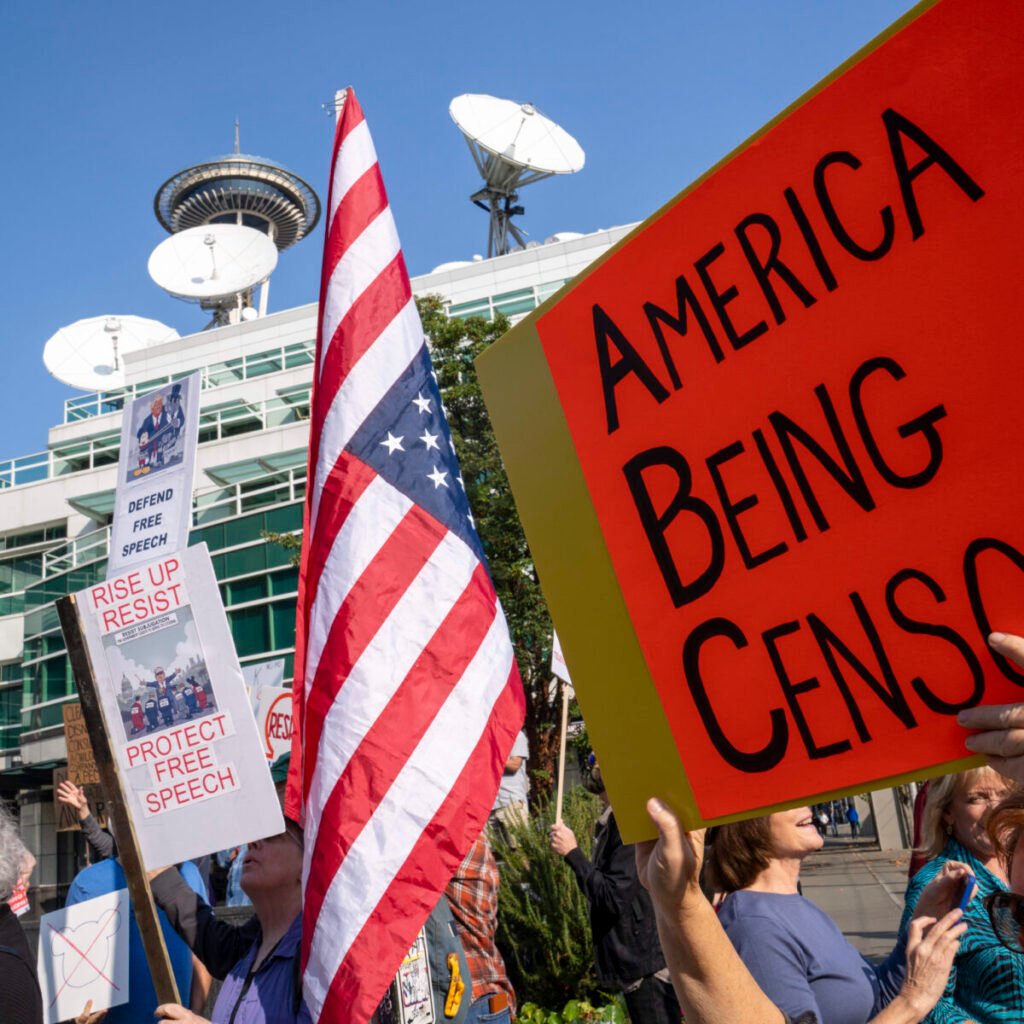
In the US, the levers of media and political power are converging like never before. Across both social media and traditional news media, platforms and outlets that shape public discourse are increasingly controlled by individuals aligned with the Trump administration. Ownership now dictates editorial priorities, content moderation and platform governance, narrowing the space for independent reporting and debate. With a handful of corporations mediating how billions of Americans access information, this fusion of wealth, political influence and media control represents more than partisan bias — it is a structural threat to democratic accountability and the integrity of public conversation.