


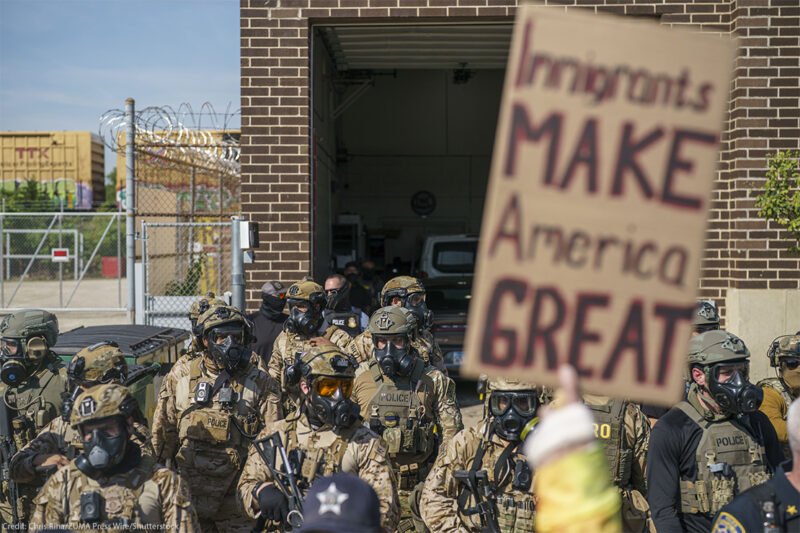
US Immigration and Customs Enforcement (ICE) remains one of the most debated and scrutinised federal agencies in the US. Established in 2003 under the Homeland Security Act of 2002 following the 11 September attacks, ICE consolidated immigration enforcement and customs investigative functions previously housed in the Immigration and Naturalization Service (INS) and the US Customs Service (Pub. L. 107–296). As of 2026, ICE continues to operate under the Department of Homeland Security (DHS), with a mandate that includes immigration enforcement, detention and removal operations and complex transnational criminal investigations. Its activities have shaped national political discourse, generated high-profile litigation and prompted ongoing questions about training, accountability and civil liberties.
ICE operates primarily through two directorates: Enforcement and Removal Operations (ERO) and Homeland Security Investigations (HSI). ERO is responsible for identifying, arresting, detaining and removing non-citizens who are alleged to have violated immigration law. HSI conducts criminal investigations involving human trafficking, narcotics smuggling, financial crimes, cybercrime and export enforcement. According to DHS congressional budget justifications for the 2024 financial year, ICE employs approximately 20,000 personnel and operates with a multibillion-dollar annual budget. The agency’s resources and reach make it one of the largest investigative bodies within the federal government.
Enforcement priorities and judicial rulings
Enforcement priorities have shifted over recent administrations. In September 2021, DHS issued guidelines emphasising prosecutorial discretion and prioritising national security threats, recent border entrants and individuals with serious criminal convictions. Several states challenged those guidelines, arguing that reduced interior enforcement imposed fiscal burdens on them. The dispute reached the Supreme Court in United States v. Texas (2023), where the Court held that the plaintiff states lacked standing to challenge DHS’s enforcement priorities. The ruling reaffirmed broad executive discretion in immigration enforcement, emphasising that decisions about whom to arrest and remove fall within traditional executive authority.
ICE’s enforcement statistics have fluctuated in recent years. The agency reported approximately 142,580 removals in the 2023 financial year, an increase from pandemic-era lows but below levels seen prior to 2019 (ICE Annual Report FY2023). A significant proportion of removals involved individuals apprehended near the border rather than long-term residents arrested in interior enforcement actions. Nevertheless, worksite enforcement operations and targeted arrests within communities continue to generate legal and political controversy.
Detention conditions and oversight
Detention practices remain a central focus of criticism and litigation. ICE contracts with county jails, privately operated detention centres and federally managed facilities. Oversight reports by the DHS office of inspector general between 2022 and 2024 documented concerns related to medical care, solitary confinement practices and facility conditions. During the COVID-19 pandemic, detention centres experienced significant outbreaks, leading to court-ordered population reductions in cases such as Fraihat v. ICE (2020). Advocacy organisations, including the American Civil Liberties Union (ACLU), have argued that systemic deficiencies persist, citing reports such as Fatal Neglect (ACLU, 2022), which examined deaths in immigration custody.
High-profile cases have shaped public perception of ICE’s role. The 2018 family separation policy, though initiated under a department of justice “zero tolerance” directive and implemented largely at the border by US Customs and Border Protection, resulted in ICE detaining separated parents. Litigation in Ms. L. v. ICE (2018) led to a nationwide injunction halting family separations and mandating reunification efforts. Similarly, large-scale worksite enforcement operations, such as the 2019 Mississippi poultry plant raids, resulted in hundreds of arrests in a single day and prompted lawsuits and congressional scrutiny over due process concerns and humanitarian impacts on US-citizen children.
DACA and the limits of authority
The Deferred Action for Childhood Arrivals (DACA) programme has also intersected with ICE enforcement authority. In Department of Homeland Security v. Regents of the University of California (2020), the Supreme Court held that the attempted rescission of DACA was arbitrary and capricious under the Administrative Procedure Act. Although the case did not directly limit ICE’s enforcement powers, it underscored the legal constraints on executive immigration policy changes and highlighted the vulnerability of certain immigrant populations to shifts in enforcement priorities.
Debate surrounding ICE frequently extends to questions about training and qualifications of its personnel. It is important to distinguish between sworn federal officers and non-sworn staff or contractors. HSI special agents receive training at the Federal Law Enforcement Training Centers (FLETC) and are credentialed criminal investigators. ERO deportation officers authorised to carry firearms must also complete formal federal training programmes. However, ICE also relies heavily on contract detention staff and support personnel who are not sworn federal law enforcement officers. Government Accountability Office (GAO) reports have recommended improved oversight and consistency in training standards across facilities and personnel categories (GAO, Immigration Enforcement: Actions Needed to Improve Oversight and Training, 2021). Critics argue that, compared with historical INS-era requirements for standardised federal law enforcement preparation, current reliance on contractors and varied training frameworks can create inconsistencies in professional standards. ICE maintains that sworn officers meet federal training requirements, but public confusion persists because not all individuals working in ICE facilities are federal agents.
Individual cases and regional tensions
Individual cases have further amplified scrutiny. Advocates and journalists have referenced deaths such as Renee Goode in discussions about training conditions and due process protections, arguing that her case illustrates broader systemic issues regarding proper training and deep background checks for on-the-ground officers. Similarly, the case of Alex Pretti has been cited in public debate surrounding the scope of ICE enforcement and the human consequences of removal proceedings. These cases, frequently referenced in advocacy reports and media coverage, have contributed to broader calls for reform, increased transparency and expanded judicial oversight.
Federal-state tensions also remain pronounced. ICE’s use of detainers—requests that local law enforcement agencies hold individuals for transfer to federal custody—has prompted constitutional litigation. In Morales v. Chadbourne (2015), the First Circuit held that detention pursuant to an ICE detainer without probable cause could violate the Fourth Amendment. At the same time, the Supreme Court has affirmed the federal government’s primary authority over immigration enforcement in Arizona v. United States (2012), while reinforcing that the federal government cannot compel state participation in enforcement efforts.
Future outlook
Public opinion on ICE remains deeply divided. Supporters argue that ICE plays a critical role in combating transnational crime, dismantling trafficking networks and protecting national security. Critics contend that detention conditions, civil immigration arrests and the use of prosecutorial discretion raise serious civil rights concerns. Legislative proposals have ranged from expanding enforcement resources to restructuring or abolishing ICE altogether. As of early 2026, no major statutory overhaul has occurred, but oversight, litigation and internal policy revisions continue to shape the agency’s operations.
More than two decades after its creation, ICE remains central to the national conversation about immigration, executive authority and civil liberties. Supreme Court decisions such as Regents and United States v. Texas highlight the constitutional boundaries of enforcement discretion, while ongoing cases and oversight reports continue to shape policy debates. As migration patterns, political leadership and judicial interpretations evolve, ICE’s authority and accountability mechanisms will likely remain subjects of sustained public scrutiny.