
People online love to joke that “men used to build things”, usually paired with a photo carousel of the Taj Mahal, Registan Square or Versailles. Behind the humour is a real point. Art once occupied a central place in public life, and the people remembered across empires were often philosophers, poets, architects or scientists whose work challenged the limits of their time and their societies. Even in maths and science, the figures we continue to celebrate were not technicians executing predefined tasks, but thinkers shaped by academic environments that rewarded curiosity, dissent and radical ideas. Their societies invested in that intellectual freedom because creativity itself was understood as a form of civilisational power.
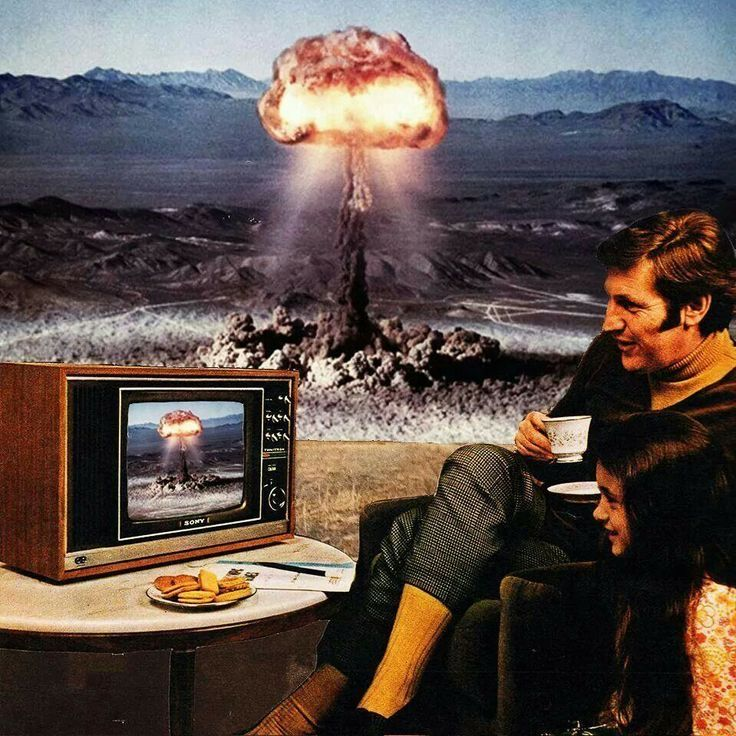
That balance began to shift in the 20th century and hardened during the Cold War. In both the US and the Soviet Union, education systems were reorganised around competition, productivity and measurable output. In the USSR, engineering and technical fields made up roughly 40% of university enrolments by the 1970s, reflecting a system designed to serve industrial capacity and military strength. In the US, a parallel shift unfolded more gradually. By 2020, humanities degrees accounted for less than 10% of all bachelor’s degrees, while Science, Technology, Engineering and Mathematics (STEM) and pre-professional fields expanded steadily. Creativity did not vanish in this era, but it was increasingly subordinated to strategic utility. The Cold War did not eliminate artistic or intellectual ambition overnight—it gradually reshaped which forms of thinking were funded, legitimised and treated as essential to national survival.
As the Cold War progressed, this hierarchy of value moved beyond universities and into the broader culture. Technical expertise and monetarily high-output fields were framed as responsible, forward-looking and patriotic. The assumption was that prioritising science, engineering and economic productivity at the top would strengthen society as a whole. In practice, that logic operated much like a cultural version of “trickle-down economics”. Prestige and resources concentrated in fields tied to measurable growth and defence, while the arts were recast as personally enriching but economically risky. Public investment narrowed. Career advice shifted. Over time, entire generations internalised the idea that creativity was admirable only if it could be quantified, monetised or weaponised.
The consequences are visible in who occupies the contemporary spotlight. Media cycles, political ceremonies and social platforms centre founders, financiers and technology executives as embodiments of innovation. Images of economic and technological elites standing alongside political leadership are treated as symbols of progress rather than concentration—this is not incidental. It reflects a value system shaped in the Cold War, when economic output and technical dominance became proxies for strength. Over time, the public prestige once attached to philosophers, artists and independent thinkers diminished, while figures whose creativity is inseparable from markets and machinery came to define what innovation looks like.
Yet the story does not end in disappearance. As digital spaces expanded, particularly after the social isolation of 2020, creativity adapted. Online platforms became a third space, first for younger generations and now increasingly across age groups. Marginalised communities, independent artists and unconventional thinkers found audiences without relying on traditional gatekeepers. The result has been a visible diversification of creative expression across race, gender identity, body type and geography. This resurgence is not a restoration of older artistic hierarchies, but an adaptation to constrained institutional support. It is resilience within a system that still privileges scale and monetisation.
Even this digital revival carries the imprint of the Cold War inheritance. Visibility is often governed by algorithms optimised for engagement, and creative success is frequently measured through metrics that mirror the productivity logic of the 20th century. The pressure to brand, scale and monetise follows creators into the very spaces that promised freedom. What has shifted is access—what has not fully shifted is the underlying hierarchy of value.
If the Cold War killed creativity, it did so by narrowing what counted as legitimate contribution. It elevated instrumental thinking as the highest civic virtue and trained institutions to reward output over depth. That hierarchy did not dissolve when the conflict ended. It embedded itself in universities, markets, media and public life. When a society consistently privileges what can be quantified, scaled and monetised, it risks sidelining the forms of creativity that challenge power rather than optimise it. The danger is not that art disappears, but that it becomes peripheral to decision-making, policy and collective imagination. A culture that measures worth primarily through productivity may continue to innovate, but it will struggle to ask whether its innovations serve human flourishing. The question now is whether the current wave of creative adaptation can reclaim not only visibility, but influence. Without that shift, the logic inherited from the Cold War will continue to define progress in increasingly narrow terms.