

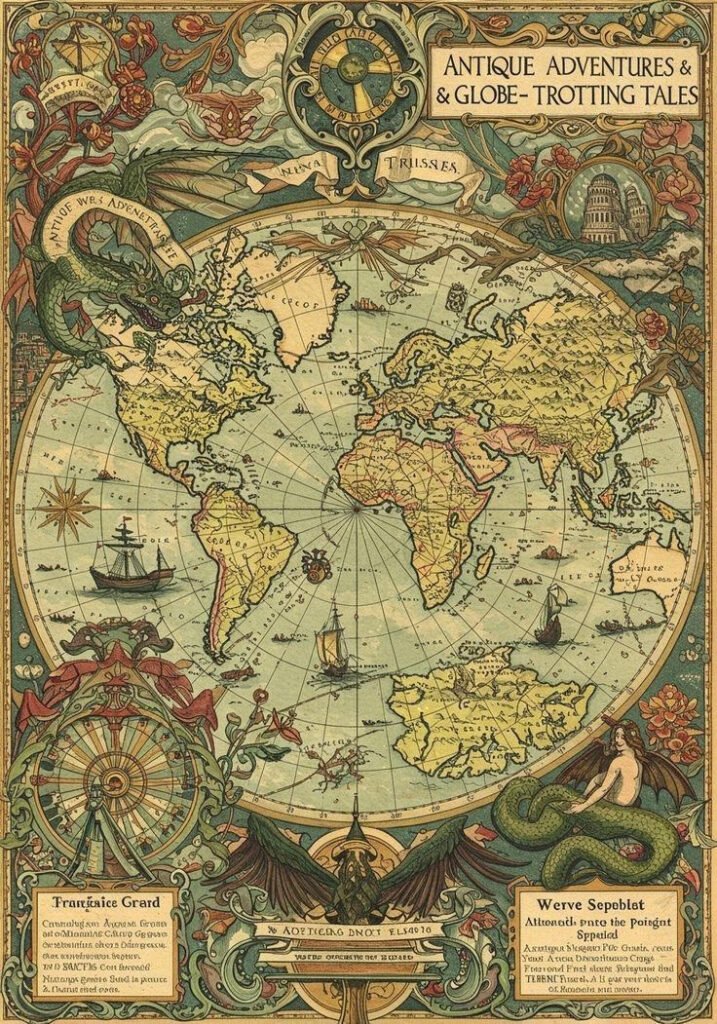
It is often said that the only constants in life are death and taxes. But history suggests a third certainty — migration. As nations build borders and societies imagine themselves rooted in myths of permanence, humanity has always been in motion. Civilisations rise, expand, splinter and reform; people leave, arrive, return and transform the very places they inhabit. A society may believe it is stationary, yet it is always shifting — propelled forward by the same forces that shaped our earliest migrations. Consider, for a moment, two vessels separated by centuries: a conquistador ship cutting through the waters towards a distant shore and a migrant boat edging towards the guarded coastline of a modern state. Their materials differ, their navigational tools differ — their passengers carry different hopes and fears. Yet the underlying forces — determination, desperation, desire and longing — remain hauntingly familiar. We celebrate freedom, innovation and human rights, yet we continue to operate within frameworks shaped during the age of empire. Expansion, occupation and domination — we have traded armour and sails for international law and geopolitical strategy — but their logic still shapes global movement and the stories nations tell about belonging. Intertwined with this long history of conquest is an older, simpler instinct: the search for place. From the first human migrations out of Africa to the bustling arteries of the Silk Road, people have moved in pursuit of safety and opportunity. Those ancient routes carried more than goods; they carried worldviews, technologies and entire identities. And crucially, the exchange was never one-directional. After all, a funnel flows in both directions. We expanded outwards — now others flow towards us, driven by the same timeless desire to belong. The movements shaping the past are the same movements shaping the present. Our world is draped in the language of progress and morality; but our actions often echo a far older script — mirroring the arc of past empires and hinting that their fate may one day be our own.
Empire is often imagined as a one-way force, primarily outwards. Historical evidence, however, complicates this view. The infrastructures that enabled expansion — such as roads, ports and trade routes — also inevitably facilitated inward movement. Armies may have advanced along these routes, but they were followed and often preceded by traders, pilgrims and, most importantly, ideas. Expansion and exchange occur simultaneously. The Silk Road offers one of the clearest historical examples of this duality. While luxury goods such as silk, spices and precious metals moved across continents, so too did vast knowledge. Every empire invested in continuous contact — whether Roman roads or Ottoman ports — creating channels that allowed for return flows and laying the groundwork for future movement. It is naïve of us to assume that this outward movement would have no opposite bearing — this inward influx of people, influence and labour was inevitable. Modern societies, however, often treat this outcome as somewhat unexpected. Britain, Spain and Portugal, whose global reach once depended on the outward movement of explorers and settlers, now experience significant migration from the regions they once entered. Through certain media coverage, these waves are often viewed as disruptions — particularly as they can be seen as reversals of historical order; these once prosperous nations now rely on the influx of migrants to uplift their economy. This ironic shift in language is also important to note — it has become the language of justification. It is not the impulse of the movement, but rather the shift in rhetoric from its prior guise “seeking to civilise and bring to Christ” or “manifesting their divine destiny” to contemporary conjunctions with “strategic interests, economic development and humanitarian missions”. Simply put, we reap what we sow.
A world without consequence
It is a modern paradox to both wish for a world without consequence — but simultaneously reaping the rewards of globalisation. We must admit that even the best of us have benefited from the convenience of cheaper goods, such as Amazon and fast-fashion brands, with cultural out-of-season imports along with a 24-hour connected world. This is widely seen as triumphant progress; however, when this eventually transpires into human movement — asylum seekers, foreign workers — it is now ‘crisis’. These contemporary migration patterns mimic the pre-existing pathways. This reversal is increasingly interpreted as a warning, politicising news outlets and the media. You undoubtedly will have noticed the sheer number of English flags being raised this past year, coined as “Operation Raise the Colours”. Often in conjunction with the obnoxiously loud rhetoric of “Keep Britain British” echoing down London streets — no greater was this creeping ascent of the far right in the Western world felt than on the 13th of September 2025, where more than 110,000 huddled in hate. This campaign has gained traction amid the debates over migration, asylum and the threat of national identity; the flag is no longer a representation of heritage but rather a symbol of those who belong and those who do not. Similar dynamics are coming to the forefront elsewhere, with Italy’s Giorgia Meloni, head of a party with its roots in neo-fascism; the Finns, Finland’s far-right nationalists, joining the coalition government; and a rise in members of Rassemblement National (RN), led by Marine Le Pen, a French far-right group. Europe seems to be on a knife-edge. In the US, we observe key authoritarian traits in Donald Trump — a clear cult of personality. Heightened further this year with Immigration and Customs Enforcement (ICE) raids on Latin Americans with nearly 200,000 ICE deportations as of October 2025. This militant rhetoric is coexisting with an economy that is deeply reliant on immigrant labour. Across these contexts, inward movement is seen as weakening and destabilising, even though outward expansion once formed the backbone of national fortune. Again, what is striking is the familiar language: empires coined ‘catchphrases’ were civilising missions, whereas contemporary states speak of defending values. Conquests were justified as progress; resistance to migration influx is preservation of tradition. The logic has not disappeared — it has merely turned on its head, so to speak — expansion is seemingly destiny only when moving outward.
This contemporary migration underpins a clear conflict of contradiction pivotal to the development of a global society: the inherent desire to claim ‘place’ on land shaped by displacement. Post-war migration has existed since the beginning of time; no greater example of this multicultural migration is represented than by the Windrush Generation of the latter half of the 20th century. This was not happenstance, but instead the result of imperial systems that had utilised labour and extracted resources from these once colonised regions. Settling in these countries that had once controlled them, they still faced horrific racism and a clear lack of social equality. However, this dynamic is not a unique one. These migration patterns follow the same colonial routines, highlighting the conversations around entitlement and belonging. Ironically, societies that pride themselves on the defence of values often are on land whose gained their wealth and prosperity upon earlier acts of conquest. Migration, in this sense, is not an intrusion but part of an ongoing negotiation over place and the need to belong — governed by the fear of displacement. In today’s modern society, it can be argued that people essentially want the skills immigrants offer, but from a distance — an ‘out of sight, out of mind’ mindset. Mirroring the empire’s narrow view, migrants are economically central; however universally ostracised.
After extensive research for this article, an underlying question remains — “If we built the global systems that now carry others towards us, can we really justify closing the door behind ourselves?” It has become clearer that it is not as simple as whether the age of empire has ended — although I happen to think we are shifting towards a more, if we are not careful, divided time. But whether its logic and reasoning are still in play. Yes, the technology and language have shifted, albeit the pattern has been woven into the very fabric of our society, remaining strikingly familiar. Power shall always attract movement — symbiotically a consequence of expansion — place is still asserted and disputed. Once encouraged flow is now opposed, or indeed visibly fought against. A thought to leave you with, reader: until this question is confronted honestly, we remain entangled within this empire framework, repeating the same patterns in different fonts.
“Empires inevitably fall; what fate awaits our own?”