











Foreign billionaire banker blackmails British government over its fiscal policy twice since November
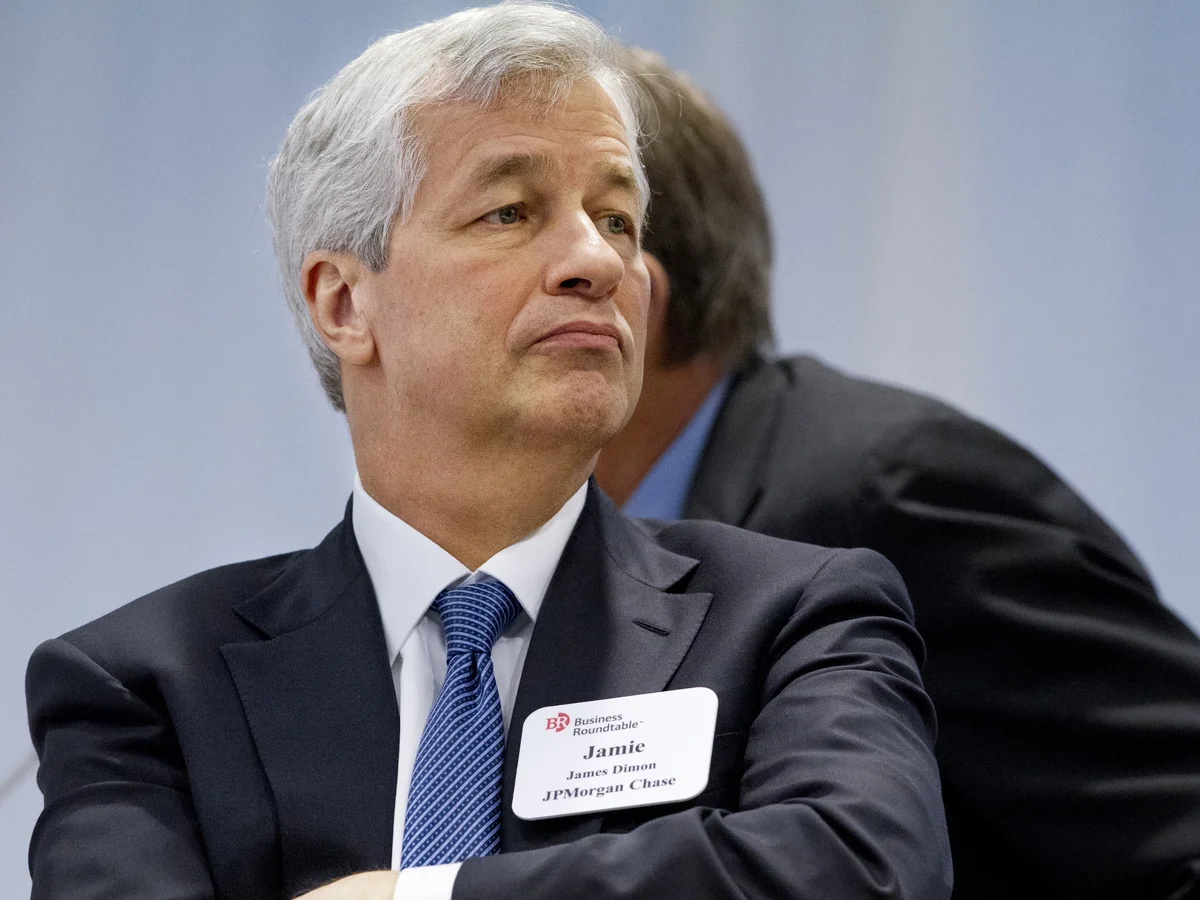
See how capital rushes to protect its prospects. Jamie Dimon, US billionaire and CEO of the world’s largest bank JPMorganChase, warns the UK government that if they should dare to raise bank taxes or generally become “hostile to banks again”, then he will reverse $3 billion plans to build his corporation’s new headquarters in Canary Wharf.
In the US Ken Griffin, CEO of the ‘most successful hedge fund in history’ Citadel, has engaged in similar “discussions” regarding New York, building plans and fiscal policy. Amidst an ongoing spat between the hedge fund boss and progressive mayor Zohran Mamdani over tax, Griffin told his employees in April that he might reconsider the company’s Midtown office expansion. The right-wing snowflake said that Mamdani’s messaging around taxing the billionaire’s $238 million second home in New York was ‘triggering the trauma [he] experienced in Chicago’ when politicians there also dared to talk about him paying tax. Believe it.
After Starmer’s Labour government caved to pressure from the banking giant in November, lenders for the JPMorganChase building project were spared tax increases in Rachel Reeves’ autumn budget. Apparently that wasn’t enough. Since Dimon succeeded in bullying the British government back then, threatening to pull his bank out of the country if faced with higher taxes, he is emboldened and attempting to bully our government again. This is logical—he tried something, it worked, he’s trying it again. Hence the age-old wisdom that you don’t bend to bullies, apparently lost on the Labour right. Prime minister Starmer is exactly the person you would try this on, given his want for principles, politics and freebies.
This round of intimidation comes at an even more critical point in British politics. Local elections have never been so nationally significant. A by-election will never have been so historical. What hangs in the balance now is understood by all except that most privileged, venal minority. That privileged, venal minority will sacrifice us for a lower tax bill. The lesson? Do not raise taxes for the richest. I guess the rest of us should cough up or die when we can’t.
Perhaps when you are worth almost $3 billion and run one of global capitalism’s biggest furnaces, democracy is a nut to crack rather than a rule to follow. Why lobby the government through the British Chambers of Commerce or the Confederation of British Industry (CBI)? That would be constitutional, transparent, weak. Beneath a sitting billionaire.
After all, it’s not what the likes of Elon Musk, Jeff Bezos, Mark Zuckerberg and others have shown to be possible. Build your billion-dollar businesses—provide a platform for neo-Nazis, dismember global majority workers, destroy the environment and damage children’s minds—you must now be an expert on free speech and political reform.
Dimon knows best. In a culture (better known as capitalism) that has blinkered us into believing that those most worthy of praise are the richest and most ruthless, you are more likely to hear understanding of and even support for Dimon’s political intervention than any sort of criticism. My management consultant-turned-big-pharma friend from university responded to my outrage: “I mean they’re a private company. What do you expect? They consider the country’s politics before making a big investment. It’s kind of within their mandate”.
Let’s evaluate my confused friend’s remarks about the Dimon-JPMC assault: they’re a private company—incorrect, JPMC is a public company, though what I think he’s pointing to (that corporations are top-down, dictatorial structures) is a valid note; this is what you would expect—correct or incorrect, depending on who and how class-conscious “you” is; they consider the country’s politics before making a big investment—correct, but “consider” by no stretch of definition means “influence”; it’s kind of within their mandate—correct or incorrect, depending on whether you prefer capital or life.
You would expect my management consultant-turned-big-pharma friend from university to speak like this. However, the political class across the fake aisle, i.e. including supposedly left-wing parties, has been remarkably quiet about this corporate attack on workers, making yet more clear how meaningless the political divide has become since the victory and mainstreaming of neoliberalism.
Status quo defenders instinctively protect the banks on the grounds that they are fulfilling their mandate. What about the popular mandate of the elected government of the United Kingdom? Do banks come before democracy? What if the British government’s mandate were to fix public services, end homelessness and lift Brits out of poverty? Would that surpass the mandate of banks to blackmail government for lower taxes, of asset managers to suck up properties and perpetuate artificial housing crises, of systemically important financial institutions to temporarily suspend their free market principles and be bailed out of their crimes by the taxpayer? Perhaps that would be hostile to banks. Again.
Jamie Dimon’s ultimatum was that the government cannot become “hostile to banks again” or else. Again?! What previous period of pain and suffering for the poor banks is Dimon referencing? The period since the financial crash, when the banks were rewarded for crashing the global economy?
His perception of hostility needs to be examined. I don’t believe Dimon has weighed in on our infamous hostile environment for migrants, the hostile atmosphere for Muslims, the hostile assaults on queer rights or the hostile takeover of our foreign policy by genocidal supremacists. The hostility he is referring to is basic left-of-centre policies around wealth redistribution. You can deceptively call this radical leftist nonsense in the post-Thatcher–Reagan world. Meanwhile in reality, this was the post-WWII social democratic consensus.
They are issuing a threat to any new government to not become more “hostile to banks again”. What does ‘hostile to banks’, incidentally some of the most powerful and damaging entities in the world, mean? Is Dimon simply having a tantrum at the idea of accountability and fair taxes?
Who has the right to make political interventions of this magnitude? Who has the access to make headlines with this sway? Who has the ability to extort the government and get away with it? In theory all businesses can lobby, but I haven’t seen the owner of my local corner shop make headlines in The Guardian and Business Insider with his directives to the Treasury. He also thinks he’s paying too much tax.