












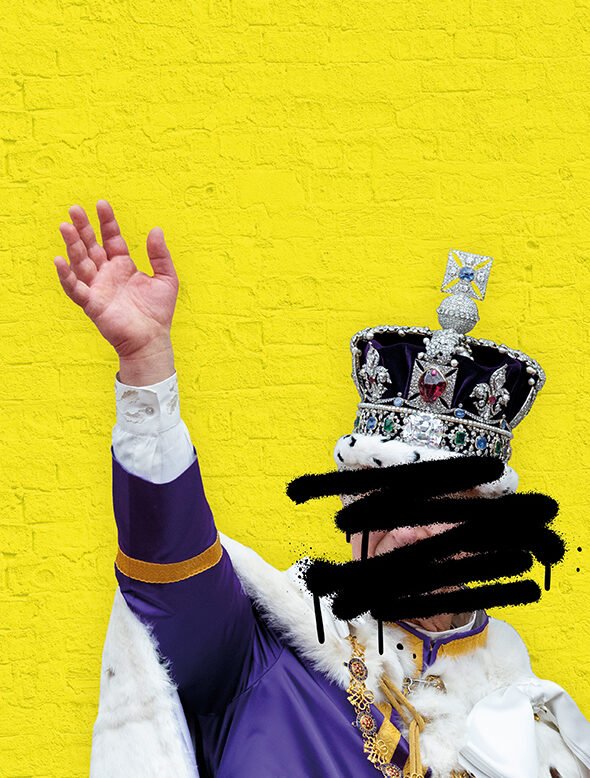
Of all the New Year’s resolutions to have been put forward by various celebrities, I find Zarah Sultana’s message to be the most hopeful. Her short, sweet and simple tweet didn’t beat around the bush and got straight to the heart of the matter. It read: “My message of hope for 2026. Abolish the monarchy.” As somebody who has spent years arguing for the abolition of the royal family, it was refreshing to finally hear a member of parliament proclaim that the UK should take the progressive step and become a republic. But it wasn’t necessarily her tweet in itself which got me thinking; it was rather some of the comments in response to her tweet which really got my brain working. They were the same arguments that people usually make when defending the monarchy — that the royals create more revenue than they lose because of the amount they bring in through tourism. That the royals are great ambassadors for the UK on the international stage and reinforce our status in relations with other countries. Of course, there was the argument surrounding the notion that the royal family are a central part of British culture and are fundamental to our “national identity”. As much as I have my doubts about these first two arguments, it’s this third argument which I’d like to explore further.
My first problem with this argument is that it completely ignores Britain’s strong culture of republicanism. A number of people, pressure groups, campaigns and organisations have vied for Britain to become a republic over the years, and we must respect the efforts they have put in to fight for what they believe in. Throughout the 20th Century, some of these republican figures even achieved political office and stood and spoke in parliament on the subject of republicanism. The late member of parliament Tony Benn even went as far as to introduce a “Commonwealth of Britain” bill in 1991 seeking to replace the monarchy with an elected president. The 19th Century, too, had its figures. Some of our most famous enlightened philosophers like Jeremy Bentham and John Stuart Mill advocated republicanism, as did Percy Shelley, one of Britain’s most romantic poets. Earlier than that, John Wilkes was gaoled several times in the 18th Century for publishing articles criticising King George III in his radical newspaper The North Briton. Earlier still, in the 17th Century, a number of radical groups like the Levellers and the Diggers fought and often died fighting for their republican beliefs, as did the many soldiers who fought for Oliver Cromwell’s Roundheads during the English Civil War — a dream they realised in the interregnum period of 1649–1660, decades before republics were proclaimed in mainland Europe. Can we sensibly claim that all these important and significant people — these artists, intellectuals, statesmen, organisations and armies which have spread across the last 400 years who all adhere to the British republican ideal — be criticised for flying in the face of British culture? Of course not. They may not share the opinions of the majority, but that does not mean they do not play a role in the shared culture of the country. If we take things at face value, the monarchy is nothing more or less than a political institution and, just like any political institution, it has always had those who are in favour and those who are against it.
A large part of the national identity argument is that the monarchy is a British tradition, and like any tradition, they need to be upkept. They claim that these traditions play a vital role in who we are and the abolition of them risks leading the country into a state of national amnesia as we seek to rediscover ourselves. It leads me to wonder about the history of political institutions themselves, and if there can be such a thing as tradition in politics. If you think about it, there are many different institutions, at one point seen as sacrosanct parts of our national identity, which we have done away with as time has gone on. We used to believe in the divine right of kings to rule up until we didn’t. We used to see parliament as an advisory body to the crown until time proved that the country was better served if the two institutions switched positions. Great Britain was at one point seen as a major player in the international slave trade, right up until William Wilberforce and the abolitionist movement succeeded in consigning the barbaric practice to the history books. For many years, the UK was known and indeed proud of having the world’s largest empire, and anyone who campaigned in favour of decolonisation was accused of unravelling the country’s national identity. That was right until those who were campaigning for the Empire’s end were proved right by history and a policy of self-determination and independence came through in the fifties and the sixties. Of course, this is not to say the monarchy is in any way as ethically bankrupt as some of the aforementioned institutions, but the principle remains the same. There cannot ever be such a thing as tradition in politics, and if we ever pretend there is, we may run the risk of being against any form of national progress. Politics is about bringing forth new ideas, about challenging the status quo and changing the country for the better. As times change, old institutions are proven to be out of place in the modern era and are replaced with new institutions that better serve the times they reflect. In this sense, national identity is not a concrete construct with strict guidelines about what it can and can’t tolerate, but rather a breathing entity which is forever adapting and evolving according to new theories, norms and values that different demographics introduce. A tradition is only a tradition if people make a conscious decision to follow it, and as soon as people stop in favour of something new, they stop being traditions and start becoming history. Eventually, if the radical new ideas are followed by enough people for a long enough period of time, they start to become traditions themselves. In the revolutionary wars in the US and France, those who campaigned for a republic were lambasted by monarchists for destroying their own sense of national identity, much the same way they are in the UK today. Nowadays, 250 years later, these countries now have such a strong sense of republicanism that anyone who brings it into doubt is accused of undoing their country’s national fabric. I see no reason why the UK couldn’t be in a similar place in 250 years’ time if we took the progressive step to become a republic now.
National identity as a concept is kicked around like a football by everybody on all sides of the spectrum to promote their own point of view. Tea-drinkers like to fly the Union Jack when making the case for their beverage of choice. They play the oft-used card that tea is one of the classic British institutions and that coffee-drinkers are the new kids on the block, destroying the rulebook on what it means to be English. Meat-eaters like to criticise vegans and vegetarians for similar reasons, claiming that eating meat is an important part of our culture and that we are known throughout the world for our love of fish and chips, pies, English breakfasts and Sunday roast beef. They say that because vegans refuse to eat these national institutions, they are playing their part in the finality of British identity. This leads me onto racists. They love talking about national identity. They talk a big game about how the influx of foreign immigrants is destroying British culture, about how they can’t recognise their own country anymore because of the sheer amount of non-white people they see on their day-to-day, as well all the mosques which seem to have replaced the churches and the curry shops which seem to have replaced all the bakeries and fishmongers they grew up with.
In spite of all their protestations, coffee shops, vegan cafes and Indian restaurants can be found in any city in Britain. This is because if something is popular and if there is a market for something, it will thrive. In every one of these shops, you will also find tea-drinkers, meat-eaters and white people respectively, all of whom may be trying something new and discovering they have a taste for them. I do not see this as the abandonment of British national identity, but rather the latest chapter in the rich, ever-changing tapestry in British culture, and these new buildings are a part of the make-up of the new, diverse, multicultural Britain that we have created. This is because not only is there no such thing as political tradition, there is no such thing as social tradition either, merely the rich vein of new ideas and cultures replacing the previous as values ebb and flow and tastes wax and wane as times change. Any historian will tell you: the only real tradition which is ever served faithfully is change itself. As uncomfortable as it may be for some to swallow, all traditions, however sacred in the eyes of some, all started as a new idea. As much as it may well be true that curry shops have taken over fish and chip shops, fish and chips themselves have been eaten widespread in England since the 1860s, and even then, the first shops to sell it were probably taking inspiration from French and Belgian influences. Similarly, tea only became a national drink in the 18th Century and in turn comes from India. Both of these foreign imports replaced bread and water, the only food and drink which we know for a fact that most British peasants have consistently consumed for several centuries now. As much as it might be hard for the far-right to admit, however English they think they are, our island has always seen immigration — from the Huguenots to the Normans and from the Vikings to the Saxons. Still, this doesn’t stop them all from hanging their Saint George’s flags from every lamppost and branding anyone who disagrees with them as a traitor to their country.
This is my other problem with the way in which people use the term “national identity” as an argument — it can lend itself to patriotism. Not only are people who are in favour of a republic told that they hate national identity, but they are also told that they hate their country as well. This argument is also often used to describe anybody on the left of British politics, just for showing their support for policies which could radically change the UK for the better. This argument has been used by people on the right since time immemorial, and many of the different protesters, campaigners and activists were branded as traitors for daring to stand against the stance of the government at the time. The Luddites, Chartists and Suffragettes were all referred to as unpatriotic at the time, and yet they all affected the constitutional changes which we now see as vital elements of our democracy. I see no reason why the addition of the elected head of state will not be viewed as another one of these great constitutional changes given enough time. Trade unionists have been criticised for undermining the country by every generation since their inception, and yet I’m sure all the descendants of those same naysayers are now enjoying the holidays, sick pay, eight-hour shifts and weekends that those early striking workers had achieved. It seems that if one wants to be remembered as a hero, you first need to start as a rebel and then wait 100 years to see the once controversial agenda you pioneered become accepted as an important step in the country’s development. Picture the suffragette, chaining herself to the railings, demanding that women have the right to vote. Then picture the policeman, swinging his truncheon onto her head. Who’s really the patriot and who’s really the traitor? With this notion in mind, how will we think of the current climate change protesters who are arrested regularly in a few decades to come? Should this country become a republic and a successful one, how will we see people like Zarah Sultana in a few centuries from now?
For those who still believe that the monarchy is a central part of who we are as a people, I ask one question. In how many former monarchies which have now embraced republicanism do their people suffer from a national identity crisis? Have the people of Finland and Greece really been scratching themselves as they fall into mental health issues in their struggle to deal with the absence of their king? Or do they simply turn up for work on Monday morning and carry out their duties as they need to? Much the same way they always have. We all know it’s the latter option. They take change as another inevitability that life brings. And not only that, change is necessary, no matter how scary it seems. The introduction of the seatbelt, the end of the sixpence. Speed cameras and the third television channel. CCTV and the smoking ban. Many were against all these things, and yet nowadays they have all been normalised. This is because no matter how much Brits complain about change, they just get used to it. It’s part of our national identity.