














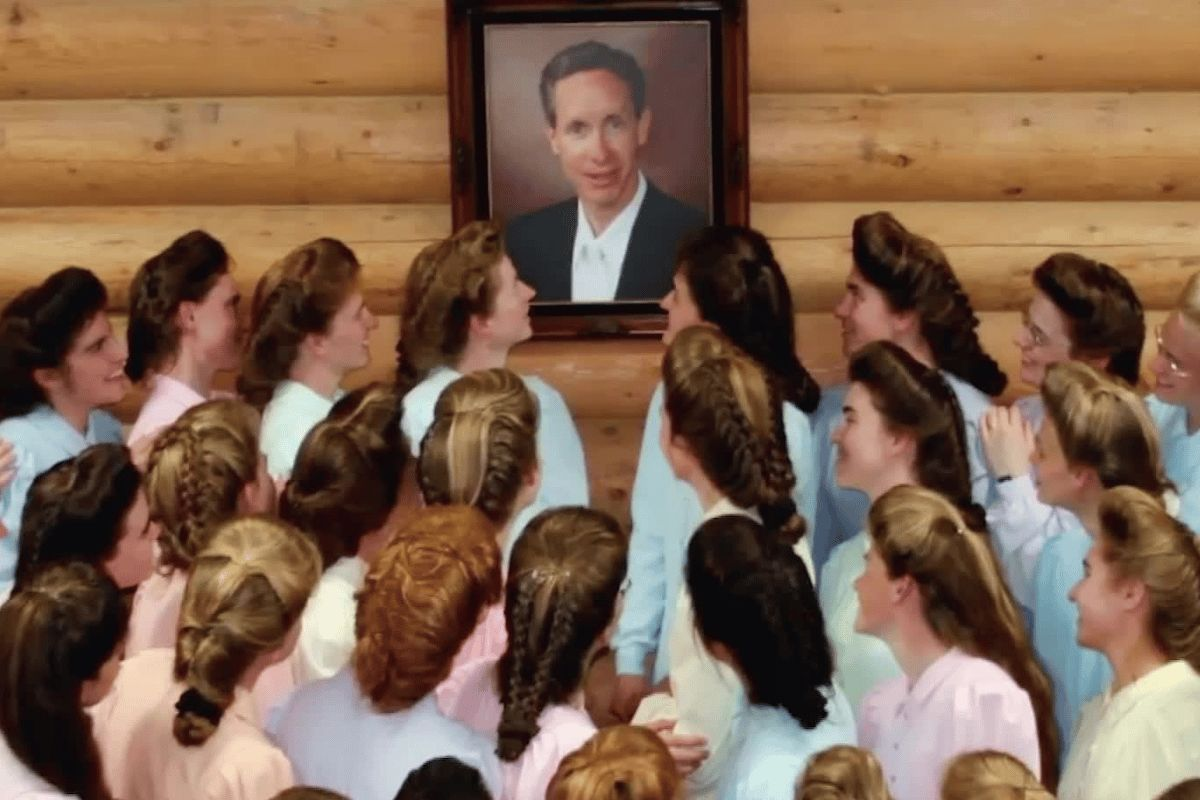
“A woman should learn in quietness and full submission. I do not permit a woman to teach or to assume authority over a man; she must be quiet.” — 1 Timothy 2:11–12
There is something almost admirable in the efficiency with which religion has managed, across time and geography, to persuade women to defend systems that so plainly work against them. Century after century, belief system after belief system, women have knelt obediently before gods who do not resemble them, submitted reverently to doctrines that restrict them and raised daughters within moral frameworks that will one day demand their silence. This is not an isolated quirk of culture, nor a misunderstanding that can be waved away with historical context; it is a pattern, replicated so reliably that it begins to feel less like coincidence and more like design. One eventually reaches a point where the question is no longer whether religion mistreats women, but rather how it has managed to convince so many of them to see that mistreatment as virtue.
Men, of course, have never required religion to control women. History has shown that violence, law and economic dependence are more than sufficient tools on their own. Religion simply refines the process. It elevates male authority from something enforced to something ordained, transforming entitlement into righteousness and obedience into moral duty. Better still, it relocates accountability entirely. When power is attributed to God, there is no one left to interrogate. God cannot be subpoenaed, appealed to or cross-examined, and he is, rather conveniently, always in agreement with whoever happens to be speaking on his behalf. In this sense, God becomes the ultimate scapegoat — omnipotent enough to justify anything and distant enough to never be held responsible for it.
Christianity is rarely subtle about where it positions women within this structure. The hierarchy is laid out plainly enough that it is often disguised as harmless familiarity. Wives are instructed to submit to their husbands as they do to the Lord — a comparison that carries a certain irony given the Lord’s historical indifference to negotiation. Women are encouraged toward quietness, steered away from teaching or authority, their silence reframed as evidence of spiritual maturity rather than marginalisation. And then, rather predictably, comes Timothy’s promise that women will be saved through childbearing:
“I do not permit a woman to teach or to exercise authority over a man; rather, she is to remain quiet. For Adam was formed first, then Eve; and Adam was not deceived, but the woman was deceived and became a transgressor. Yet she will be saved through childbearing — if they continue in faith and love and holiness, with self-control.” — 1 Timothy 2:11–15
Yikes.
Saved, not valued or honoured, but corrected, as though motherhood were less a choice than a form of moral repayment. Women produce life, yet divinity remains male, authoritative and unreachable. Mary, Christianity’s most revered woman, is sanctified precisely because she does not disrupt this order. She is obedient, virginal and silent. Motherhood is exalted, but only when stripped of agency, desire or dissent. It is difficult not to marvel at how thoroughly this arrangement has been romanticised.
Buddhism, often treated in Western discourse as a gentler alternative to religious orthodoxy, reveals a familiar pattern under closer inspection. According to traditional texts, the Buddha initially refused to allow women to be ordained as nuns, relenting only after repeated appeals. Even then, their inclusion was conditional. The Eight Garudhammas, rules that remain influential in many Buddhist traditions, permanently subordinate nuns to monks regardless of experience or seniority. A nun ordained for decades must bow to a monk ordained that very day — a ritualised reminder that spiritual dedication does not translate into institutional authority. Across much of Buddhist history, women have been permitted spiritual practice but excluded from leadership and governance. Enlightenment may be theoretically accessible to all, but power, it seems, remains gendered.
In its most overt contemporary form, the Taliban’s interpretation of Islam abandons even the pretence of subtlety. Under Taliban rule, women are barred from studying, working, singing, reading aloud, playing sports, visiting parks or speaking in public. Their voices are framed as sources of temptation, their visibility a moral liability. Women are forbidden from looking directly at men who are not their husbands or blood relatives, as if eye contact alone might unravel social order. Even singing inside one’s own home is grounds for punishment. And yet, these restrictions are consistently defended as protective. Taliban officials insist that women’s dignity and honour are being safeguarded in accordance with Sharia law and cultural tradition. It is a narrative so detached from women’s lived reality that it borders on farce, were it not enforced with such devastating consequences.
What connects these belief systems is not simply the restriction of women’s behaviour, but the symbolism that sustains it. God is almost always male. Authority is masculinised, descending neatly from the divine to the domestic sphere. Women may be praised as mothers, caretakers or moral guardians, but only insofar as they remain obedient and non-threatening. Holiness is acceptable when it is quiet. The moment a woman speaks with authority, questions doctrine or claims autonomy, her faith is suddenly treated as suspect, as though devotion itself were conditional on submission. Over time, obedience is reframed as moral excellence. Silence becomes purity. Compliance becomes grace. Fear becomes faith. The promise of eternal punishment functions far more effectively than any earthly system of enforcement ever could. Once belief is internalised, there is very little need for constant surveillance. Women learn to regulate themselves, adjusting their behaviour in anticipation of judgement that may never materialise, but has been convincingly promised nonetheless. The policing becomes internal — almost automatic.
This is where the structure becomes self-sustaining. Women do not merely live within these systems — they maintain them. They enforce dress codes, correct behaviour and monitor one another’s conformity, often with remarkable diligence. Other women’s bodies are scrutinised, their choices moralised and their dissent quietly corrected, all under the banner of devotion. Eventually, the cage no longer appears locked from the outside. It is guarded from within, and doing so is framed as virtue. Of course, belief persists not only through fear, but through reward. Religion offers certainty in a world that is often chaotic and hostile, particularly for women. It offers community where isolation might otherwise prevail and meaning where alternatives feel inaccessible. For women navigating economic precarity, social restriction or physical danger, submission can feel like safety. Obedience becomes tolerable when framed as chosen. Suffering becomes easier to endure when it is given purpose, and the cage is far more bearable when it is presented as shelter.
This is not to suggest that religious women are naïve or unaware. Faith is rarely chosen freely. It is inherited, geographical and embedded long before it can be interrogated. A woman born in Kabul is unlikely to grow up Catholic. A woman born in rural Alabama is unlikely to be raised Buddhist. Belief is absorbed alongside language, family and fear, reinforced through ritual and consequence. To question it is not simply to challenge doctrine, but to risk exile, punishment or eternal damnation. In that context, compliance often resembles survival more than devotion.
It is perhaps for this reason that attempts to reconcile institutional religion with feminism so often collapse under scrutiny. Feminism demands autonomy, equality and bodily sovereignty. Religion, at least in its traditional forms, demands hierarchy, obedience and submission to divine authority, as interpreted, almost invariably, by men. Progressive reinterpretations may soften the language, but they rarely dismantle the foundation. A system built upon divinely sanctioned inequality cannot be reshaped into liberation without surrendering the very authority that sustains it. Perhaps the most unsettling truth is this: patriarchal religion does not persist because women fail to recognise its cruelty; it persists because it teaches women to interpret that cruelty as love. To endure it patiently. To defend it publicly. To pass it on faithfully. Belief, in this sense, becomes a beautifully constructed cage, adorned with promises of grace, protection and eternal reward. And when a woman learns not only to live within that cage, but to guard it herself, the architecture of conformity is complete.