














“Art is free, shameless, irresponsible: the movement is intense, almost feverish; it resembles, it seems to me, a snakeskin full of ants… filled with meddlesome life” (Bergman, The Snakeskin).
Travelling to an island in the Swedish archipelago from Stockholm Central Station requires a train and two buses. Or a train, a ferry and a bus. Either allows me to watch the city open itself to a world held up by brackish water, water that has an ability to preserve wooden ships for 300 years in perfect condition. Jumping off the jetty and submerging myself in the water, I am frozen in time. Consumed by dark green nothing, only abborre for company. All at once I am every age I have ever been. In winter, the lake freezes so thickly that some people drive their cars over it to visit adjacent islands. Children ice-skate in snowsuits, balaclavas and mittens connected by a string. Acres are predicated by smells of burning wood from every chimney, the thick smoke wrapping around itself for warmth and comfort. Hidden under two or three feet of snow, the land sleeps in the 15 hours of darkness a day — hibernating before life returns in April with snödroppar and vitsippa.
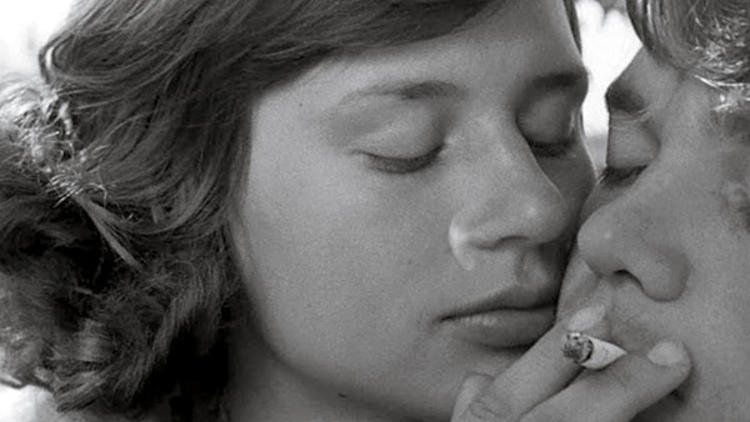
Ingmar Bergman details the transformative nature of rural Sweden in his 1953 film Sommaren med Monika. A turning point in Bergman’s creative journey, the film signals his pivot into exploring female perspectives, constricted by 1950s Sweden. In its opening scenes, freedom seems as though it has become a distant dream, clouded by industrial smog from steamships perched at the city’s harbour. Monika’s refusal to compromise on her happiness is a central point of the film’s dream-like narrative. Her confidence feels refreshing viewed through the black-and-white lens of Bergman’s camera. We cannot help but root for her survival and success.
Bergman perfectly captures how wide the world feels out among the islands, using free camera work to encapsulate the vast wilderness of the Swedish archipelago. Monika recognises this vastness, and accepts that her life can be exactly what she makes of it — money, stability and the changing of seasons does not stop her.
“I want summer to go on like this…” This is not a pipedream; it is an active decision she has made. Though she is difficult and arguably selfish, Monika’s archetype has become central in modern depictions of adolescent women, highlighting the imperfection that accompanies growing up. I see Monika in the protagonists of Greta Gerwig’s Lady Bird and Emma Seligman’s Shiva Baby. Bergman’s investment in unapologetically portraying the female dream has paved a road for female narrative cinema, accommodating the likes of Sofia Coppola, Halina Reijn and Marielle Heller.
In America and the UK, Sommaren med Monika was initially released as an erotic film and advertised with overtly sensual photographs of Harriet Andersson. The American release of the film, which was renamed Monika, the Story of a Bad Girl!, displays a reductive approach to topics surrounding dissatisfaction with the banality of life and female emancipation. Because Monika desires more than she has, she is depicted as slovenly, lustful — an attempt at framing Nordic Socialism as the downfall of Western morality.
I am often blindsided by the visceral reaction that English/American audiences have to nudity. The body of a woman is beautiful but not inherently sexual. Sexual shame does not exist in the same way in Sweden, and more than that, sexuality is portrayed as a psychological trait rather than a physical one. Monika’s youth and ecstasy is explored in more ways than in just her naked body. Laying under the eternal skies of the archipelago, her body is commodified. The urban realism of the oppressive city demands so much of her happiness in exchange for mere survival. Monika achieves a spiritual immortality that is gained through transformation in nature, to free herself from compromise.
Bergman’s treatment of female characters becomes more nuanced in his later films — Autumn Sonata (1978), Cries and Whispers (1972) and Face to Face (1976). Sisters, mothers, friends, enemies, sickness, sexuality and vengeance. He is ritualistic in identifying what ties his characters to their surroundings, as well as how humanity stands out against the backdrop of the natural world. Monika is solidified in her aspiration to be as vast as the brackish landscape, preserved in time as a woman tied to freedom through her dissatisfaction with the “meddlesome life” of urban existence.