














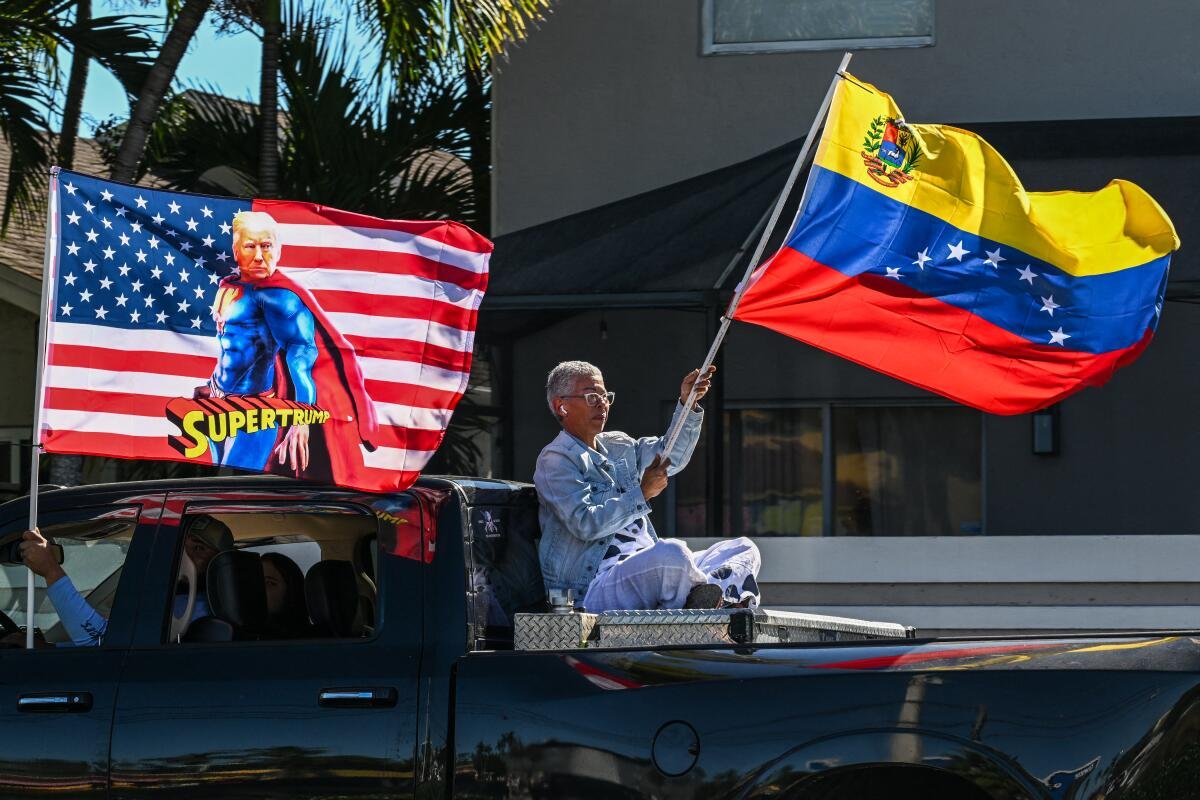
The conflict between Venezuela and the United States is not a conventional war, but rather a prolonged political, economic and diplomatic standoff rooted in ideological differences, contested elections, sanctions policy, energy geopolitics and regional security concerns. Over the past decade, tensions have intensified, eased at moments and then resurfaced—particularly around Venezuela’s electoral legitimacy, US sanctions, migration flows and oil production. As of 2026, the relationship remains strained, shaped by mutual distrust and competing strategic interests.
Historical context and political breakdown
US–Venezuela tensions escalated significantly under former Venezuelan president Hugo Chávez (1999–2013), whose socialist government positioned itself in opposition to US influence in Latin America. After Chávez’s death, his successor Nicolás Maduro inherited both political polarisation at home and deteriorating relations abroad.
The breaking point came following Venezuela’s 2018 presidential election, which the US, the European Union (EU) and several Latin American countries deemed neither free nor fair. In 2019, the United States formally recognised opposition leader Juan Guaidó as Venezuela’s interim president, arguing that Maduro’s re-election lacked “legitimacy”. The Maduro government rejected this move as an attempted foreign-backed “coup”. This diplomatic rupture marked the beginning of the most severe phase of the conflict.
Although US recognition of Guaidó diminished in practical significance over time—especially after Venezuela’s opposition coalition restructured its leadership strategy in 2023—the political legitimacy dispute remains a central source of friction.
Sanctions and economic pressure
The most significant tool used by Washington has been economic sanctions. Beginning in 2017 and expanding in 2019, the US imposed sweeping financial sanctions on Venezuelan officials and state institutions, including Petróleos de Venezuela, S.A. (PDVSA), the state oil company that forms the backbone of Venezuela’s economy.
The rationale for sanctions has been to pressure Maduro’s government to restore democratic processes and respect human rights. However, critics argue that broad sanctions have exacerbated Venezuela’s economic collapse, contributing to hyperinflation, shortages and mass migration. The Venezuelan government blames US sanctions for much of the country’s economic suffering, though economists point to years of mismanagement, corruption and declining oil production as key structural causes.
In 2022 and 2023, amid global energy supply concerns following Russia’s invasion of Ukraine, the US slightly recalibrated its policy. Washington granted a limited licence to US oil company Chevron to resume certain operations in Venezuela under strict conditions. In late 2023, after the Maduro government agreed to electoral negotiations with the opposition in Barbados, the US temporarily eased some oil and gold sanctions. However, when Venezuelan authorities disqualified key opposition candidates from running in the 2024 presidential election, parts of that sanctions relief were reversed in 2024.
Thus, sanctions policy has become cyclical—tightened or loosened depending on Venezuela’s compliance with political agreements.
The 2024 election and democratic concerns
Venezuela’s 2024 presidential election was widely seen as a test of whether negotiated political reform was possible. The US government and regional actors urged Caracas to allow opposition candidates to run freely and to permit international observation.
When Venezuela’s Supreme Court upheld bans on several opposition figures, including María Corina Machado, Washington condemned the move as undemocratic. Although a substitute opposition candidate was eventually permitted to run, critics argued the playing field remained uneven. The United States responded by reimposing certain sanctions that had been temporarily lifted, reinforcing the pattern of conditional engagement.
For Maduro’s government, these actions are framed as sovereign decisions free from foreign interference. Venezuelan officials consistently argue that US sanctions constitute economic warfare designed to destabilise the country.
Oil, energy and strategic interests
Energy lies at the heart of the relationship. Venezuela possesses the world’s largest proven oil reserves. Historically, it was a major oil supplier to the United States. However, sanctions and declining infrastructure dramatically reduced exports.
The global energy shock following the war in Ukraine altered strategic calculations. The US faced pressure to stabilise oil markets and reduce dependence on Russian energy. This created limited diplomatic openings with Caracas, despite longstanding hostility.
Nevertheless, US engagement remains cautious. American policymakers must balance energy needs against domestic political considerations and human rights concerns. Meanwhile, Venezuela has deepened ties with China, Russia, Iran and Turkey, seeking alternative markets and financial channels to bypass sanctions.
Migration and regional stability
Another major dimension of the conflict is migration. Since 2015, more than seven million Venezuelans have left the country, according to the United Nations (UN), creating one of the largest displacement crises in the world. While most migrants have settled in neighbouring Latin American countries, increasing numbers have travelled north toward the United States.
Migration has become both a humanitarian issue and a political flashpoint in US domestic politics. Washington has alternated between expanding Temporary Protected Status (TPS) for Venezuelans already in the US and tightening border enforcement measures.
The Venezuelan government denies that sanctions are the primary driver of migration, but US officials acknowledge that economic collapse and governance challenges have played a central role.
The Guyana dispute and regional security
Tensions further intensified in 2023–2024 over Venezuela’s longstanding territorial claim to the Essequibo region of neighbouring Guyana, an area rich in offshore oil reserves. After a controversial Venezuelan referendum reaffirmed the claim, the United States publicly supported Guyana’s territorial integrity.
Washington increased diplomatic and military cooperation with Guyana, conducting joint exercises aimed at deterrence. Venezuela condemned these actions as external interference. Although direct military conflict has been avoided, the episode added a new geopolitical layer to US–Venezuela tensions.
Human rights and international law
Human rights remain central to US criticism of Venezuela. Reports by the UN Fact-Finding Mission and organisations such as Human Rights Watch have documented allegations of arbitrary detention, political repression and restrictions on media freedom.
The Maduro government rejects these findings as biased and politically motivated. Nonetheless, human rights concerns continue to shape US policy decisions and sanctions designations.
Diplomatic engagement and prisoner swaps
Despite hostility, communication has not completely broken down. In 2023, the two governments conducted a high-profile prisoner exchange involving detained Americans and close allies of Maduro. These negotiations demonstrated that pragmatic cooperation remains possible under specific circumstances.
However, such engagements are transactional rather than transformative. Neither side appears ready for full normalisation of relations.
The conflict between Venezuela and the United States is multifaceted, blending ideological rivalry, sanctions diplomacy, energy politics, migration pressures and regional security concerns. While moments of negotiation have occurred—particularly around oil licences and prisoner exchanges—deep structural distrust persists.
For Washington, the central goals remain democratic reform, human rights protection and regional stability. For Caracas, the priority is regime survival, sovereignty and economic recovery under conditions it deems free from foreign coercion.
Absent a durable political settlement within Venezuela and a mutually acceptable framework for sanctions relief, tensions are likely to continue in cycles of confrontation and limited engagement. The future of the relationship will depend heavily on internal political developments in Venezuela, global energy dynamics and broader shifts in hemispheric diplomacy.