













Border externalisation—the outsourcing of migration control to states beyond a country’s borders—has quietly become a defining feature of modern border policy. Marketed as “partnerships” and “capacity building, ” it in fact creates a transnational system of delegated violence, where accountability evaporates and suffering becomes someone else’s problem.
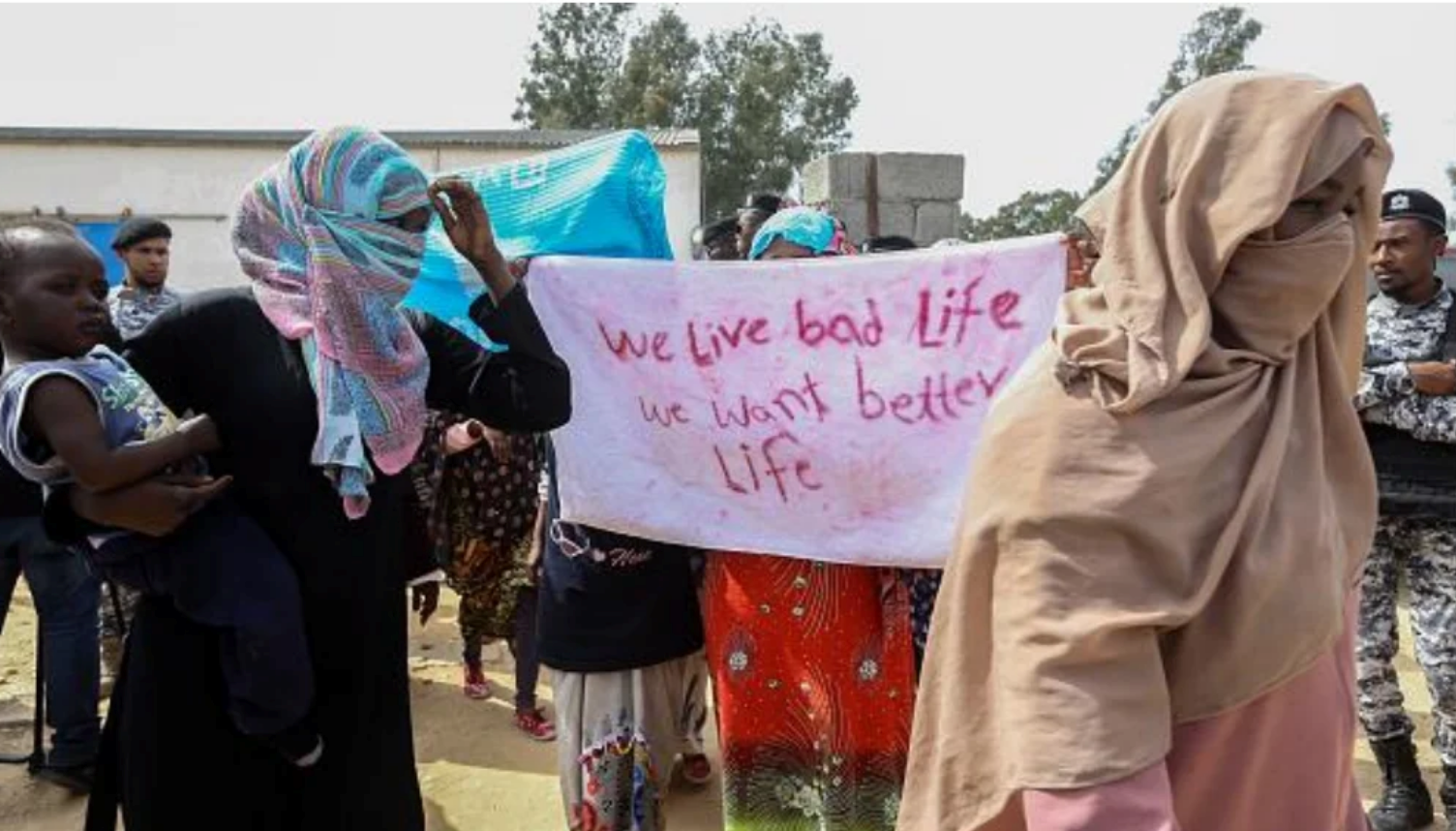
The EU–Libya arrangement reveals this with brutal clarity. When Europe shifted Mediterranean search-and-rescue responsibilities to the Libyan Coast Guard, it empowered a fragmented security landscape of intertwined militias, traffickers, and armed groups. EU-funded units intercept migrants at sea, return them to Libya, and hand them into detention centres where torture, TB outbreaks, starvation, and sexual violence are routinely documented. The system functions openly as abuse-for-profit: militias run smuggling routes and detention centres simultaneously, earning European money for policing a market they themselves sustain. Even the U.S. State Department notes that Libya’s “anti-illegal migration unit” is composed of militia members who oscillate between trafficking and policing.
Some abuses defy comprehension. Extremist groups and criminal gangs exploited Libya’s governance vacuum to operate slavery sites in unofficial detention centres, kidnapping migrants, forcing conversions, conscripting adults and children for suicide missions, and sexually enslaving women and girls. Migrants perceived to come from wealthier diasporas, or with relatives abroad, are often held for ransom, with payment typically moving through the informal hawala system—making both the money trail and the fate of the still-captive migrants extremely difficult to trace.
Greece and Turkey offer a different but equally chilling expression of externalisation: the deliberate production of legal limbo. A 2021 Greek decision declared Turkey a “safe third country” for Afghans, Syrians, Somalis, Pakistanis, and Bangladeshis, despite previous rulings to the contrary. Asylum applications from these nationalities are now rejected as inadmissible at scale—up 126% in one year—without examining individual risk. Yet Turkey has refused returns for years. The result is thousands stranded in Greece with no access to asylum, work, housing, or public services. This is not a bureaucratic accident but a core feature of the system: protection denied, responsibility displaced, people trapped.
Across Europe, the political climate is hardening further. Reform UK has pledged to resurrect Britain’s Rwanda scheme and has even proposed withdrawing from the European Convention on Human Rights to do so. Germany’s AfD openly endorses externalisation and normalises the term “remigration” —a euphemism for mass deportation of people with migrant backgrounds. After knife attacks by asylum seekers, Germany reinstated full border checks at all nine land crossings. The EU has meanwhile promised €1 billion to Lebanon to prevent Syrians and Palestinians from onward movement. Far from retreating, externalisation is expanding.
Proponents argue these measures are necessary to manage migration flows. But outsourcing border control to militias, authoritarian governments, or criminalised security forces is not policy pragmatism—it is responsibility laundering. It allows democracies to claim their hands are clean while funding practices that would be illegal on their own soil: arbitrary detention, torture, forced labour, slavery, and refoulement. Sovereignty does not grant licence to commit abuses by proxy. If the trafficking gangs, militias, and corrupt security officials are the hitmen, torturers, and kidnappers, Western states are the ones who put out the contract.
Externalisation is eroding the international protection regime and entrenching a market in human suffering that strengthens exactly the actors—smugglers, militias, traffickers—states claim to combat. The people intercepted at sea by dangerous actors or held captive in Libyan camps are paying the price for a system designed to make their suffering invisible, enduring unimaginable horror while pundits in the West celebrate their illegal detention and call for even harsher measures. But invisibility is not inevitability. Externalisation is a political choice, and its continued expansion tells us something uncomfortable: that some democracies are willing to accept profound human cruelty—so long as it remains out of sight.