













Around the 5th Century BCE, in Ancient China, one notorious commander declared that “all warfare is based on deception”, and ultimate success purely stems from tactics of evasion and subtlety. The work which this quote has been acquired from, The Art of War, is attributed to Sun Tzu; however, by 1469, the year Niccolò Machiavelli was born, it is highly unlikely that Sun Tzu’s treatise was known in Europe, let alone translated or widely circulated. Nevertheless, the captivating effects of deception must have been still prominent in the 15th and 16th centuries respectively, as Machiavelli himself set out to create a rulebook for a prince aiming for success — one primarily focusing on the same principles the Chinese commander held so highly in regard.
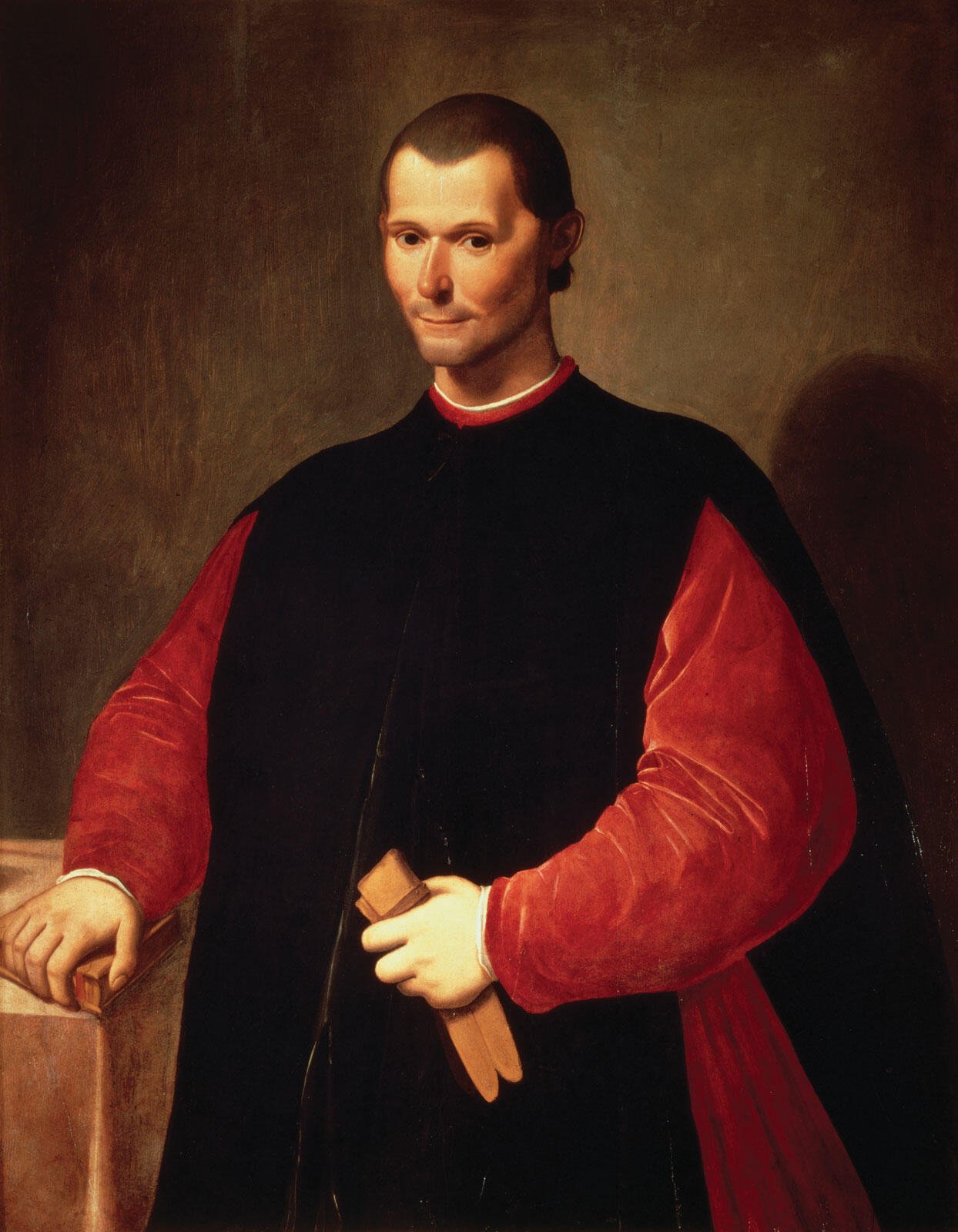
Before his principal work, The Prince, was written in 1513 and published posthumously in 1532, Machiavelli had worked under the Florence republic after the expulsion of the Medicis. The Medicis at the time were a force to be reckoned with — several of the members of this banking dynasty had even become popes. After the exile caused by an unfortunate alliance with France, the grand family came back to power. As an alleged conspirator of the republic in the interim, Machiavelli was tortured, imprisoned and eventually retreated to his family estate in exile, where he undoubtedly wished to redeem his reputation. The book was dedicated to Lorenzo de Medici, who would become the Duke of Urbino and rule Florence from 1516 to 1519 — as the book was published many years after Lorenzo’s rule and death, he never had a chance to see what Machiavelli had advised not only him but all possible princes.
The book is still studied as a crucial piece in political science, and some modern states’ actions can even be interpreted through it if one wishes to. Nonetheless, the way it is structured isn’t a guide for geopolitics — it is, put simply, an ethics (or non-ethics, as we shall explore) guide for princes who wish to either obtain or retain their power. As someone who served in political positions for many years and travelled extensively, Machiavelli without a doubt knew what he was giving advice on. He didn’t concern himself with the qualities of a “good” or “evil” man at all and presented a pragmatic argument for princes and their interpersonal relations. He advises the prince not to fear mistakes, for instance, in a particular example regarding rebellions. The prince may reconquer a land which has rebelled formerly, and “having learned from the rebellion, he’ll have fewer scruples when it comes to punishing troublemakers, interrogating suspects and strengthening any weak points in his defences”. The prince, both as a concept and person, shall be in a flowing state to adapt to circumstances constantly, while focusing on qualities Machiavelli deems worthy of having.
He shall never act passive in political matters and take the matters in his own hands as the need arises. As the ruler will have a natural desire to expand his territories, he shall be cautious of the actions he will take in the newly acquired ones. For example, if the former ruling family still resides in the area, the prince shall eliminate them to ensure the loyalty of the population and prevent an uprising. He shall be steady in his endeavours: “like anything that appears suddenly and grows fast, regimes that come out of nothing inevitably have shallow roots and will tend to crash in the first storm”. Even when convincing the population, whose customs may entirely differ from his own, the prince must strive to never act harshly, instead resorting to methods which rely on his cunning.
However, the usage of force, in Machiavelli’s view, isn’t necessarily equivalent to excessive cruelty: “we can hardly describe killing fellow citizens, betraying friends and living without loyalty, mercy or creed as signs of talent. Methods like that bring you power, but not glory”. Cruelty, after all, “is short-lived” although still “decisive”, and even if used, the ruler shall abandon his cruel practices as soon as he is in a secure position to do so. Therefore, the violence itself shall be swift and forceful, only to vanish immediately afterwards. This is certainly not because the ruler experiences a sudden change of heart: on the contrary, this is still a tactic of cunning Machiavelli advises the rulers to employ. This way, as the violence is swift and over soon, the people will hesitate to revolt and will forget the massacre in a short time.
At the same time, and perhaps contradictory, the ruler shall never fear being perceived as cruel. Cruelty is always preferable to compassion, for “it’s much safer to be feared than loved”. Generosity will only allow people to use you for their own gains, meanwhile cruelty will ensure you will be in a rather secure position. As Machiavelli compares: “A ruler mustn’t worry about being labelled cruel when it’s a question of keeping his subjects loyal and united; using a little exemplary severity, he will prove more compassionate than the leader whose excessive compassion leads to public disorder, muggings and murder. That kind of trouble tends to harm everyone, while the death sentences a ruler hands out affect only the individuals involved”.
Fear, in the end, will ignite both respect and terror — circumstances that the ruler can easily manipulate to secure his position and direct the masses according to his will, to the extent of what he can control, not on what others have freedom to choose. The masses will always respect the ruler as long as he doesn’t seize property and women, and as long as he doesn’t unnecessarily kill. To do this, the ruler, in true Machiavellian fashion, shall simply deceive. He shall act as if an actor on stage, as having these virtuous qualities isn’t necessary at all, for “if he had those qualities and observed them all the time, he’d be putting himself at risk. It’s seeming to be virtuous that helps, as for example, seeming to be compassionate, loyal, humane, honest and religious”. It is enough for the ruler to be perceived as thus.
The cunning of the ruler as advised by Machiavelli is still used to interpret certain psychological qualities, proving the extent of power this Florentine bureaucrat had. The term “Machiavellianism” was coined in the 1960s by Richard Christie and Florence Geis, who were inspired by Machiavelli’s manipulative methods like flattery and deceivement highly used by certain individuals, who were observed to highly regard money, power and competition above all else in life. Shortly called Machs, they may be interpreted as echoes of the Italian princes.
Although Machs may lack empathy, they aren’t necessarily as reckless as psychopaths. Additionally, they are not inherently aggressive but most times resort to interpersonal manipulation tactics such as lying and cheating as a way of control instead. These individuals are the modern princes of companies and political institutions, and in some instances Machs were deemed more trustworthy in high positions of power.
Machiavelli’s notorious prince, then, is not merely an idea, nor an anomaly. Those who act virtuous while practising cruelty, manipulate the masses to their will and rely on deception still exist, even if their roles within society have shifted. The Prince sheds light on uncomfortable truths about human nature — truths that remain disturbingly relevant rather than confined to Renaissance politics.