
Gabriel García Márquez (1927–2014) — affectionately known as “Gabo” — started his career as a journalist, but is best known for the novels and short stories that earned him the Nobel Prize in Literature in 1982.
Alongside Peruvian author Mario Vargas Llosa and Mexican writer Carlos Fuentes, he was the best-known member of the triumvirate that sparked the boom in Latin American literature in the late 1960s. He popularised the style that came to be known as “magical realism”, influencing later authors such as Isabel Allende and Salman Rushdie.
His novel One Hundred Years of Solitude has sold more than 30 million copies and has been translated into 37 languages. He is one of the most translated Spanish-language authors in the world, alongside Allende, Jorge Luis Borges and the author of Don Quixote, Miguel de Cervantes.
News of Márquez’s unpublished novel has been making headlines for close to a year. Posthumously published novels can be contentious and generally fall into four categories.
Some are unfinished or incomplete. These are either fragmentary works, such as Vladimir Nabokov’s The Original of Laura, or substantial works that were never fully revised to the author’s satisfaction. Franz Kafka’s Amerika, The Trial and The Castle are famous examples of unfinished, posthumously published novels.
Some are unfinished but partially complete. In these cases, sections were fully revised by the author, but a complete draft was never finished. Charles Dickens’ final novel, The Mystery of Edwin Drood, falls into this category. When Dickens died in 1870, he had completed and fully revised six of its 12 chapters.
Occasionally, posthumously published books are finished and complete. E.M. Forster wrote Maurice, his novel about homosexual love, in 1914. He revised it to his satisfaction but decided not to publish it, fearing legal repercussions because of attitudes towards homosexuality at the time. The novel was eventually published in 1971, the year after his death.
Then there are novels that are finished but unrevised. A complete draft exists, but one that still required further work by the author. J.R.R. Tolkien’s The Silmarillion, for example, was written after The Hobbit but was initially rejected. This led Tolkien to write The Lord of the Rings. The Silmarillion was eventually revised, edited and published by Tolkien’s son, Christopher Tolkien, four years after his father’s death.
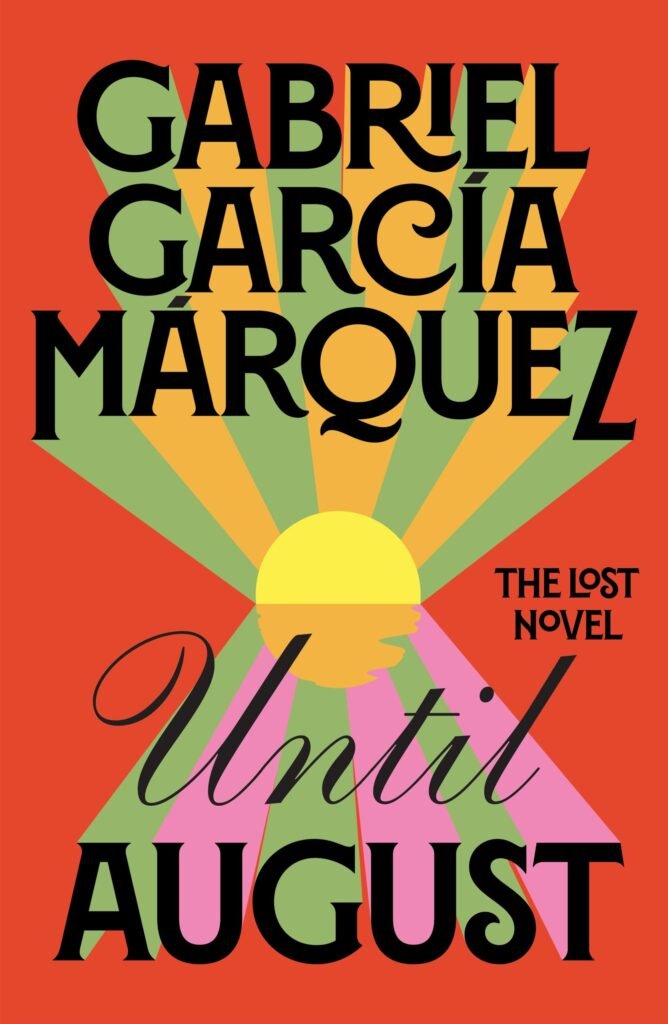
Márquez’s Until August falls into this final category. It is a complete but unfinished work that Márquez was unable to revise to his satisfaction. The novel has been edited by Cristóbal Pera, who also edited Márquez’s memoir, Living to Tell the Tale. The published version is based on Márquez’s fifth and final draft, incorporating fragments from earlier versions.
It is important to bear this in mind while reading the novel, as well as the reasons why it was never fully revised.
Rumours of an unpublished Márquez novel had circulated since March 1999, when the author read a chapter of Until August at Casa América Madrid during that year’s forum for the Spanish Society of Authors and Publishers. Three days later, the Spanish newspaper El País published the chapter, which was later translated into English for The New Yorker.
In 2003, another fragment of Until August emerged. It was published as a short story in the Colombian magazine Cambio (owned by Márquez) under the title “The Night of the Eclipse”.
After that came silence. For years, the rumours appeared to be nothing more than speculation until August 2023, when Penguin Random House confirmed both the novel’s existence and its publication in 2024, marking the tenth anniversary of Márquez’s death. The publication date carried additional significance, with the Spanish edition appearing on 6 March — Márquez’s birthday.
Márquez was a perfectionist. He revised his novels meticulously, rewriting them repeatedly until they reached the highest possible standard. His indisputable masterpiece, The Autumn of the Patriarch, took him 17 years to complete.
This explains why his sons, Rodrigo and Gonzalo García Barcha, who now oversee their father’s literary estate, were initially uncomfortable with publishing Until August. In the novel’s preface, they share their father’s verdict: “This book doesn’t work. It must be destroyed”.
As the brothers explain, however, Until August represented their father’s “last effort to carry on creating”. In 1999, Márquez was diagnosed with lymphatic cancer. Three years later, in 2002, he was diagnosed with dementia. As his health deteriorated, so too did his writing. Until August was composed during this period.
The “novel” is really a novella. At scarcely 100 pages, it is divided into six chapters centred on its protagonist, Ana Magdalena Bach. Ana Magdalena is 46 years old. Named after Johann Sebastian Bach’s second wife, she is, like her namesake, married to a musician. Her husband of 27 years, Domenico Amarís, directs the local conservatoire.
Ana Magdalena’s mother died eight years before the novel begins. Her final wish was to be buried on a Caribbean island. Every year, on the 16th of August — the anniversary of her mother’s death — Ana Magdalena makes the one-day journey to lay flowers at her grave.
On her eighth visit to the island, Ana Magdalena meets a man and has sex with him. At first, it seems the novel might become the story of an affair — of longing, romance and waiting another year for their reunion. Instead, after that first encounter, she makes a point of finding a different man to sleep with every 16 August.
Yet the novel is not about sexual liberation either. We are explicitly told that after almost three decades together, Ana Magdalena and her husband still enjoy a strong, emotionally fulfilling marriage and an active sex life.
The anonymity of the island allows other aspects of Ana Magdalena’s identity to emerge and evolve. Her sexual encounters vary dramatically. One is with a man who assumes she is a sex worker and, to her outrage, leaves 20 dollars inside her copy of Bram Stoker’s Dracula. Another lover — a hurricane in bed — turns out to be a criminal. Then there are visits when, much to her frustration, nothing happens at all.
Interestingly, none of the men Ana Magdalena sleeps with is given a name. Their anonymity ensures that she remains the novel’s undisputed protagonist.
Until August glimmers with Márquez’s genius. The narrative voice is enthralling, the plot inventive and the characters complex, contradictory and compelling.
Most astonishing is Márquez’s poetic prose, translated with remarkable fluency by Anna McLean. The rhythm of his sentences still strikes with extraordinary emotional force. Consider this passage before Ana Magdalena’s first sexual encounter:
“After the second drink she felt that the brandy had met up with the gin in some corner of her heart, and she had to concentrate in order not to lose her head. The music ended at eleven and the band was only waiting for them to leave so they could close. She knew him by then as if she had always lived with him. She knew he was clean, impeccably dressed, with inexpressive hands accentuated by the natural shine of his fingernails, and with a good and cowardly heart”.
Until August is not a magical realist novel, so readers expecting another Leaf Storm or Chronicle of a Death Foretold — two masterpieces written at the height of Márquez’s creative powers — may be surprised.
It is, however, a captivating book and a testament to the challenges Márquez was striving to overcome while writing it. Books do not exist in a vacuum; they are products of the circumstances in which they are written. Consequently, Until August is not Márquez’s finest work. There are minor plot contradictions, unnecessary repetitions and occasional lapses in clarity. The ending feels abrupt. It contains an intriguing twist that could have been more fully realised, leaving the novel without the resolution it deserves.
Even so, this remains a remarkable book, particularly when one considers that Márquez wrote it while battling serious illness.
In her Nobel lecture, Writing and Being, South African author Nadine Gordimer reflects on Márquez’s political commitment to literature. She summarises his philosophy in one sentence: “When it comes down to it, the writer’s duty, his revolutionary duty if you like, is to write well”.
In the face of adversity, Márquez continued to write. Until August is the product of that determination — a moving testament to his love for, and commitment to, literature.