
From watching a blockbuster at the cinema to watching a programme on Netflix, the entertainment industry has had to adapt at a rapid pace to be able to keep up with demand from audiences. But to what detriment?
For starters, the movie industry has produced multiple classics over the years. This ranges from the 1950s with Singin’ in the Rain to cult classics such as 1973’s The Wicker Man. These genres and films capture audiences and bring imaginations to life. However, over time, the film industry has changed. Nowadays, audiences call for superhero franchise films, mainly Marvel and DC. While this is not necessarily a bad thing, the problems arise when more films get released and audiences are struggling to catch up, as everything is linked (allegedly). This gets worse when you analyse the DC Extended Universe (DCEU) and the downfall of the “Snyderverse”.
After the downfall of the “Snyderverse”, Warner Bros. decided to start afresh, releasing a new Superman film (because 13 Superman films are not enough) directed by James Gunn, who decided on a different approach, giving the film a comedic twist. But if you look closely, it is the same old Superman: Lex Luthor is the main villain, he makes the world doubt him, then Superman stops Lex Luthor. But this time with a wonderful speech about how he is a human too (which he is not, but that is to be debated for another day). The film received a mixed reception. Rotten Tomatoes awarded the film 83%, while Empire stated that “it doesn’t work”. So, the question is, was it needed? The answer is no. The film was a stunt in an attempt to save any credit they had from the “Snyderverse” downfall. It was too comedic and carried “hidden” political messages so audiences can be fed a subtle political view from Hollywood. Also, with future DCEU projects in the works—Supergirl, being released in 2026, produced by James Gunn and directed by Craig Gillespie—by the result of this film, things are not looking up for the DCEU. Warner Bros. are just releasing films in order to keep up with Marvel.
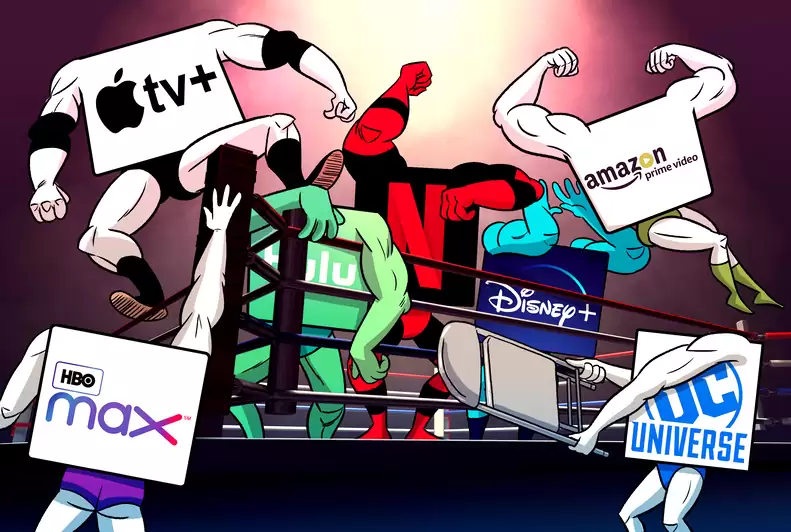
DCEU is not just the issue here. Marvel is just as guilty. Disney+ are having a field day with all of the content that is being released onto their platform. Especially with the agenda being pushed that all projects are linked; therefore, audiences must watch them all. However, due to popular belief, this is not required. An example being the poorly received She-Hulk. Audiences, to summarise, had strong opinions about She-Hulk. Forbes stated “She-Hulk is getting review bombed even harder than Ms Marvel”. The percentage of one-star reviews was 35.8% compared to Loki, which had a 1.5% number of one-star reviews. So, did Marvel announce a break from releasing projects after this? Of course not! Instead, they immediately released Ant-Man and the Wasp: Quantumania and Guardians of the Galaxy Vol. 3. The former receiving poor reviews and the latter being received well by audiences, classing it as the return of Marvel. And to add insult to injury, Marvel have announced that after Secret Wars, they are restarting the Marvel Cinematic Universe (MCU). Because the 37 films are not enough. I love superhero movies and TV, but until there is a strong consistency, there is no rhyme or reason as to making more—well, besides money.
As much as Marvel and DC can be targeted and ripped apart all day, let’s not hide from the world of horror. As of October, there are nine Texas Chainsaw Massacre, nine A Nightmare on Elm Street and six Scream films. All of these series have more films in the works: A Nightmare on Elm Street being released in December 2026, Scream 7 being released in September 2026 and a new film is in the works to add to the Friday the 13th franchise. The irony being that the original Scream was meant to be a satire of horror and the genre’s clichés—now, nearly 30 years later, the franchise’s diminishing returns seem to be the punchline in and of itself.
On TV, the quality is not much better. The world of television seems to either rely on reboots of classic programmes from the 20th century and the early 2000s or repetitive shows where the audience can easily guess the “twist” before the twist is even presented. Examples of revivals include Frasier, King of the Hill and Will & Grace. Due to these reboots, audiences would rather watch something that holds nostalgia rather than watch something new as these shows hold a place in many people’s hearts. As a result, new shows suffer a decline in viewership and a lack of funding, causing no reason to produce future series. Because why try to watch something new when you can watch a reboot of a show that was aired when you were younger? In addition, with rumours that reboots of The Inbetweeners and the American version of The Office are in the works, there is no stopping the rapid fire of these shows now.
Then there is the non-stop world of reality TV. This genre of garbage is slowly starting to age like milk with shows such as The Only Way Is Essex and Made in Chelsea, which when put together has produced a huge 65 series. Is there anything wrong with reality TV? No, of course not, but surely when the audience has seen a couple of series a show like this, it should call it quits. Apparently not, as The Only Way Is Essex have some of the highest paid reality stars on their payroll, from £50–£350 per episode, whilst some have been reported to earn £450. These numbers may not sound very high, but when looking at how many episodes have been made, it all adds up. In addition, this then leads a pathway to go onto shows like Strictly Come Dancing and I’m a Celebrity… Get Me Out of Here!, which have been floundering on for a combination of 43 years. Which is incredible considering how hard it is for shows to get past airing one series nowadays.
Ultimately, this shows the decline of cinema and TV. With the entertainment industry struggling to keep up with the demand for different genres of TV and film, the result has landed us here. In a world where, no matter if you are at home watching your preferred streaming service or paying £15 to see a film at the cinema, audiences will be served slop. Even though amongst all of this doom and gloom there are still some gems out there, with Stranger Things captivating audiences to The Social Network showing the impact of greed, betrayal and social media’s impact on in-person relationships. Whilst repetition and lack of quality will always haunt us, there are always going to be those classics that make audiences come back for more.