
Silvia Park’s debut novel looks like a cautionary tale about ai, but at its core is inherently human.
I was initially very surprised to learn that Korean author Silvia Park’s debut novel Luminous was initially intended to be a children’s book. Most children’s books do not feature intimate scenes between police officers and robots in a bar toilet or many of the adult themes that this novel discusses. The book clearly grew up as Park edited and added to it over a period of six years. This contrasts with many of its characters, who are either unable to entirely leave their childhood or are determined to never entirely leave their past behind.
The story is set at an unspecified future time where North and South Korea are united as a single country and largely sentient robots have been integrated into every part of day-to-day life. While this may make the novel seem like a warning about a potential future where society is dependent on artificial intelligence, the author has revealed that this was not the case. In an interview with The Nod magazine in June 2025, Park explained that they first started writing Luminous in 2019, several years before AI language learning models became commonly used, and “didn’t intend Luminous to be timely”. The robotic world is instead used as a vehicle to explore the human themes of — family, terminal illness and the struggles of coming of age — none of which depend on the novel’s futuristic setting.
The book’s more mature plotline, which Park added later in the writing process, is a story about three siblings. These are Morgan, a human woman, Jun, a cyborg man who lost 78% of his human body while serving in the military and lives on through a vast array of mechanical parts, and their robotic “older brother” Yoyo, who was sold to the military while Morgan and Jun were children. Morgan and Jun are instantly believable as a pair of bickering siblings, and rail against each other throughout the novel while failing to healthily process their shared grief. The lesson from this story — that grief can separate us from the people we need most — could be written as part of the story of any familial passing, either human or robotic.
Both siblings are shown to be clinging to their lost childhood with Yoyo in their own individual ways. It is revealed that Jun is recovering from an addiction to virtual reality experiences, having spent several years preferring to live in his own fantasy worlds than the real one. Meanwhile, Morgan works as part of a robotics team designing a robot with Yoyo’s exact name and likeness. The reader later learns that Morgan and Jun’s father Yosep named Yoyo after his own late older brother Yohan. Throughout this storyline, the robots are used as a physical representation of a generational trauma caused by the childhood loss of a sibling, which, by the novel’s conclusion, is being sold and distributed to the general public. The novel’s final statement that “When a firefly dies, they can send out a signal even after they’re gone” speaks to the notion that trauma, when not properly addressed, can spread throughout a family and a society, long after its initial cause.
Luminous’s original plotline, aimed at readers of young adult fiction, later morphed into the novel’s other main story where Yoyo befriends a terminally ill 11-year-old girl named Rujie. The set-up of this plotline and its themes of — class, childhood illness and the friendship between human and robot — is strikingly similar to that of the central characters in Kazuo Ishiguro’s Klara and the Sun (2021). While these similarities are entirely incidental — Luminous was largely written during the height of the COVID-19 pandemic, before Klara and the Sun was published — a comparison of the two novels’ endings highlights their differing central focuses. Ishiguro’s climax showcases the lengths that a robot will go to in order to help their assigned human, showing the kind of love and loyalty that some of the characters doubted that robots were capable of. Contrastingly, Park concludes by having the “body” of a robot die, but its consciousness survives. This acts as a metaphor for how figures and events from the past may never truly stop influencing the present. This further showcases how Park’s robots exist primarily to impact their human characters, rather than as characters whose nature the novel is written to explore.
A key motif throughout Luminous is the idea that robots do not age. Robots which are designed in the image of human children are described as being “forever ten” or “forever 12” while Morgan laments the fact that her robotic partner will physically remain 28 years old while she ages naturally. The absence of biological ageing from the life of a robot is mirrored by the persistent emotional immaturity of the novel’s protagonists, who are unable to outgrow their father’s influence. Jun lives in his childhood home, while Morgan replicates their father’s work.
Rujie’s story mirrors the timelessness of the robots even more directly. By the novel’s conclusion, she has accepted that she will die before reaching adulthood and feels a kinship with the “forever 12” Yoyo that she cannot share with her human friends who will all go on to live adult lives.
Several of the novel’s adult characters make disparaging references to “robot kids” who have grown up with this society’s contemporary technology and struggle to adjust to lives without it. This clearly evokes many of the fears of our own world — that society will become overly dependent on technology and artificial intelligence, ultimately leaving it vulnerable to the social and environmental costs of AI’s repeated use.
The desire, and ability, of characters to obsess over their past will also seem familiar to many readers. The online trend of sharing images of 2016 ten years later as a means of immersing oneself in what may feel like a simpler or more enjoyable time has dominated the internet in the early weeks of 2026. This has only been made possible by advances in technology which allow for more of the past to be preserved and contrasted with the present. It has never been easier for people in either our world, or the world of Luminous, to live in the past.
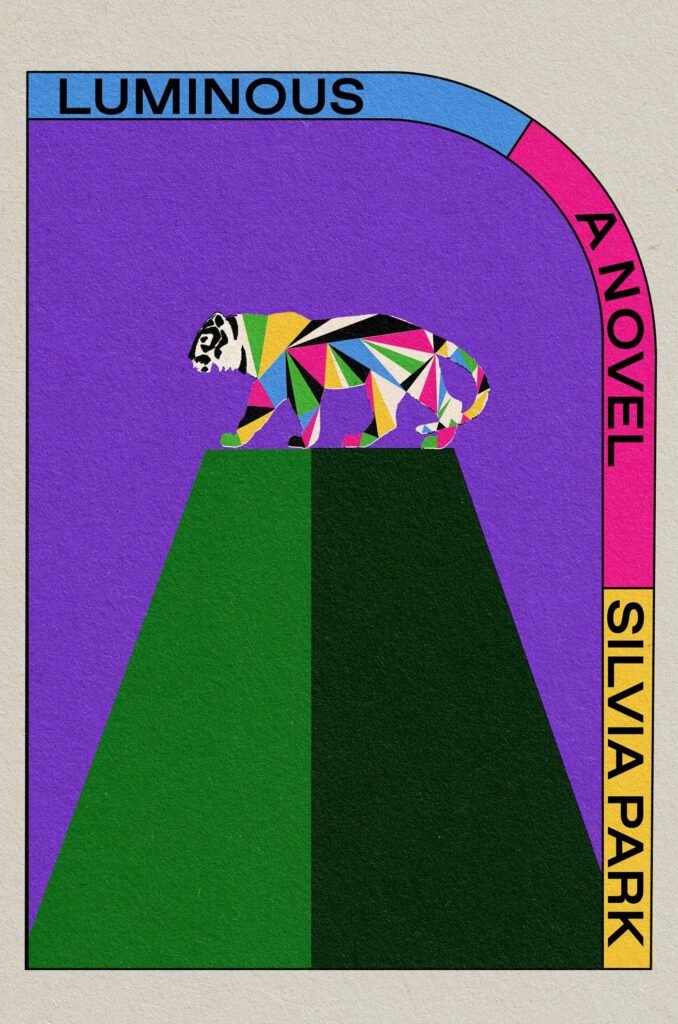
Luminous was not written to discuss the potential future of language learning models but has become incidentally relevant to one of the most discussed contemporary issues. Its more deliberate themes of family, grief and human mortality are, however, timeless. When discussing the novel’s cover art (its title written many times, one on top of the other), Park said that their book “has a lot of layers; each reader will take something very different from it”. Luminous may seem to be a novel about artificial intelligence but could appear completely different in the context of our own world’s future.