
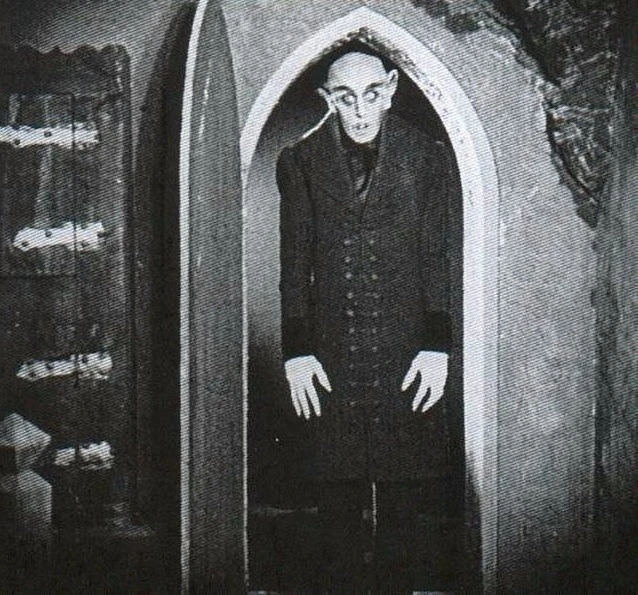
Cinematographers and film lovers alike seem to have developed a gothic appetite. Guillermo del Toro’s new adaptation of Mary Shelley’s iconic novel, Frankenstein, gained quite a lot of friction online and has been acclaimed by audiences and critics alike. The movie seems to be a part of a wider cinematographical tendency which leans towards the gothic. Some of many other examples include Eggers’s Nosferatu, his new upcoming release Werwulf, Besson’s Dracula: A Love Tale, Coogler’s Sinners — the list goes on.
Many widely acclaimed filmmakers are becoming preoccupied with vampires, monsters and other forms of horror and, if one considers the plethora of content that these have sparked on social media, the audiences seem to be loving it.
But that bodes a question, namely: why is gothic fiction returning?
Most would agree that these haunting stories have something in common, but what does “gothic” really mean? Here the work of Angela Wright, a professor of romantic literature, will be of great aid. As a literary genre it has attracted much critical appetite ever since its beginnings in the 1760s, as many view Walpole’s The Castle of Otranto as the first, or at least one of many firsts, examples of gothic fiction.
However, the attachment of the term “gothic” to a literary genre only took place in the 18th Century. The earlier uses of the term seem to be either alluding to a Germanic tribe or a style of architecture. Starting with the former, the term was used to refer to a specific tribe, the Visigoths, which invaded and defeated the Roman Empire. In this context, “gothic” was frequently used as a juxtaposition to the Roman or classical; therefore, it functioned as a synonym for barbaric. This rather negative connotation shifted in the 18th Century when “Gothic” enjoyed a far more positive revival. It started to allude to the more general aesthetic of medieval chivalry, and one of the ways in which the term gained a much more favourable reputation was through architecture — the style of which often appeared in gothic novels of the 18th and 19th centuries.
When it comes to literature, gothic is often used to describe an aesthetic of fear and haunting. Such works are often set in castles or old mansions; there’s a dark atmosphere, combined with a metonymy of horror, mixed with supernatural or inexplicable events. Interestingly enough, within most gothic stories there is a female character that is in distress, mostly due to a presence of a tyrannical male or more abstract being that stands to represent this oppression.
Later on, gothic fictions became a medium for the expression of a wider variety of concerns. According to Melissa Gronlund, author of the article “Return of the Gothic: Digital Anxiety in the Domestic Sphere”, gothic fiction became a nexus for a wide variety of anxieties, especially fear of the rapid modernisation of daily life. Telegraph lines, telephones and electric machines were viewed with suspicion, with many people reporting experiences of the supernatural, such as ghost sightings along the telegraph lines. Overall, the gothic is always a confrontation of the old and the new, with a preference for the former out of distrust and fear.
Since gothic fictions have always functioned as a metaphorical plane for representing oppression, as well as voicing anxieties — what can the gothic fictions of today tell us about our greatest fears? Although each of these gothic fictions can be read to reflect specific societal anxieties, in this article I want to focus on Guillermo del Toro’s most recent film.
Del Toro’s approach to the original text is quite original, with many arguing that it captures the “spirit” of Shelley’s novel much better than earlier adaptations. Within the popular imagination, Frankenstein’s creature resembles the way in which it was portrayed in the 1930s much more than Shelley’s original work. Whilst imagining Frankenstein (as the name of the creator and the creature is often confused), many picture a green, uncommunicative and unintelligent creature with screws on its neck. Many earlier adaptations also added quite an important aspect which raised conversations around nature vs nurture, as the creature’s brain was supposed to be derived from a criminal, therefore suggesting that it was inherently evil in some sense.
Del Toro’s approach is radically different. He gives a voice to the creature, allowing him to tell his own story. Moreover, Frankenstein’s creation is naturally completely benevolent, and even accepted by animals despite being feared by humans. The creature is portrayed as a blank slate which only becomes malicious once subjected to human cruelty. In one of the scenes, Will says to Victor Frankenstein: “You are the monster”. Indeed, del Toro’s adaptation functions as a constant negotiation of what makes a monster and what makes a human.
Nowadays, it seems as though our society is collectively role-playing as Frankenstein. While developing new AI models, creating public personas such as Tilly Norwood and many people falling in love with ChatGPT, the boundaries of what it means to be human, or more generally alive, seem to keep being challenged.
Although AI usage has completely seeped into everyday life — whether one desires it or not — many people do not actually understand this fairly new technology. This has pushed many AI experts to express apprehension over how freely it has been incorporated into everyday life, as well as how recklessly many companies are pushing for further advancements in the field with no ethical considerations in sight.
Opening any kind of social media platform feels like entering a collective psychosis. Especially with the emergence of Meta’s Nano Banana Pro, it is no longer as trivial of a task to differentiate between reality and AI content, even for generations which grew up “being online”. Consequently, we all seem preoccupied with trying to ascertain whether something is real or AI, and the difficulty level keeps increasing. And let’s be honest, who has never fallen for these fake videos?
Although seeing AI-generated pictures may be uncanny, the true danger lies in the development of autonomous AI systems, especially those which directly impact human lives — such as self-driving cars or systems used in medical care. Just a few months ago, a college undergraduate in Texas committed suicide after being encouraged to do so by ChatGPT.
Mary Shelley’s 1816 tale on the consequences of unchecked ambition and playing god remains more relevant than ever. In the preface to the 1831 edition of Frankenstein, Mary Shelley wrote: “Frightful must it be, for supremely frightful would be the effect of any human endeavour to mock the stupendous mechanism of the Creator of the world”. Although mentioning the “Creator”, this sentiment is not only relevant for those who are religious, but rather speaks to the dangers of boundless hubris and creating life without accountability or ethical considerations.
An article titled “Artificial Intelligence and Mary Shelley’s Frankenstein: A Comparative Analysis of Creation, Morality and Responsibility” points out an important point that many AI ethicists raise: “If we design thinking machines that emulate human cognitive and emotional processes, do we not have a responsibility to ensure that they behave morally when making decisions?” We need to even consider our language here and how that misplaces agency. “ChatGPT this… ChatGPT that…” ChatGPT only does what it’s been programmed to do; it replicates and does not create; it is not the AI model that is “evil”, it is its creator.
My theory is that the return of gothic fiction can be seen to serve the same purpose it has been since the 18th Century — to express our anxiety. Because it is this fascination with those human-like yet entirely different and incomprehensible monsters, even those created by us, that is more relevant now than ever. In an age where what it means to be a sentient being, what it means to feel, what it means to be human, is pushed to its absolute limits.
What makes del Toro’s take truly special is the fact that he highlights what we often forget: the machine is not to blame, its creator is. At the end of the day, Frankenstein is a surviving negotiation of what it means to be human. This gothic fascination and del Toro’s new creation leaves us with a few important considerations: what makes a monster and what makes a human? And at the end of the day, who is the true monster of the tale?