
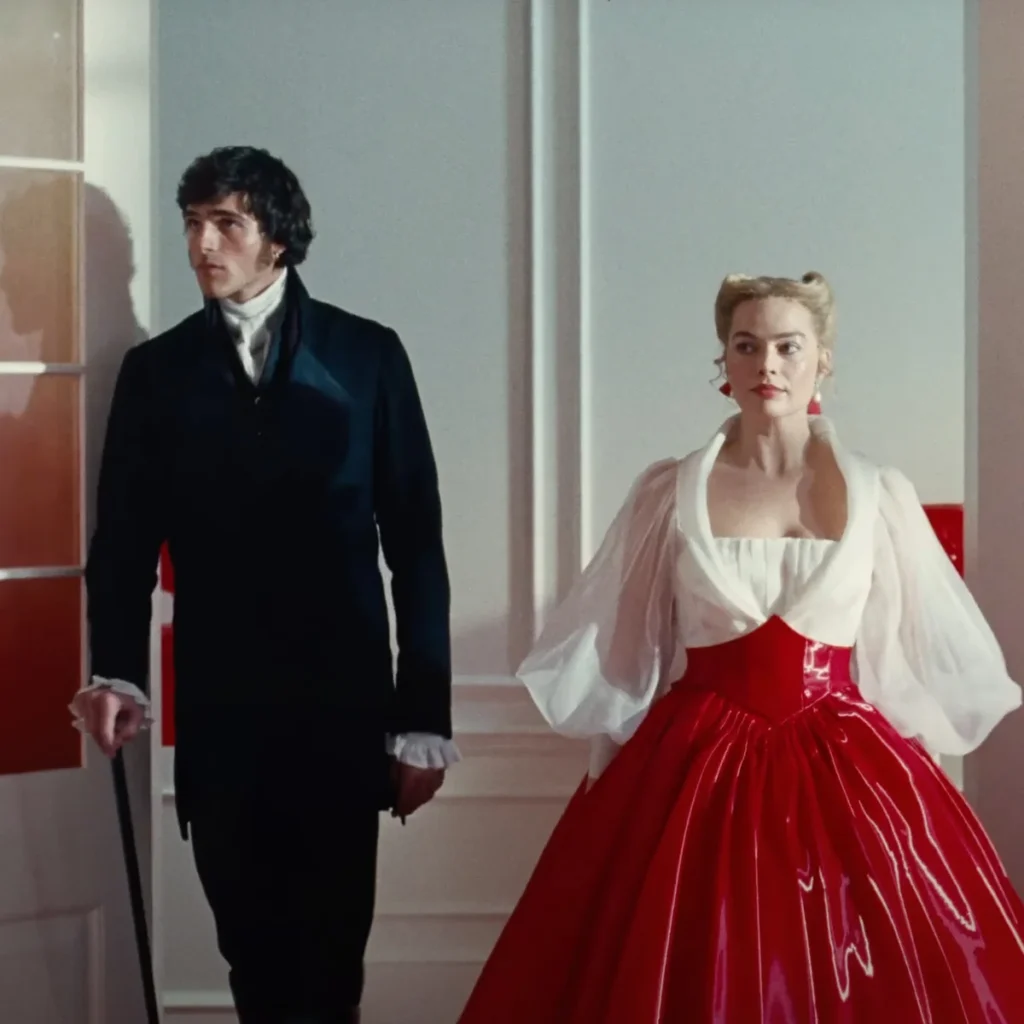
Book adaptations have always divided opinion, especially with texts as well-loved and hotly debated as Emily Brontë’s masterpiece, Wuthering Heights. Over the years the classic tale of the tempestuous relationship between Heathcliff and Catherine has seen countless film, TV and theatre incarnations, and has even been immortalised in song by the inimitable Kate Bush.
Unsurprisingly, the critics’ knives were out for Emerald Fennell’s 2026 version long before its 14 February 2026 premiere. The film, which stars Margot Robbie and Jacob Elordi as the ill-fated lovers at the heart of the story, has received mixed reviews at best — while the BBC’s Caryn James deemed it ‘bold, artful… utterly absorbing,’ the Guardian’s Peter Bradshaw called it an ‘emotionally hollow, bodice-ripping misfire’ and the Atlantic’s Sophie Gilbert a ‘poppy, gooey, thuddingly literal work of sexy fan fiction.’
I am no purist, and was willing to accept some deviations from the source material to furnish Fennell’s creative vision. Whitewashing Heathcliff, lopping the book’s second half, having the pair consummate their relationship — all could be justified provided the bewitching, brutal essence of the novel was retained. However, for me, I think the biggest disappointment about the film was that, despite claims of its being ‘bold and provocative,’ many of the elements that make Brontë’s work shocking and unsettling were omitted.
The trailer describes it as ‘the greatest love story of all time,’ but I believe understanding Wuthering Heights as a love story at all is only partially accurate. This is a book about love, but it is also about jealousy, betrayal, class conflict, generational trauma, insanity and death. The reimagining of the monstrously cruel Heathcliff as a sulky, brooding lust object left me — Darcy-esque wet shirt or not — particularly cold.
It’s not an easy read. When the book was first published in 1847, under the pseudonym Ellis Bell, early reviews were mixed, due in part to its confusing narrative structure as well as the harrowing themes within. The story is told second, and at times even third hand, which takes concentration and commitment to follow, as can the intricacies of the family trees, and some of the language and dialect might perturb modern audiences.
But those who persevere regardless are richly rewarded with a gothic masterpiece as powerful, provocative and charged with furious passion now as it was when it was first written. The underlying themes of class struggle and domestic servitude feel particularly relevant in an age where, despite progress, we remain bitterly divided by status and social standing. It is as much about dominance and control as it is about desire.
The book begins as Mr Lockwood, the new tenant of Thrushcross Grange, pays a visit to his landlord, Heathcliff, one evening at Wuthering Heights, an isolated farmhouse on the Yorkshire moors. When poor weather conditions prevent Lockwood from returning that evening, he is forced to spend the night. Happening upon the diaries of his room’s former occupant, the teenage Catherine Earnshaw, he fitfully dreams of her ghost rattling at the window. His shouts wake Heathcliff, who, to his surprise, falls to the floor in anguish, beseeching the spectre to return.
On the 30th of October, upon returning to Thrushcross Grange, Lockwood falls ill and is waited upon by the housekeeper, Ellen ‘Nelly’ Dean. Lockwood entreats her to tell him more about his troubled landlord and the identity of the mysterious Catherine. Taking over the narrative, Nelly recalls the events of some thirty years ago, when the kindly Mr Earnshaw, father to a then six-year-old Catherine and her older brother Hindley, returns home from a business trip with an infant orphan of uncertain ethnicity, whom he names Heathcliff.
The two younger children become inseparable despite Hindley’s jealousy of and cruelty towards Heathcliff. As they grow older, it is implied they develop a romantic relationship. However, when the children of the wealthy Linton family befriend the Earnshaws, the disparity in social status becomes an insurmountable obstacle. When Catherine comes of age and the Lintons’ son Edgar proposes marriage to her, her decision to choose class over love sends ripple effects through both families and the generations to come. Humiliated, betrayed and seething with jealousy, Heathcliff seeks to exact a terrible revenge.
Wuthering Heights has been studied and celebrated for almost 200 years precisely because its multiple layers invite multiple interpretations. By considering the plot from different perspectives — and recognising that the narrators themselves are fallible and subject to their own biases — it is possible to gain new insights and understandings with each read. Despite Heathcliff’s unhinged behaviour in the second half of the book, it is difficult not to feel sympathy for an orphaned child bullied by his quasi-sibling, cast out as ‘other’ for his ethnicity and unrefined nature. It is also realistic that a young woman in Catherine’s position would choose comfort and stability over an uncertain future with her true love, despite the distress it causes them both. (A book by Effie Fox, Catherine, released on 12 February 2026, retells the story from her point of view.)
I would urge any newcomers to the novel to set aside their preconceptions of Edgar, Catherine and Heathcliff’s torturous triangle and open their minds to an exploration of what love truly means. Is the desire to possess another person a healthy one? Did Catherine love Edgar, or was she merely motivated by the promise of a social upgrade? And can the wrongs of the past be righted in the present, or are they doomed to repeat themselves?
It is regrettable that the latest adaptation has fallen short of delivering the raw power of Brontë’s original. However, it has at least given me an excuse to revisit one of my favourite novels, and I hope it will encourage others to read it for the first time.