









With a Charli XCX DJ remix as its soundtrack, the trailer for the new Wuthering Heights adaptation is capturing a wider Gen Z audience and renewing interest in Emily Brontë’s legendary classic.
Emerald Fennell—best known for directing Saltburn—appears to have carefully assembled the key ingredients for another buzzy release. Margot Robbie Jacob Elordi star, and Fennell’s instantly recognisable production style—her excessively polished, hyper-perfect reality reflected in everything from the characters’ homes to their clothing and even their speech—come together to create a meticulously constructed cinematic world.
But as the trailer continues to flood Instagram and TikTok, clearly aiming to reintroduce the literary classic to younger viewers, controversy over casting choices and plot decisions has already sparked heated debate.
Many are questioning whether this version, even with the artistic freedom inherent in any adaptation, makes sense on its own terms. Viewers remain divided: some find the trailer unintentionally comical, while others argue it risks becoming the worst possible adaptation, potentially undermining Brontë’s legacy and the novel’s core meaning.
For Fennell—whose works lean into glam, dark humor, satire, and artifice—Wuthering Heights is no exception. She has never claimed the film would be an accurate depiction of the book. Instead, her adaptation’s central idea lies in its focus on character development and interiority, expressed through behavioral storytelling. Unlike the novel, where physical description is key to reader understanding, the film shifts attention away from appearance and toward emotional and psychological interpretation.
Although Fennell places her characters’ emotions at the center, she does not disregard visuals. Their world is rendered in an exaggerated, fever-dream style, where hysteria mixes with rave-like energy, depicting the characters as prisoners of their own passions.
Notably, despite being English—and therefore uniquely positioned to understand how a contemporary adaptation of an English classic might look—Fennell’s film embraces an experimental, visually bold reimagining unlike anything seen before.
However, in this reimagining, the emphasis on hypersexuality—including latex, gag scenes, and relentless opulence—pushes attention away from Brontë’s themes of love, hatred, and violence, all deeply rooted in late Georgian social injustices such as racism, class inequality, and poverty.
Heathcliff’s original portrayal as a “dark-skinned gypsy,” marked by rough manners and outsider status, sharply contrasts—at least for many Brontë fans and social media viewers—with Jacob Elordi’s polished, refined screen presence. Similarly, Margot Robbie’s glamorous, Barbie-like aesthetic feels far removed from Cathy’s wild, free-spirited nature; in the novel, her dark hair and eyes underscore her untamed character.
Beyond the casting, audiences have also criticized the actors’ Australian accents, particularly their decision not to adopt the original Yorkshire dialect—a choice Fennell defends as artistic freedom.
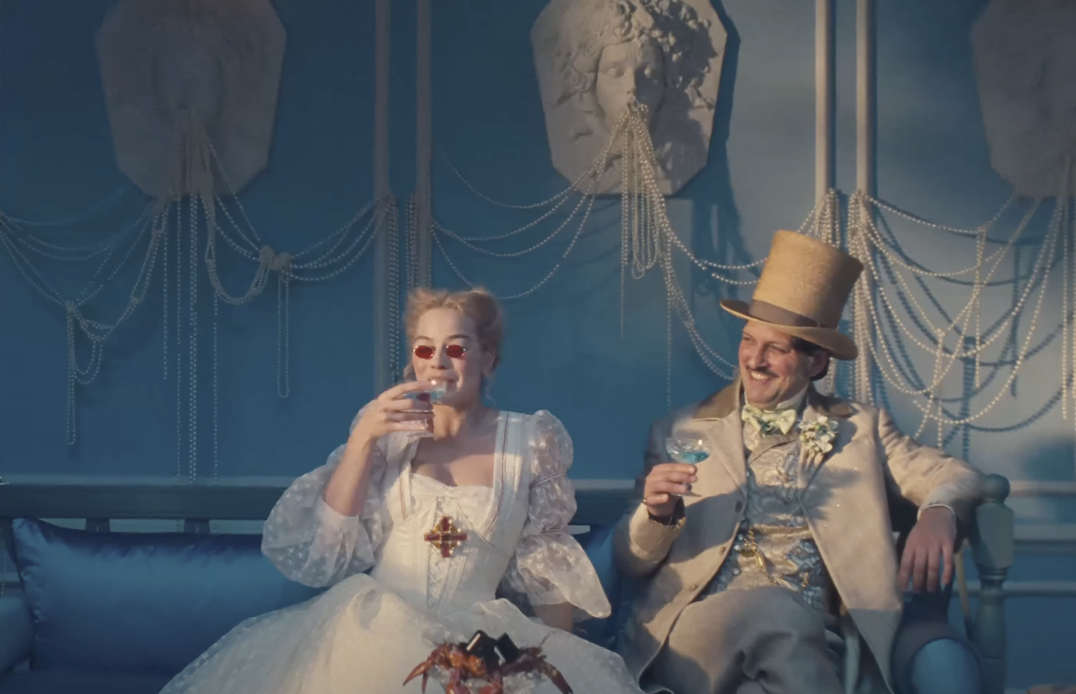
Yet the most striking element of the upcoming film is its lavish exterior design and opulent atmosphere, evoking a Coppola-esque, baroque Marie Antoinette rather than the windswept, rugged moors of Brontë’s world. Fennell replaces the gothic tone that underpins Wuthering Heights with puffy pink cakes, champagne, dollhouse interiors, and crinoline dresses for Cathy, offering only brief glimpses of the bleak English moors that defined the original novel.
Unquestionably, this mash-up adaptation has sparked strong reactions and divided opinions even before its release—a rare feat in today’s film landscape. And the controversy, rather than harming the project, seems only to fuel curiosity.
Experimenting with a work so tied to its original form is always risky, often unsettling, and demands a strong guiding vision from the creator. So far, Fennell’s passionately debated adaptation appears to be managing this delicate balance, captivating audiences at first glance—despite, and perhaps because of, its oddness.