












Since I’m fairly new to Berlin, I start each month by browsing through the holy trinity — The Berliner, Visit Berlin Blog and Berlin.de (the official website of Berlin), looking for events, festivals and exhibitions that I may wish to attend.
Given that the month of February is largely defined by Valentine’s Day, this month’s selection did not look too promising at first glance. That is of course aside from various film festivals, but even a newbie such as myself doesn’t need to be notified that the next edition of Berlinale is approaching.
I was on the brink of giving up when I saw the new exhibition at the Gemäldegalerie (painting gallery) called Gallery looks. The description promised an exploration of the interface between art and couture — which was convincing enough for me to book the tickets for the next day. Although it certainly looked interesting, I never anticipated the impression it left on me.
To provide some context to this exhibition, the Gemäldegalerie served as an inspiration for the new creative director of Dior, Jonathan Anderson’s Summer 2026 collection. The designer considered the gallery, as well as its collection, one of the most impressive museum spaces he ever visited. The collection was unveiled at the Hôtel National des Invalides in Paris, where he had a backdrop erected to imitate the halls of Berlin’s gallery, marking the role which that space took in his creative process.
Anderson’s first and highly anticipated collection seems to have been a great success. Taking inspiration from 17th–19th Century fashion, much like Christian Dior, the designer gave the garments a modern spin. It functioned as a perfect combination of a preservation of his predecessor’s legacy as well as innovation. Vogue characterised Anderson’s collection as an oscillation between tradition and innovation, as the designer “takes a step into the past to look at the future”.
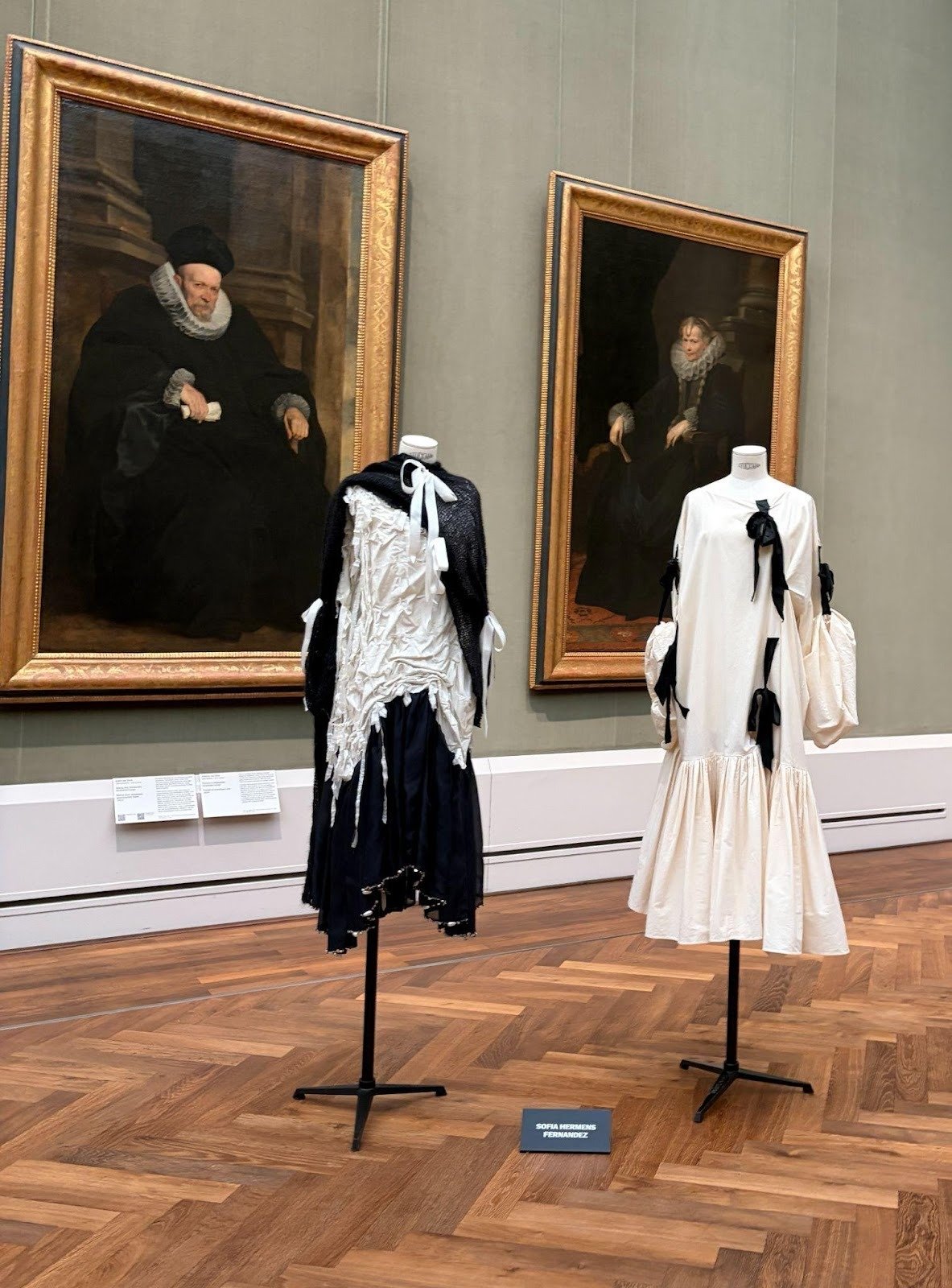
To mark the tenth anniversary of the Berliner Salon in February 2025, 55 designers presented contemporary German fashion designs among paintings by the Old Masters at the Gemäldegalerie. Preceding the opening, a photographer, Ralph Mecke, staged selected designs within the gallery’s halls and alongside its collection.
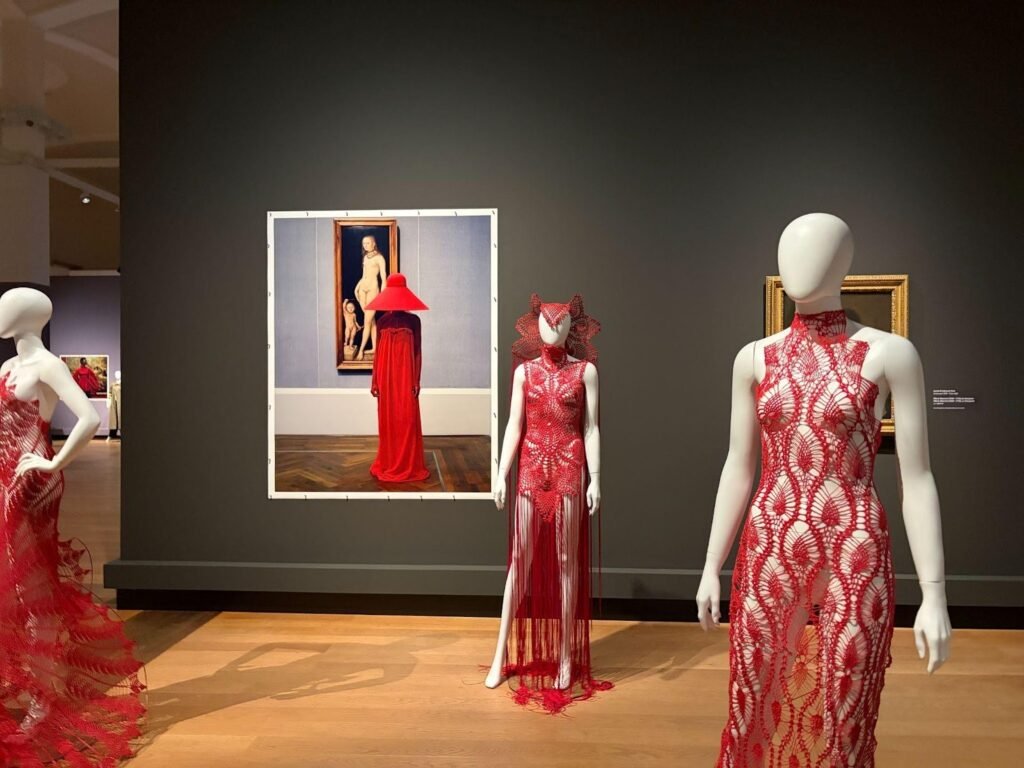
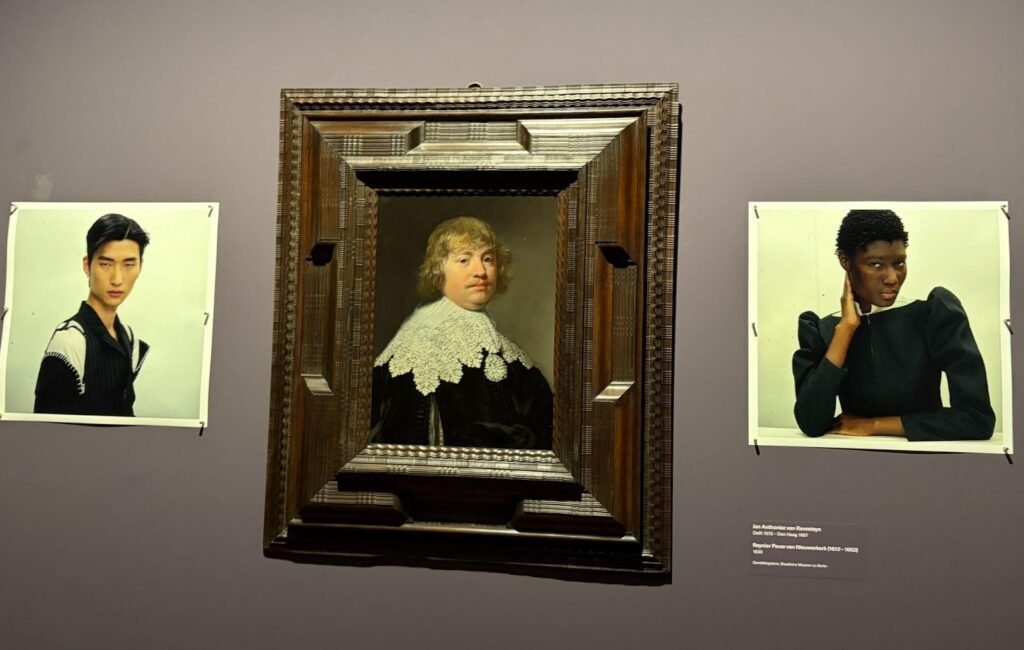
For this exhibition, designers such as Anne Bernecker, Plaid-à-Porter / Estelle Adeline Trasoglu, Karen Jessen and Alexander Gigl were asked to supply new or existing designs that interacted with/were inspired by the paintings within the gallery’s collection.
Stepping into the exhibition, visitors are greeted by the sounds of classical music. The designs and photographs are displayed alongside artworks by Old Masters, as well as recorded highlights of the Dior Summer 2026 show and the cinematographic rendition of the shoot which took place in the gallery last February. Visitors can admire the way in which many of the displayed designs interact with classical paintings and appreciate the collision of modernity and tradition. The first room weaves in different mediums and forms of expression — not only engaging the senses, but also illustrating the parallels between different art forms, such as photographs, paintings, recordings and fashion.
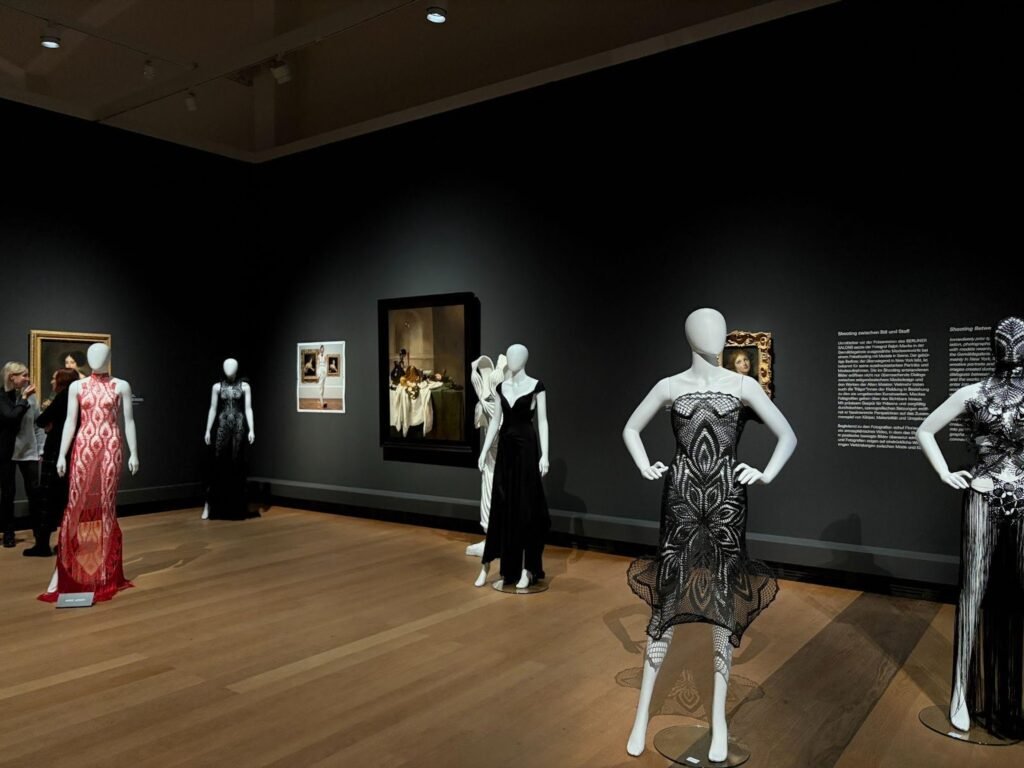
If the first room illustrated the confrontation of the present and the past, the second section titled: FASHION X CRAFT: Echoes of tomorrow, feels like stepping into the future. Here fashion is presented as a form of craftsmanship, and the collection asks important questions about what will become of this essentially analogue craft in the age of increased digitalisation of life.
These designs feel less neo-classical and more futuristic, although being strongly rooted in traditional techniques such as weaving. Traditional patterns and techniques are given a modern spin, and displayed on undeniably modern silhouettes.
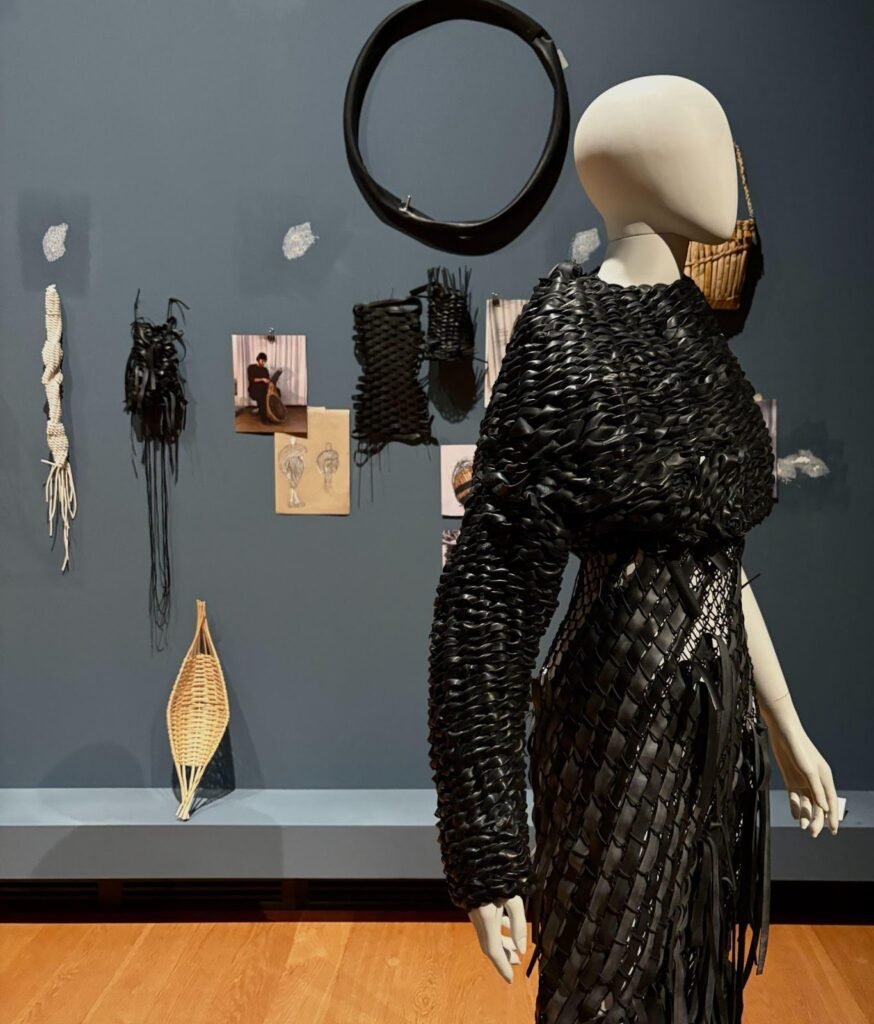
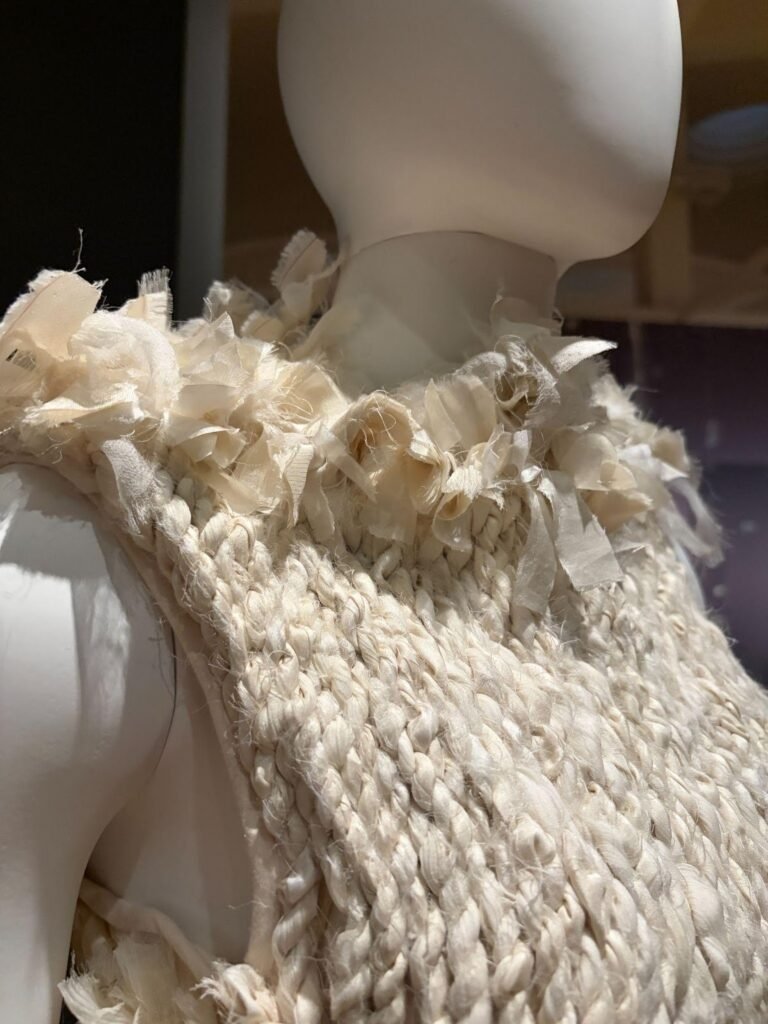
Other than being able to appreciate the designs up close, visitors can join the designers in their creative process. Many of the designs are accompanied by various sketches, pictures and post-it notes, as well as the first tentative attempts. This touch not only humanises the process, but makes the pieces feel more personal, and arguably, adds a level of depth to the way in which they are viewed and understood.
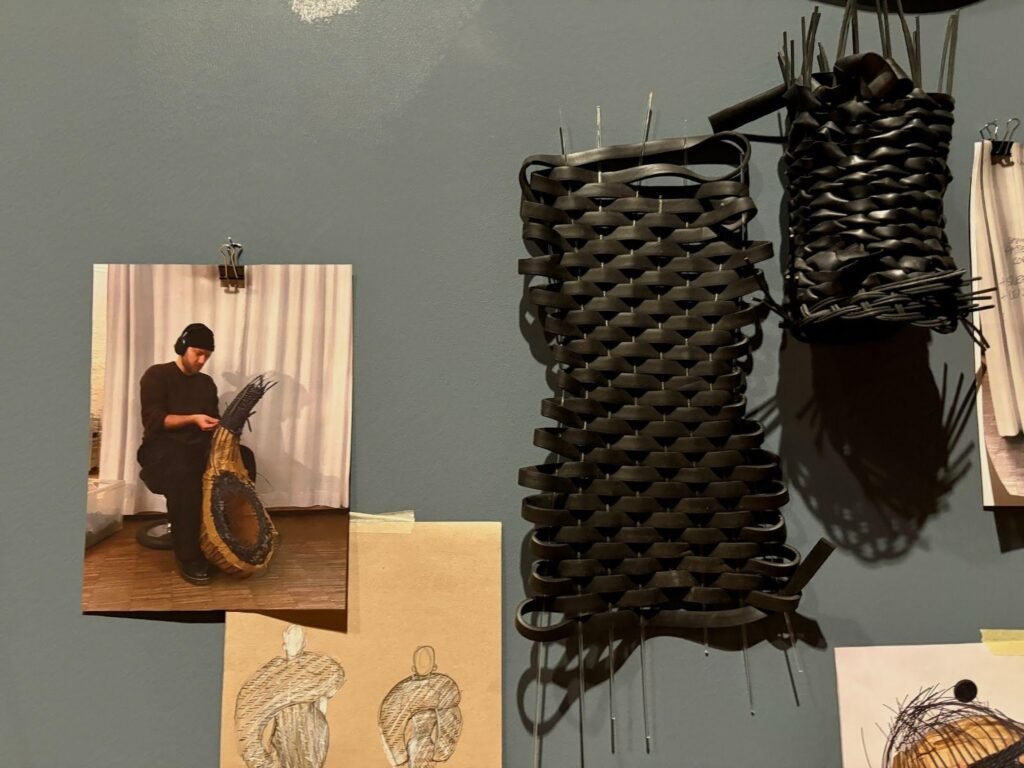
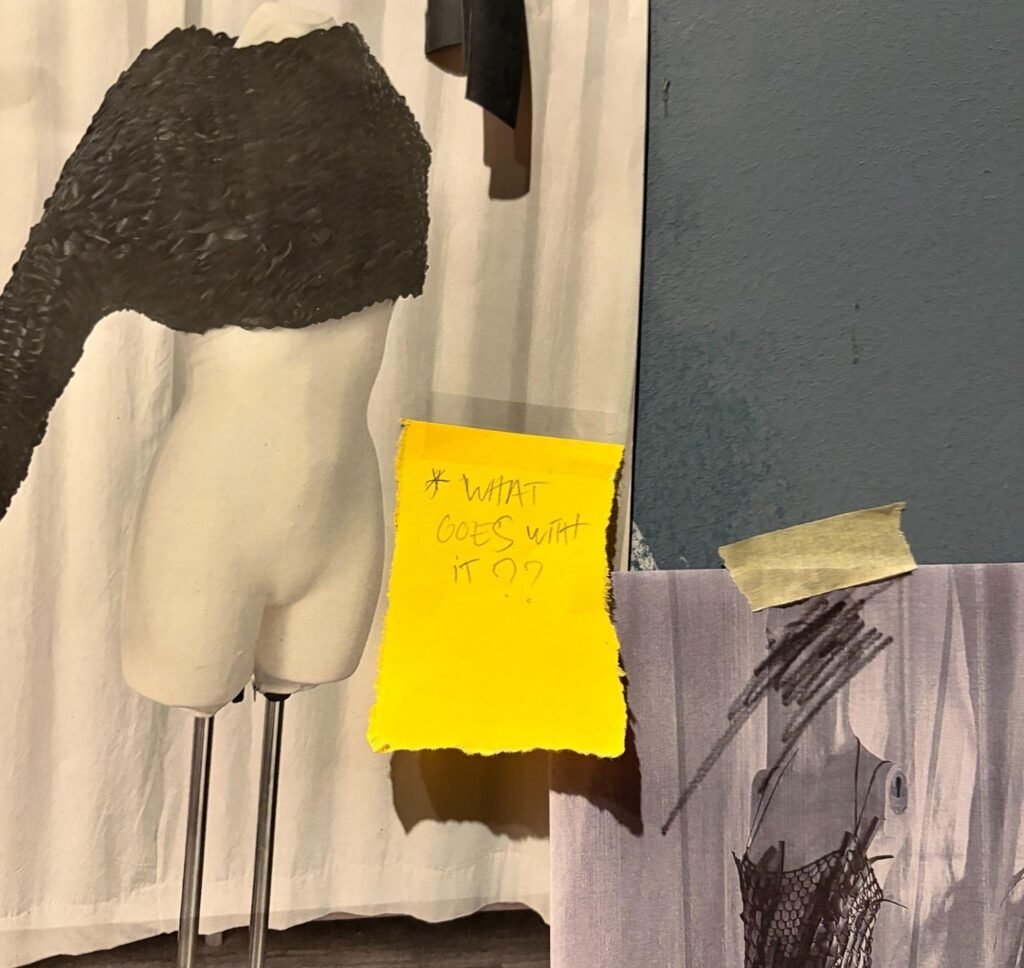
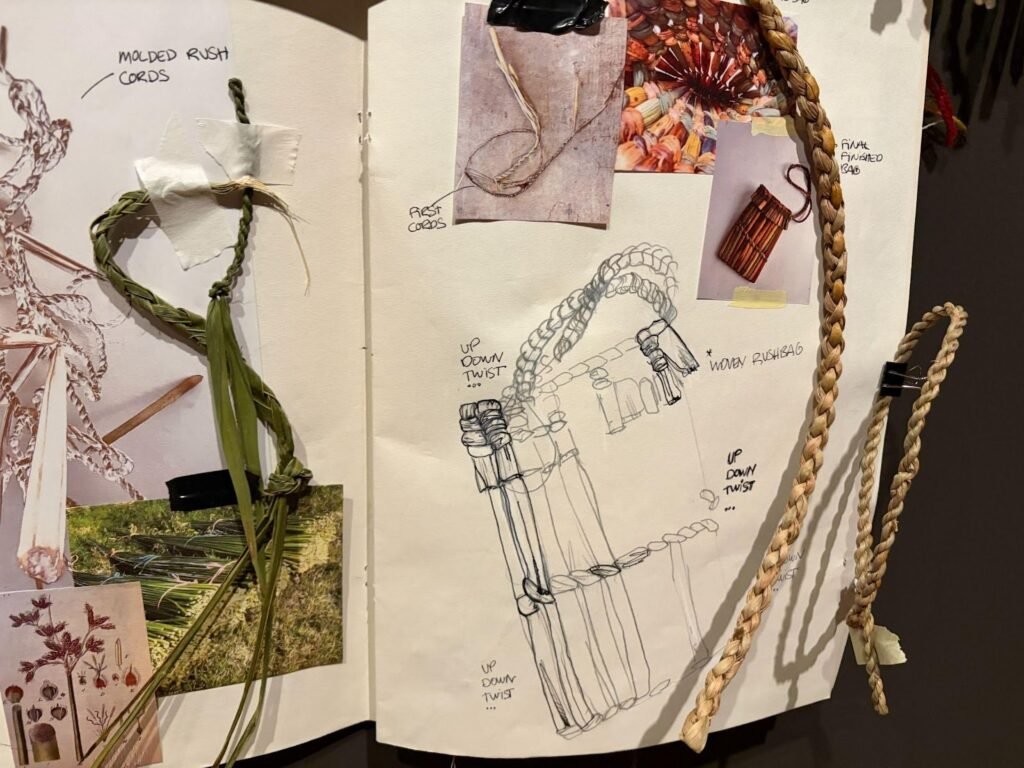
In the following parts of the exhibition, visitors can admire paintings which are part of the gallery’s permanent collection, as well as the way in which they inspired fashion. Black modern garments are placed side by side next to paintings of nobility, and futuristic designs cut from metal are presented in front of paintings of the Last Judgment.
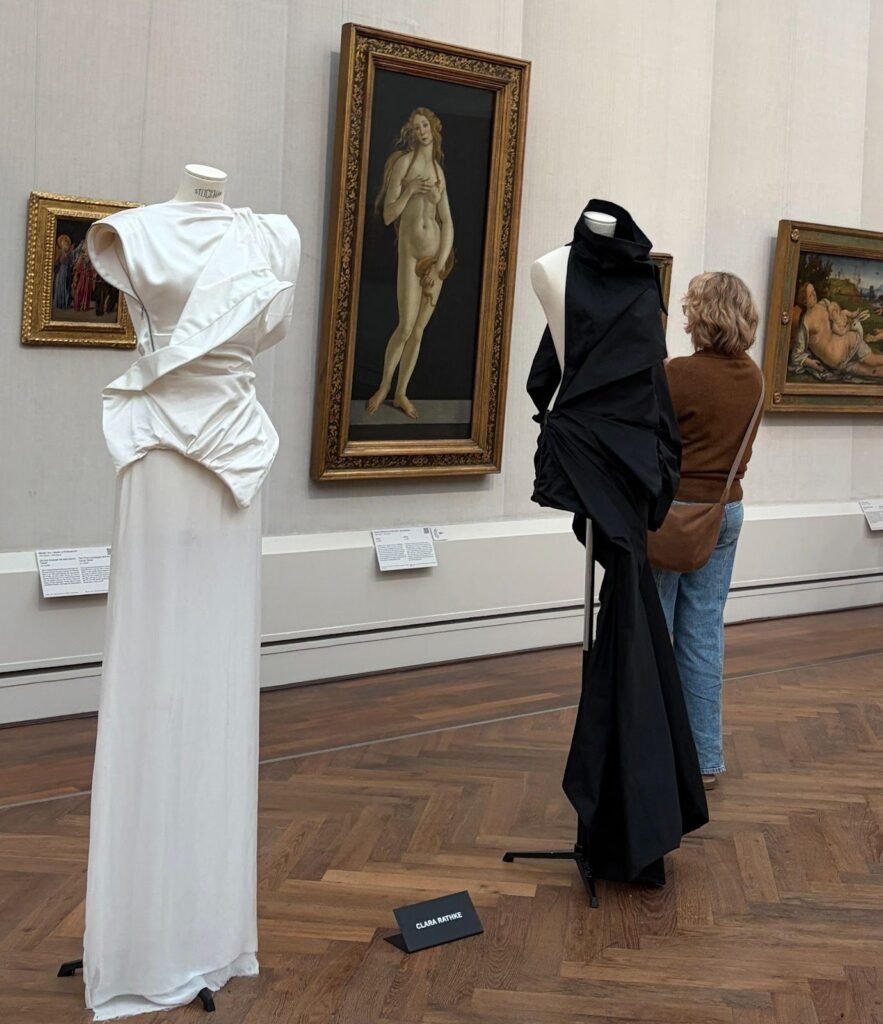
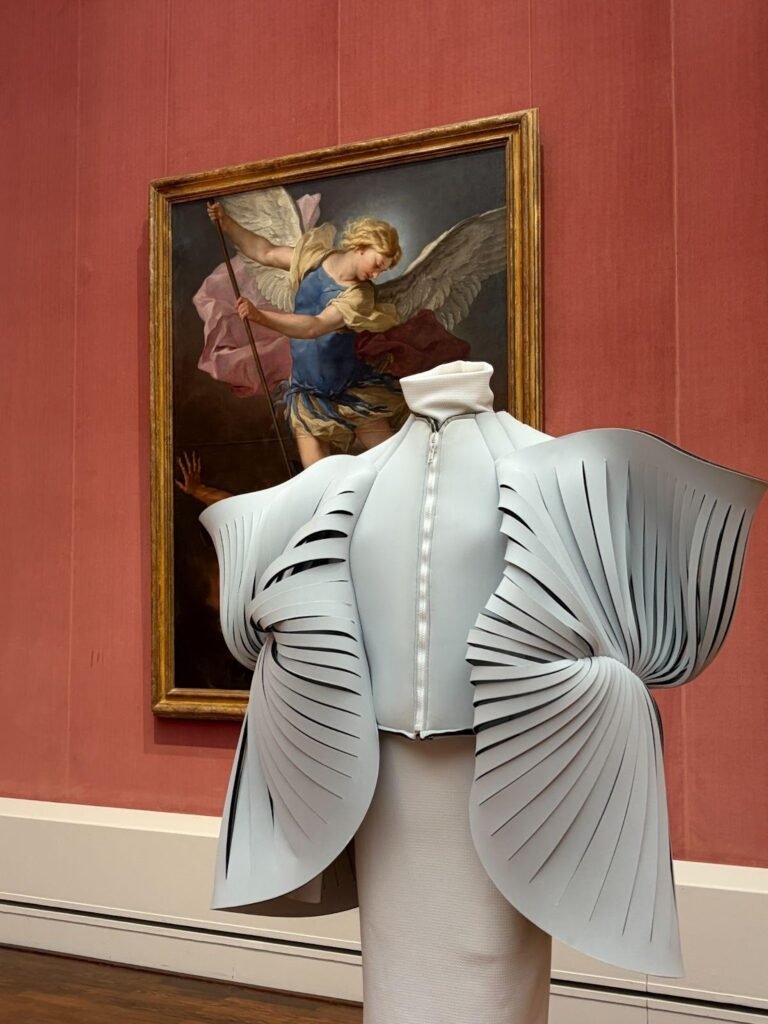
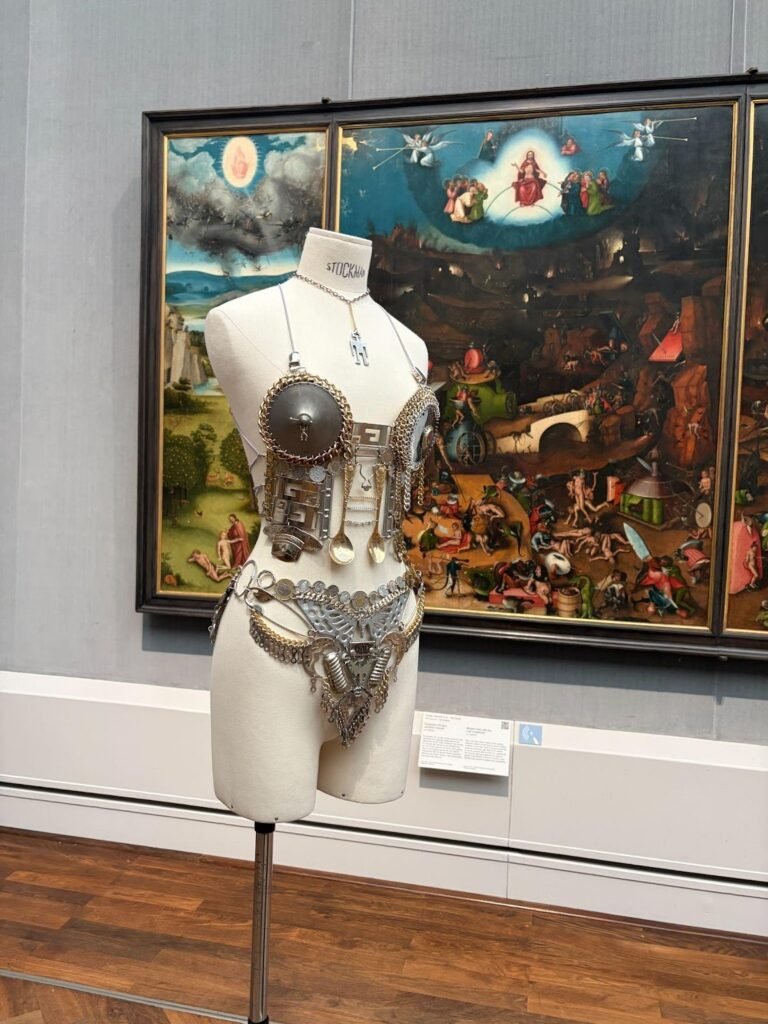
The exhibition represents the surprising influence that the Gemäldegalerie had on the world of fashion. Most importantly, it offers a unique view of fashion as both a craft and an art form. Presenting a glimpse into the world of fashion over the past centuries, the Gallery Looks underscores the continuity within art, and a kind of immortality that such a web of inspiration offers for human creation. Putting modern fashion in a dialogue with old masters reveals interesting parallels between tradition and modernity, as well as fashion and art, ultimately, both are centred around self-expression, identity and representation. Not only does it pay homage to the masterpieces that came before and still sustain their influence and importance, but it also asks questions about the future of fashion, and ultimately, human creation.
For anyone spending time in Berlin, whether newly arrived or long acquainted with the city, Gallery Looks at the Gemäldegalerie is well worth a visit. It offers far more than a conventional fashion exhibition; it creates a thoughtful dialogue between centuries, disciplines and creative minds. The interplay between old paintings and contemporary designs feels both surprising and harmonious, making the exhibition engaging even for visitors who may not usually gravitate towards fashion. It is rare to encounter an exhibition that feels intellectually stimulating, visually striking and emotionally resonant all at once.