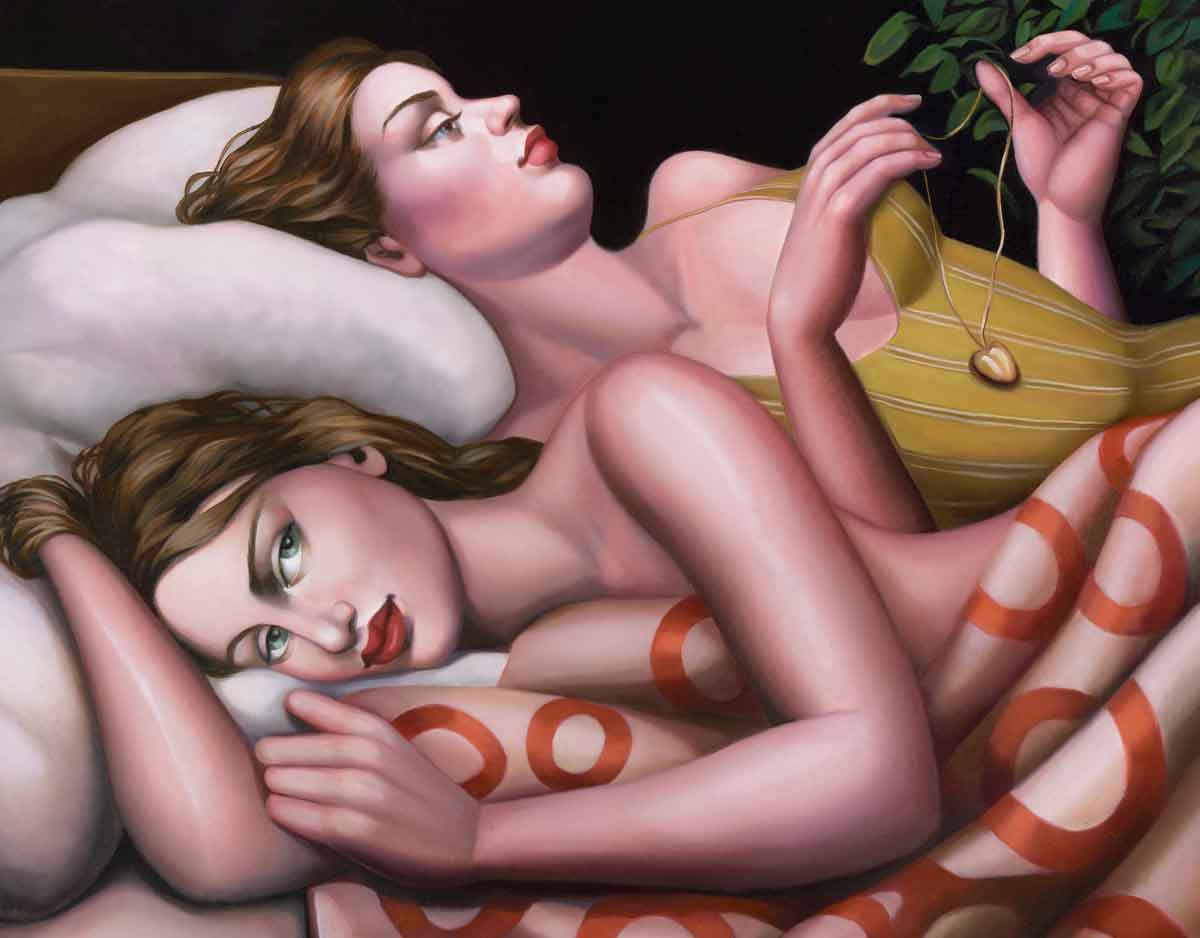

The Binding Lavaliere (2023)
Inspiration often comes from unexpected places. For Rachel Deacon, it was a home extension that sent her artistic practice in an entirely new direction.
When the building work was complete, Rachel was left with a large blank wall that demanded a statement painting. She searched for the right abstract work but found nothing that felt right.
“Everything I looked at was awful,” she says. “It was all too decorative. I wanted something dynamic, with movement and detail.”
So she decided to paint it herself.
Thirty years after graduating from Chelsea School of Art, Rachel had established a successful career as a figurative painter. Her previous exhibitions at the Catto Gallery showcased works filled with narrative, intrigue and drama. Abstract painting presented an entirely different challenge.
“It took months,” she says. “I had to fight to stop real images appearing in the work. It was a struggle. But eventually I kind of ‘moved the tiles around’ and came up with something I liked.”
What began as a single painting soon became something more. Friends responded enthusiastically to the work, and the paintings sold quickly. More importantly, Rachel found herself creatively energised by the new direction.
“It demands a totally different approach from my figurative paintings,” she says. “After thirty years, I know that process inside out. But with the abstract paintings, I have no idea how long a work will take or what direction it will go in. It is really thrilling. It is like I am using a different part of my brain.”
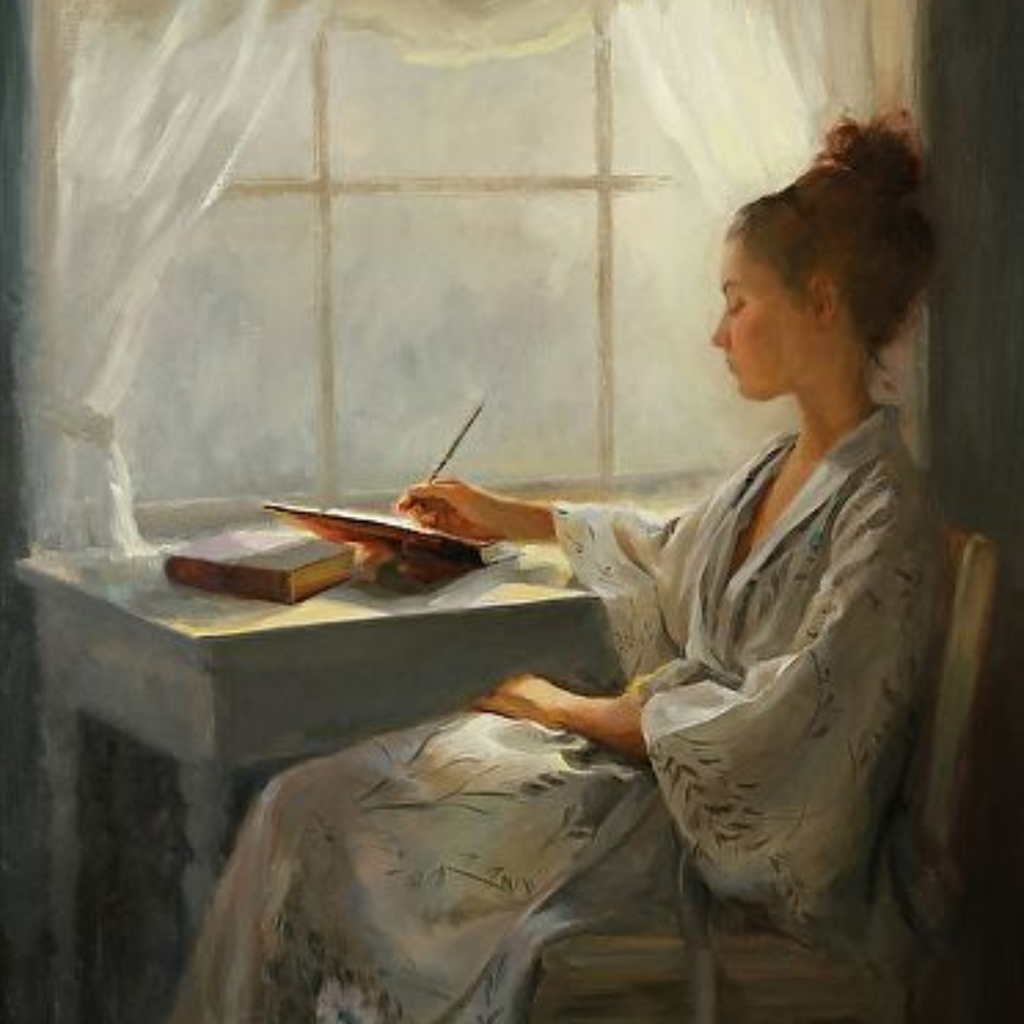
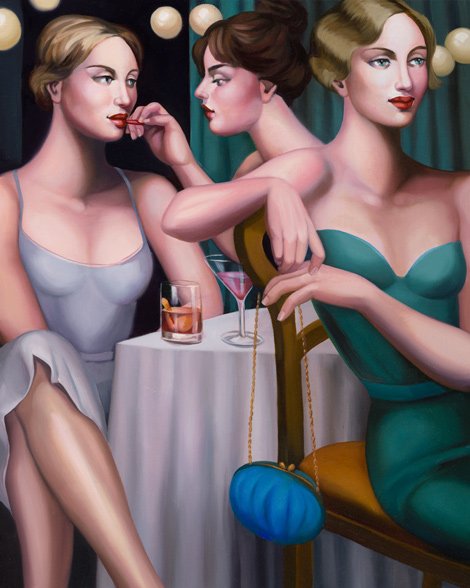
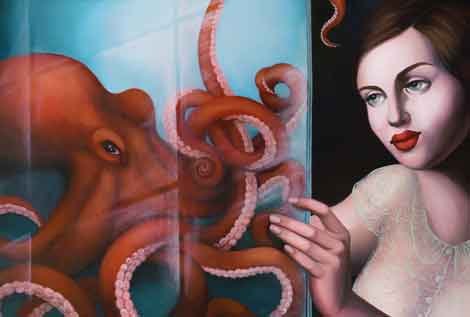
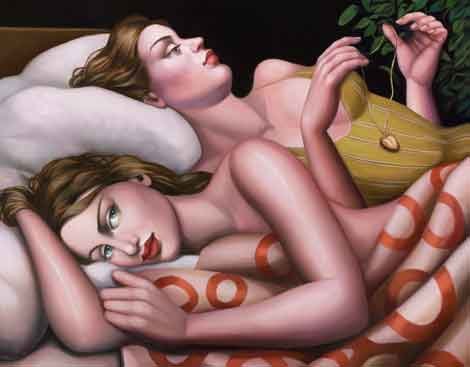
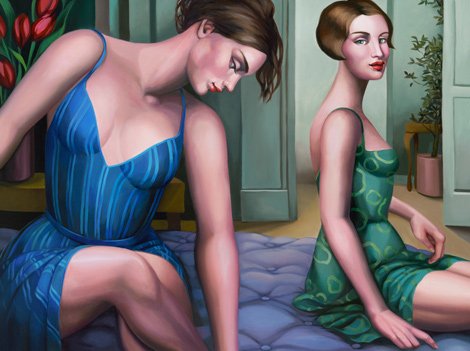
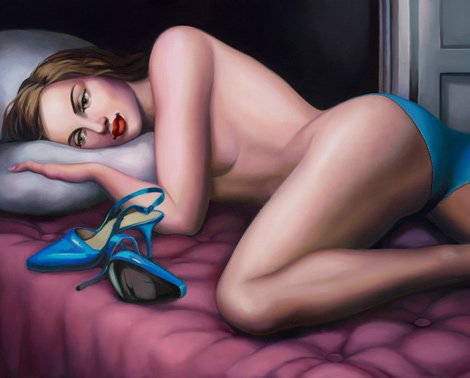
Despite this shift, Rachel has no intention of leaving figurative painting behind. Her latest exhibition continues to explore the themes that have long defined her work. Elegant female figures recline in richly composed interiors, while others appear caught in intimate conversations or enigmatic encounters, inviting viewers to imagine the narratives unfolding beyond the canvas.
There are subtle links between the two strands of her practice. Friends often remark that they can recognise the same visual language in both bodies of work, and Rachel agrees that she seeks the same sense of energy and physicality throughout her paintings. The creative process, however, remains entirely separate.
She now works across two studios. One — devoted to figurative painting — is filled with photographs, poems and flowers. The other, where the abstract works are made, is almost completely bare.
There is one final connection between the two practices. Rachel gives each of her abstract paintings a woman’s name.
“It is simpler, easier to remember and avoids boring titles like ‘Form with Green’,” she says.