
“Give them bread and circuses and they will never revolt” — Juvenal
The Bangladeshi Election
On 12 February 2026, the Bangladesh Nationalist Party (BNP) was newly elected in Bangladesh and the people echoed on internet halls and streets that “the Gen Z revolution prevailed”.
Sheikh Hasina’s 15-year rule, which was marked with unruly bloodshed and rule of law violations, had been ousted by an initial student-led protest in 2024. The protest had escalated into a nationwide uprising, now better known as the July massacre, which claimed 625 lives but led to a massive shift in politics and democratic agency in Bangladesh — an ousting of a dictatorship. Similarly, in 2025, months before the election, the nearby Nepalese Gen Z youth also led an ignited mass protest as a response to limited productive sectors and opportunities, triggering political leadership and regime change.
It begs the question — why couldn’t this happen everywhere, especially in the West where so many people have more democratic freedom to create political changes? And what was it that prompted a revolution in Bangladesh and not a country like America, which is also significantly polarised, suffering an economic decline and full of unsatisfied voters? It made me want to dissect the psychology behind a revolution and why it is that some people, some populations do nothing, whilst others can.
America in paralysis
The Centre for Economic Policy Research’s (CEPR) analysis of the second Trump administration shows that, in the first 100 days, the most significant tax increase in generations occurred, with further damage to middle-class employment benefits. This is complemented by Trump’s disruption of the global economic system through poor international deals and internal fiscal imbalance brought on by the “Big Beautiful Bill”, which widened the unsustainable debt trajectory in America. The latest war in Iran has led the International Energy Agency (IEA) to warn that the world is experiencing its largest oil supply shock on record, with a 21% surge in gas prices since February.
Trump is not only causing global but also inter-state unrest, further polarising a fragile country. The consequences demonstrate themselves through challenges by the Democratic Party’s spearhead Gavin Newsom, who runs the state of California. The Newsom v Trump (2025) lawsuit was a response to the federalisation and deployment of the California National Guard, related to Immigration and Customs Enforcement (ICE) terrorisation. This was a significantly symbolic dissent because of California’s stance in American politics, having the largest population and economy in America — the fourth largest economy in the world. Surely, a challenge this great, coupled with constant threats of impeachment and lawsuits, should mean more than a slap on the hand.
So why don’t Americans mass revolt against their political situation?
A revolution only happens when your basic interests are so largely harmed that you are affronted with a desperation for change. Where the entertainment ceases to distract and the food ceases to sate. So an ache begins, hunger irritates.
For example, in Bangladesh, the median age is just 25, making the country heavily youth-dominated. Simultaneously, estimates suggest that unemployment in young people rose in the early 2020s as a result of the global COVID-19 pandemic, according to the Bangladesh Labour Market Profile 2024–25. This economic pressure contributed to growing public frustration, as many people struggled with unemployment, rising living costs and food insecurity. Triggering a revolution because the majority of people were hungry.
It would be a farce to argue Americans do completely nothing. There have been more than 300 anti-ICE protests held across the country in February 2026. Furthermore, the Armed Conflict Location & Event Data Project (ACLED) recorded almost 20,000 demonstrations in 2025, marking a 77% increase compared to 2024 and the highest yearly total since 2020.
However, in comparison to Bangladesh and Nepal, the protests in America are much more divided and individualised, unable to have the same consequences or radical shift because their majority is not hungry enough to be united equally. Many are still occupied by their breads and circuses.
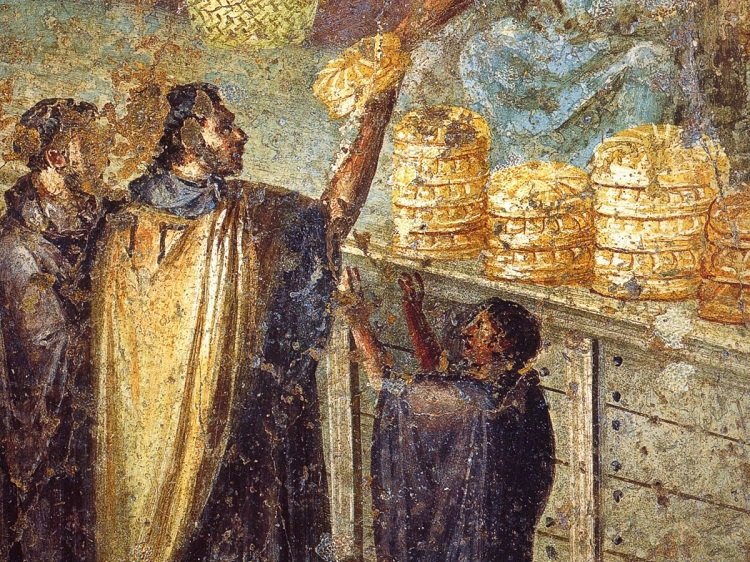
Panem et circenses — breads and circuses
This sort of sociological theory stems from some online discourse and research on Juvenal’s satires — one particular writing, Panem et circenses (Bread and Circuses). In this satire, Juvenal analysed how some emperors controlled the Roman masses by offering them a variety of pleasures such as distributions of food, public baths, gladiators and theatre representations. This offered a clever tool for distraction and influence over the plebeians who had their immediate needs met and therefore were unable to form enough volatility to address the core systemic issues within their country. Bread and circuses created the illusion of a well-run and efficient city when, in reality, it operated as gilded embellishments on broken furniture.
For example, a big factor in prompting the Nepalese revolution was the 26-platform social media ban that happened right before the student protests, and 10% of households were severely food insecure, which further fuelled the dissent against the government.
Although 11.1% of America’s residents live in poverty and large slums like Skid Row house 10,580 citizens — 41.8% under the poverty line — the middle class still makes up the majority of the American population, 46%–55%. And they can afford all the basic addictions comfortably, without realising they are counterfeit fulfilment distracting them from the calamity of their political situation.
I think the American equivalent of bread and circuses is the multiplicity of fast food chains, cable entertainment and constant access to media, which funds the attention economy and monopolises on a quick-fix culture.
Although these additives have become more opposed and researched, they are still persistent. For example, the recent Facebook mental health lawsuit exposed how companies have been engineering addictive content. Jurors found that social media platforms harmed mental health and endangered vulnerable groups, with restrictions needing to be imposed. The Journal of the Academy of Nutrition and Dietetics (2023) has also confirmed that 60% of foods purchased by Americans contain technical food additives, which is a 10% increase since 2001.
Revolution in pieces — an English case study
The death of the two-party system and party loyalty as a result of the recent council elections in the UK is an example. Some may blame Reform’s rise on outlets like the BBC for platforming Nigel Farage or just because of the general ‘rise of fascism’.
However, the truth is Reform and the Greens have both grown from the same source — people feeling poorer in the UK. The unemployment rate dropped to 4.9%, the economic inactivity rate is 21% and the war in the Middle East has heavily caused high food price inflation. GDP is falling, the economy is shrinking. The Economist’s recent article examining Farage’s rise to power includes interviews of Reform voters. One Talbot regular who goes to Reform pub quizzes is quoted saying “People who have lived here all their lives aren’t getting benefits… there’s no houses. National politicians have forgotten about us”. This is supported by The Guardian’s poll of 11,000 Reform voters, which revealed a third reported a pre-tax household income of less than £25,000, as well as London School of Economics (LSE) research, which finds Reform does very poorly in middle-class constituencies. On the other hand, LSE found the Greens to be supported by younger graduates, who are straying from Labour. This correlates with the BBC’s report on the Office for National Statistics’ (ONS) statistics of youth unemployment, 16–24, rising to 16.1% under the Labour government. The demographics supporting Reform and Greens, although differing in class, are both vulnerable to lack of job opportunities and poverty.
As more than 200 pubs are to shut down in six months and the Intergenerational Foundation (IF) reports a collapse in young people’s discretionary spending in the UK. Perhaps this groundbreaking shift in UK politics is a result of bread growing stale, the circuses slowly burning.
Of course, the success of a revolution depends on much more than just the momentum of being hungry. Political structures and brute force play a key role in facilitating the suppression of a revolution regardless of the mass consensus they garner — for example, the Paris Commune (1871) and the Easter Rising (1916). However, I would argue that the emergence of a revolution still depends upon a widespread anxiety for deprivation, because it cultivates the political consciousness necessary to ignite revolutionary fervour in the first place.
The only alternative to this is sustained activism. Some consider this a privilege because it requires a reinforced dissociation with your direct needs and a conscious assimilation of your political beliefs with everyday activities. Yet, it’s a privilege, I believe, the middle class in America and Britain can afford, if they find a purpose beyond passive consumption and gratification, through realising their political agency through a reassessment of their priorities and engagements.
The question, then, is whether we are capable of seeing beyond the artificial fulfilment offered by consumerism before it is taken away from us. Or does human nature require suffering before revolt becomes a necessity rather than a choice? Perhaps this is the underlying psychology of revolution.