
An email from the Gita Bhavan Hindu Temple brings far-right Hindutva organising in the UK into question
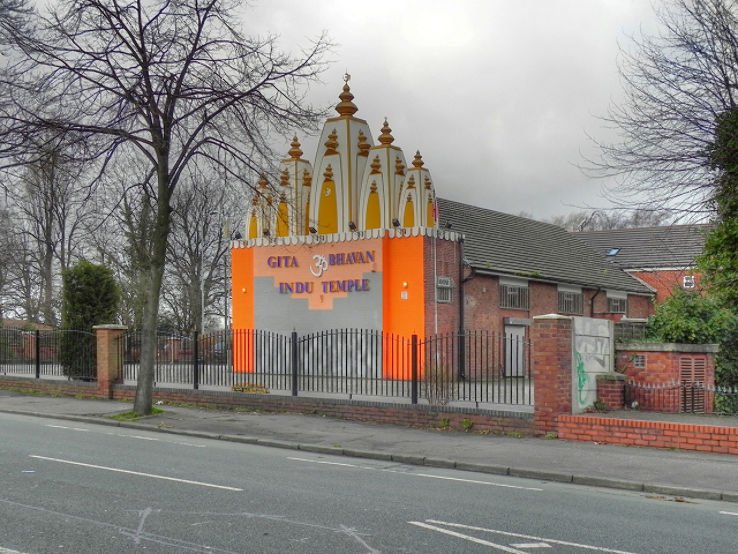
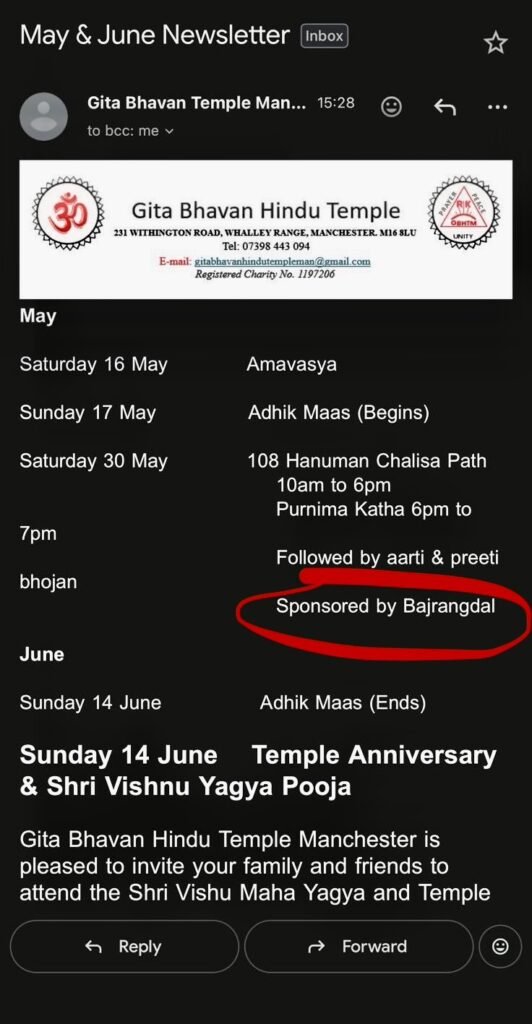
On the 10th of May 2026, a prominent Manchester mandir sent an email to its mailing list advertising an event that took place twenty days later, on the 30th of May. Alarmingly, it said the event was being “Sponsored by Bajrangdal”. I have been investigating ever since.
I published a short video explainer on the day of the event to provide information, register opposition publicly and appeal for more information. I’m glad to say that many Manchester locals, including attendees of the temple, have reached out and helped me better understand the situation.
Manchester residents have told me about the Hindu supremacist, nationalist leanings of many in the Gita Bhavan temple, especially the leadership, as well as in the city’s Hindu community more broadly. One person who has been going to the temple their whole life told me:
“I know there are multiple sympathisers to right-wing BJP ideology in the temple, including those in leadership positions.
“I think this is more indicative of a general mood within the Indian Hindu community than specifically of Gita Bhavan Hindu temple, and I think there’s a deep-rooted insecurity crisis behind all of this posturing and violence.
“It’s very difficult to speak up and be taken seriously against what they are saying, and frankly it’s cultish because the moment you say something you’re viewed as a traitor or no longer a real Indian or Hindu. You’re either with them or against them. The position of a left-wing or even centrist Hindu does not exist to them, you’re just not a proper Hindu.
“It’s just getting worse and worse and it’s alienating for people like me who felt pride in their identity but now look at what is happening and just feel so detached and disgusted by the rhetoric.”
This is tragic and revealing. Hindu temples in the UK that are affiliated with the “largest far-right network in the world”—India’s Hindu extremist Sangh Parivar—are alienating the very people they claim to be serving: British Hindus. This is what Hindus for Human Rights UK has been saying for years. We champion pluralism, positive action and progressive representation of Hinduism.
On the other hand, organisations that lean towards the far-right ideology of Hindutva and claim to speak “for all Hindus residing in the UK”, as Hindu Council UK says it does, are stifling free religious expression, independent political development and diversity of thought. They do this through the atmosphere of alienation and intimidation highlighted by the Manchester resident above and through concerted political lobbying and cultural soft power.
The British Hindutva lobby’s electoral efforts in recent years included the so-called “Hindu Manifesto”, which contained “a range of mischaracterisations and bait-and-switch tactics that, if brought into law as per the request of its creators, would make it more difficult to condemn certain forms of discrimination like casteism and misogyny.” This lobby also organised many “Hindu Hustings”, legitimising themselves and their extremist views by bringing together candidates from across the political spectrum to debate ahead of elections.
On the cultural side, far-right organisations such as the VHP UK “are on the official committee of organisers for the City Hall-backed Diwali celebrations in Trafalgar Square”. From the Evening Standard:
“In 2002, a Foreign Office report found that the Indian [VHP] organised a pogrom which killed thousands of Muslims in Gujarat that year.
“The document, cited in a BBC documentary on Prime Minister Narendra Modi, says: ‘The aim of the perpetrators of the violence, the VHP and other Hindu extremist groups, was to purge Muslims from Hindu and other mixed localities in order to ghettoise them.’”
Hindu chauvinist, anti-Muslim, anti-minority and casteist views have made alarming inroads in the British Hindu community today.
Of course, on top of the many positive messages I received from people happy to see Hindu extremist rhetoric being called out, plenty of hate, intimidation and support for the temple’s links came my way. Loyalists of the temple said that “Bajrangdal” here refers only to a local group, not “the Bajrang Dal”. Why would such a group exist? Who would create a local group in Manchester, or anywhere else, and give it the same name as a notorious, genocidal pogrom group? Perhaps it is not the Bajrang Dal, but how much better are Bajrang Dal enthusiasts? Would it be acceptable or coherent to create a local organisation, call it the Blackshirts and then criticise all who point out that this is the name of an infamous, fascist paramilitary organisation?
Apologists for genocidal anti-Muslim violence asked me what was wrong with the Bajrang Dal being involved, said it was a good thing that they were involved and told me that Islamists are much worse. The temple itself, which ignored most of my outreach, eventually replied that their sponsor listing referred to “one of the gods called Hanuman (Monkey)”. Did Lord Hanuman himself donate some money or materials for the bhojan (meal), pooja (worship) or aarti (ritual)? Or was the temple obfuscating or lying?
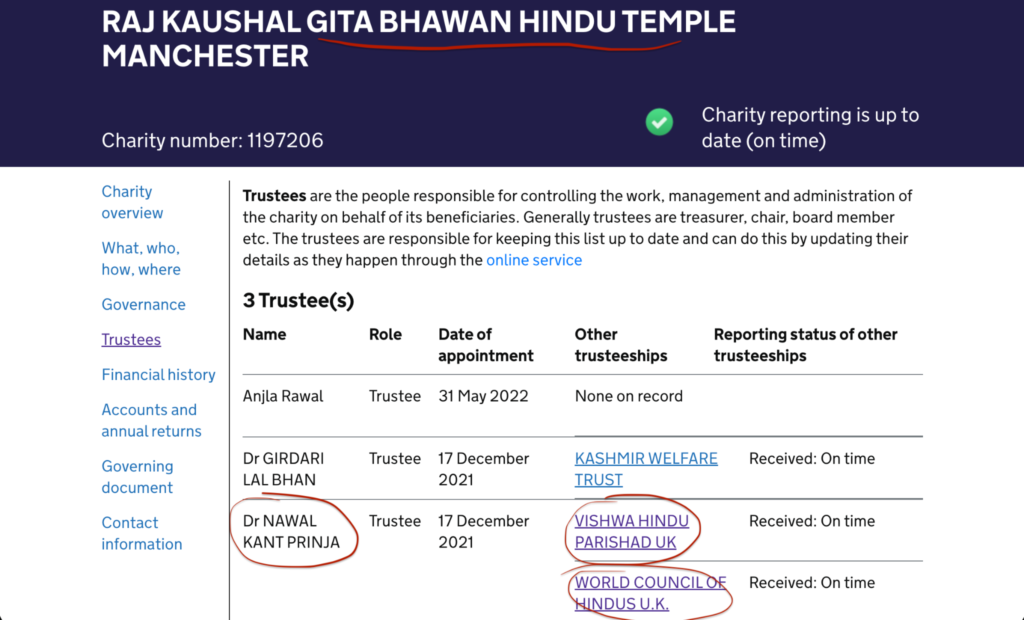
Given the Gita Bhavan Hindu Temple’s links to the VHP, sharing a trustee called Dr Nawal Kant Prinja with Vishwa Hindu Parishad UK and World Council of Hindus UK (two separate charities representing the VHP in Britain), the Manchester Hindutva situation is disturbing and must be investigated further.
All connections between religious institutions and extremist organisations must cease. A coalition of diaspora organisations signed onto this statement written by Hindus for Human Rights UK, expressing our condemnation of the Sangh Parivar and all its activities in the United Kingdom.