

In the face of accelerating climate breakdown, biodiversity loss and widening inequality, many responses still focus on narrow fixes. Tree planting is often framed as a carbon solution, something that allows businesses to continue as usual. But forests are not carbon offsets. They are living systems: tangled networks of roots, soil, plants and creatures, shaped by people and place. And climate collapse cannot be fixed with the same mindset that created it.
TreeSisters is a UK-based charity working internationally to ethically restore forests while encouraging everyone to live differently with Nature. Our work starts from a simple understanding: ecological breakdown and social injustice are deeply intertwined. Forests thrive when people are resourced, respected and empowered to care for the land they depend on. Climate action that ignores this reality will not succeed.
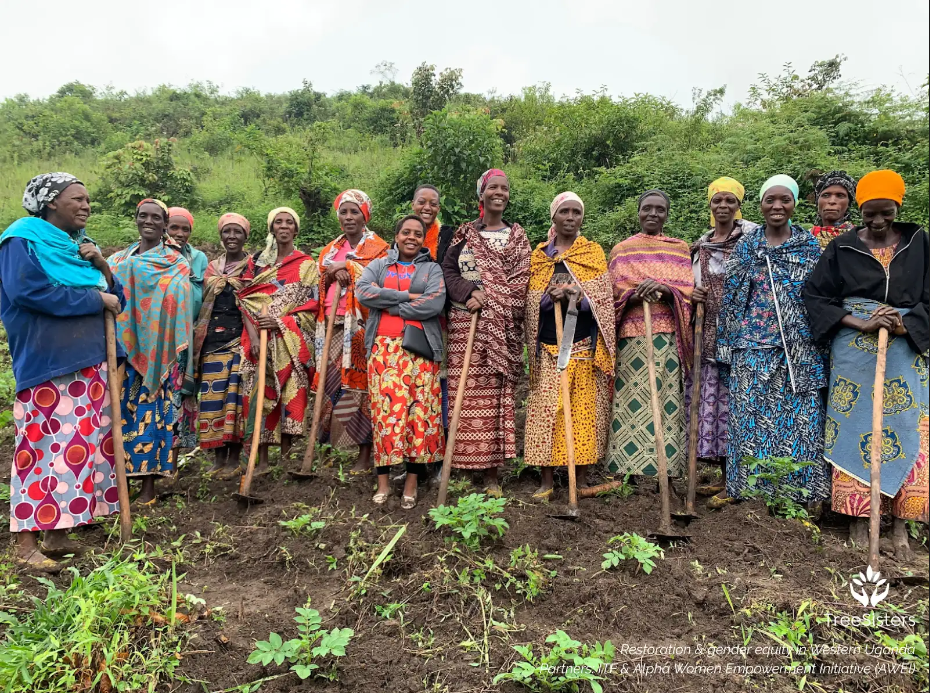
TreeSisters partners with grassroots, community-led organisations, whose projects have spanned areas including Kenya, Uganda, Colombia, the Democratic Republic of the Congo, Bolivia, Madagascar and the Amazon. Rather than funding one-size-fits-all interventions, they take a trust-based approach, directing resources where local communities identify the greatest need. This could mean restoring native forests, planting agroforestry trees or creating food gardens to reduce pressure on old-growth forests. It could also include planting to protect against flooding or landslides, as well as supporting livelihoods, education and health.
This approach recognises that environmental protection does not happen in isolation. In their Ugandan project, school absenteeism among girls dropped from 29% to 11% when reusable menstrual products were provided. In the Amazon, funding firefighting equipment helps communities defend forests against increasing wildfire risk, protecting biodiversity, homes and lives. These are real climate actions, even if they do not fit neatly into carbon accounting frameworks.
Women are at the heart of this work, not as a slogan, but because they face the greatest burdens from environmental collapse. This is not accidental. Long-standing inequalities in access to land, resources, education and decision-making make women more vulnerable. This is about who eats when food is scarce, who risks violence when water is far away and who is heard when communities rebuild after disaster. The vast majority of their projects are led by women, which matters because research consistently shows that when women are included in environmental decision-making, they act for the many, not the few. They prioritise community wellbeing and long-term sustainability. Excluding them weakens forests, ecosystems and society alike.
Alongside forest restoration, they work to shift how people relate to Nature. Nature connection is not a luxury. It is practical, transformative and revolutionary. In a world that encourages disconnection, it is vital to remember that we belong to this living world and that harming Nature harms ourselves. Nature connection forces us to question value, power and responsibility. It can take many forms: noticing how the seasons change, gardening and tending, grounding or forest bathing. But making Nature connection accessible to everyone is key if we want a new way of living with the world to take root.
Our work also includes Nature advocacy and engagement with the rights of Nature movement. Our current systems treat Nature as a commodity to be owned, sold or sacrificed for short-term gain. Why are corporations granted legal protections and able to sue for damages, while rivers, forests and the living Earth have none? The rights of Nature movement calls for ecosystems and natural communities to be recognised as legal entities that can exist, flourish and be restored when harmed. Recognising these rights works within existing systems to help create a world rooted in balance, kinship and care. This is about survival and the future of all life.
Website
Instagram