
The Afghan women working project
This eight-part series interviews Afghan women who have escaped Taliban rule, giving them space to voice their experiences and, in their own words, share how they want Afghan women to be understood by the rest of the world.
I began working alongside these women in Bangladesh while teaching at the Asian University for Women (AUW). Through these encounters, I became interested in challenging the stereotypical understanding of Afghan women’s agency under Taliban rule, and the mystification of their lives and experiences.
The world often speaks about the Afghan woman as though she were an ancient ruin: sacred yet lost to time. However, the women I worked alongside were so far removed from the one-dimensional image presented to me through Western media. They were intellectually engaged, politically conscious and deeply invested in questions of feminism, social progress and their own futures.
Their perspectives reshaped my understanding of what it means to be an Afghan woman, both within Afghanistan and as expats, leaving it.
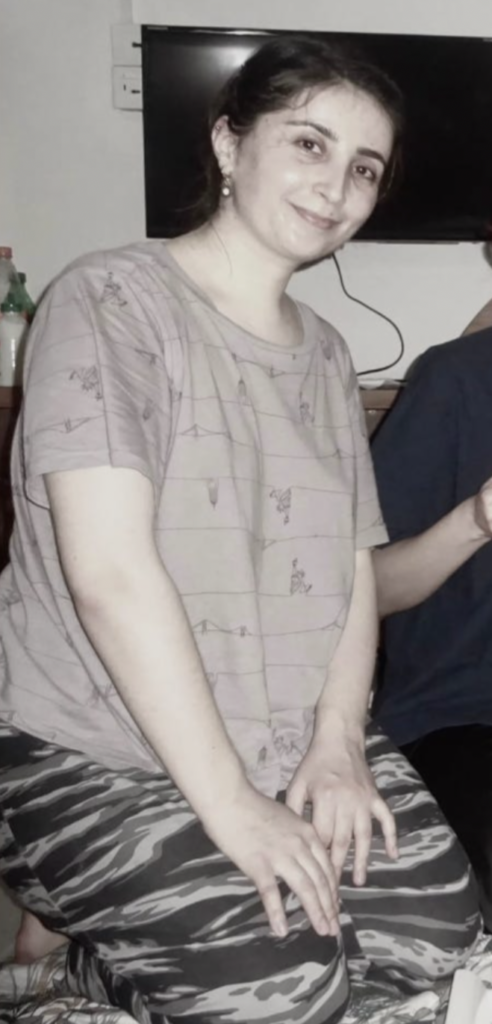
Part II — Masoona
What is your name and when was the year you left Afghanistan? “My name is Masoona, and I left Afghanistan in February 2022”.
What was your qualification or area of study/work before you left Afghanistan? Tell us about it. “While having a full-time job at Azizi Bank, I was also pursuing my master’s degree in Persian literature at Kabul University. I had successfully reached my final semester and was on the verge of completing my degree when the Taliban came and restricted women’s education, preventing me from formally graduating. I absolutely was enjoying it, and it was my passion and meant the world to me — I mean the degree that I was doing. That university was my dream university since I was a teenager, and I was planning for years to get into it. Although getting into Kabul University for someone coming from a very remote village at the zero-point border is not something easy, I made it, and it did not work in the end. About the job, I was doing that job to get earnings to pay my university tuition; however, later on, I realised that I am good at that and I like banking too”.
Does your family still live in Afghanistan and how do you maintain contact with them? “Yes, my parents and my brother are still in my country; however, my sisters are with me in Bangladesh, attending university. The way we maintain contact is through the internet. We regularly talk on WhatsApp; however, when my mum goes to our hometown, there is no internet connection — like more than half of the country — unless my brother uses his office Wi-Fi to make it work”.
How did your family feel when you left Afghanistan to join AUW, and was it easy to convince them to let you go? “I don’t even want to remember my parents’ faces at the airport. Of course, for parents living in a patriarchal, misogynistic society to decide to send their daughters to another developing country — where they know the challenges they might face and the uncertain future they might have — is a catastrophe in their hearts. My dad had doubts. However, my mum always used to say that the war here is not ending and ‘I won’t let my daughters experience the same things that I did’ (she also could not complete her degree at Kabul University during the Soviet–Afghan War)”.
What is something you want to say loudly about your experience leaving Afghanistan that the Western world doesn’t understand or give you an opportunity to talk about? “I believe not only the Western world, but all East, West, South and North in our era have access to information and news and understand everything, so I have nothing to tell them. As I believe, others won’t understand or feel what you go through unless they experience what you have experienced. But yeah, about the experience of leaving a home like Afghanistan, it might be a similar feeling to a mum leaving her injured kid in the middle of an explosion while hearing her kid’s screams everywhere as she is moving, and the scream is never, ever ending”.
What does women’s rights mean to you, and how has the Taliban affected your relationship with both religion and politics? “I prefer the middle ground when it comes to women’s rights. I don’t say we must have a matriarchal society or that there should be more opportunities for women because the female gender is superior to males — just because they are gifted with the extraordinary body that can give birth to male and female and extraordinary emotions that can’t be found anywhere in the world except in a mother — but at least there should be equality and inclusivity where women get the right to all the opportunities they need, want and deserve.
“About my relationship with religion, I believe religion as a belief system is a very personal thing, so I had enough awareness to keep religion separate from what the Taliban, as a terrorist group, are practising in the name of religion. What they are practising is more a designed ideology rather than a religion — though, for sure, it looks like a religion on the surface.
“And about politics, I used to think people have power and that when they want to and act, they can make change. But now I feel it is only superpowers who are making decisions and policies, while others are just puppets, victims or bystanders”.
How did you find yourself again, after leaving your home country? What makes you feel relaxed, understood or human? “Of course, AUW and Bangladesh became a second home to me, where I could find pieces of home in Bangla music, Rohingya hospitality, Marma jewellery etc. With all the uncertainty for the future and homesickness I am experiencing and feeling, what still makes me feel grounded is the fact that I have enough courage to dive into this ocean of challenges and live a meaningful life with dignity, in search of peace, freedom, equality and hope”.