
The Afghan women working project
This eight-part series interviews Afghan women who have escaped Taliban rule, giving them space to voice their experiences and, in their own words, share how they want Afghan women to be understood by the rest of the world.
I began working alongside these women in Bangladesh while teaching at the Asian University for Women (AUW). Through these encounters, I became interested in challenging the stereotypical understanding of Afghan women’s agency under Taliban rule, and the mystification of their lives and experiences.
The world often speaks about the Afghan woman as though she were an ancient ruin—sacred yet lost to time. However, the women I worked alongside were so far removed from the one-dimensional image presented to me through Western media. They were intellectually engaged, politically conscious and deeply invested in questions of feminism, social progress and their own futures.
Their perspectives reshaped my understanding of what it means to be an Afghan woman, both within Afghanistan and as expats, leaving it.
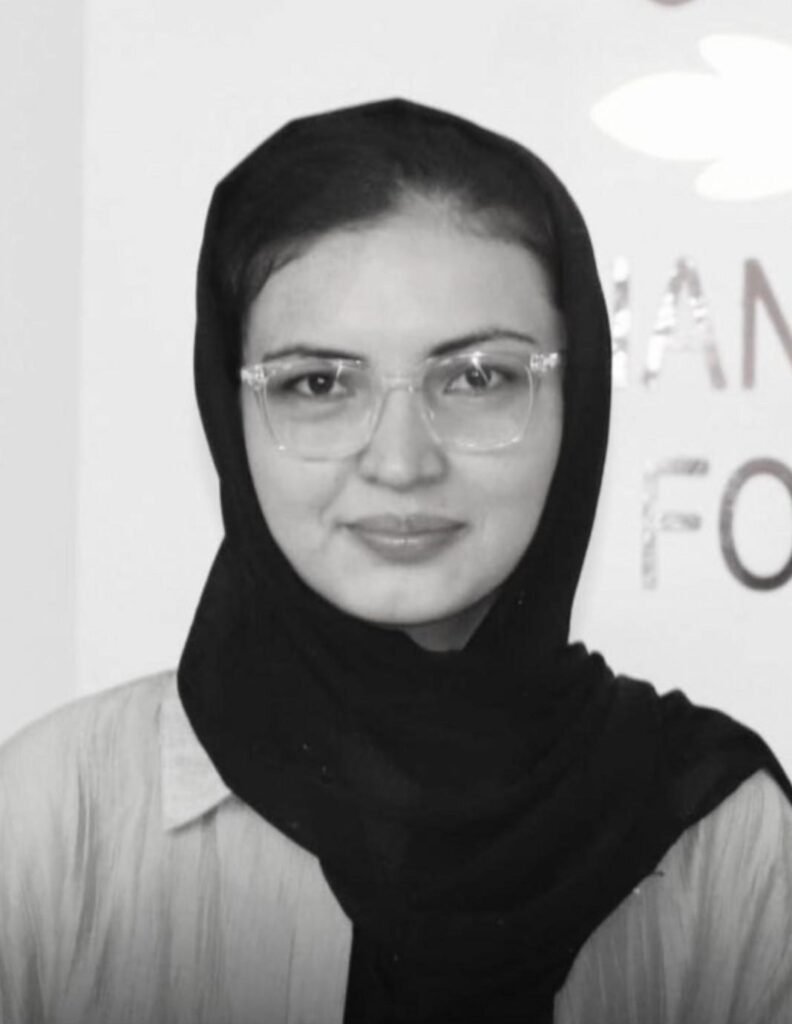
Part III — Shakila’s story
What is your name and when was the year you left Afghanistan? “My name is Shakila, and I left Afghanistan in 2025”.
What was your qualification or area of study/work before you left Afghanistan? Tell us about it. “In 2022, I lived in another province and moved to Kabul to continue my education. I received a scholarship to study computer science at Gawharshad University, and I was so happy to have the opportunity to continue my education. However, studying in Kabul as a young woman living away from my family was extremely difficult. Since my family was in another province and I was alone in Kabul, finding safe and stable accommodation was a major challenge. Many people were unwilling to rent a room to me because I was a young woman living alone under the Taliban’s rule. They were concerned about the responsibility and risks involved. Even when I found accommodation, I was often asked to leave after a few weeks or a month. As a result, I had to move repeatedly while trying to find another place to stay. At the same time, my family was constantly worried about me because I was a young woman living alone in another city under very difficult circumstances. At one point, I had to stay in a dormitory that I had not known much about beforehand. I was extremely frightened that night. The environment felt unsafe and frightening, and I could not sleep until morning. I spent the entire night crying because I was afraid. Despite all these difficulties, I continued my studies because I believed that education could give me a better future.
“After completing one semester, however, we were informed on a long winter night, Yalda night, that the university would be closed to women until further notice. I will never forget the pain of that night. I had overcome so many difficulties to reach Kabul and continue my education, and suddenly the opportunity I had worked so hard for was taken away. After returning to my home, I continued searching for ways to study and contribute to my community. At that time, one of the few educational fields still accessible to women was midwifery and nursing. I began studying midwifery and also completed practical training at a hospital. I was in my final semester when the institute was also closed.
“I had seen midwifery as a pathway to build a meaningful career and help women in Afghanistan, particularly women in communities where access to healthcare was limited. If the university and institute had remained open, I would have graduated by now and would have been able to use my education to serve my community. Alongside my education, I also worked as a teacher and taught painting to girls. I was actively involved in cultural and educational activities because I always wanted to learn, grow and contribute to others. Fortunately, in December 2024, I received my offer letter from AUW. Leaving Afghanistan was extremely difficult, but it gave me another opportunity to continue the education that had repeatedly been interrupted”.
Does your family still live in Afghanistan and how do you maintain contact with them? “My family still lives in Afghanistan, and I occasionally contact them to check on their well-being”.
How did your family feel when you left Afghanistan to join AUW, and was it easy to convince them to let you go? “Leaving my family was extremely difficult for me. Being separated from my family and the people I love has been one of the biggest emotional challenges I have faced. At the same time, my family was very happy when I received the opportunity to study at AUW. They were proud of me and understood that this was an important opportunity for my education and future. It was not an easy decision emotionally. I had to leave the people I loved behind in order to pursue my education and build a better future for myself. I left Afghanistan carrying both my family’s support and the emotional difficulty of being separated from them”.
What is something you want to say loudly about your experience leaving Afghanistan that the Western world doesn’t understand or give you an opportunity to talk about? “I want to say that when you leave your family with a thousand hopes, hoping to learn something and eventually help other people, it is deeply painful to realise that, under the current situation in Afghanistan, you may not have a future there as a woman, even if you work hard and do your best.
“I do not have the same opportunities to study, work or help my fellow people. This is deeply discouraging. We are living in what feels like complete darkness, without knowing what the future will bring. I went through many difficulties to leave Afghanistan, and I am still working hard day and night to build my future. But the fact that I cannot see a future for myself in Afghanistan worries me deeply. This is what I want people to understand about my experience as an Afghan woman”.
What does women’s rights mean to you, and how has the Taliban affected your relationship with both religion and politics? “For me, women’s rights mean that women should have the right to education, employment, freedom of choice and the ability to make decisions about their own lives. Women should have the right to choose their path, their education, their career and their future. Women should be able to have control over their own lives and make their own choices. They should be independent and have the freedom to choose the kind of life they want to live. Women make up half of society. I believe women are also important leaders because they bring the next generation into the world and play an important role in teaching and shaping that generation. Therefore, women should have the right to make their own choices and determine the direction of their lives”.
How did you find yourself again, after leaving your home country? What makes you feel relaxed, understood or human? “After leaving Afghanistan, I gradually found a stronger sense of myself through education and personal growth. I am proud of myself for continuing my education outside my country as an Afghan woman. This is not an easy path, and I recognise how unusual and challenging this opportunity can be.
“I consider myself a strong woman because, despite the difficulties and setbacks I have experienced, I have never completely given up on my hopes for the future. I believe that many achievements begin in the mind. Before someone achieves something in reality, they first have to believe that it is possible. I try to remind myself of this whenever I face difficulties. Studying, learning new skills and becoming more independent have helped me feel that I am still moving forward rather than being defined by the circumstances I left behind”.
Is there a story about your time in Afghanistan that you still remember, and would like to share? “One of the best memories I have from Afghanistan is the moment when I found out that I had been accepted for a scholarship to study at Asian University for Women. I remember feeling extremely happy and excited when I received the news. After experiencing so many difficulties and interruptions in my education, receiving that scholarship gave me a new sense of hope. It felt like a new door had opened for me and that I finally had another opportunity to continue my education and work towards the future I had always dreamed of. I was also very happy to share the news with my family. They were proud of me and excited about this opportunity. That moment remains one of the most positive and meaningful memories of my life because it reminded me that despite all the difficulties I had faced, my dreams were still possible”.