
Let’s begin at dusk, perhaps in rural Britain, at the turn of the 19th century. We enter as the frost settles on a quiet meadow after nightfall, and the land is still, ungated, open, natural, and the world is largely unknowable. Animals sleeping and trees flowing gently in the night air. Your heart is beating with a cold breath. No distant traffic, no aeroplanes above, no sense that these are possibilities. Just you and the fields.
You feel something is about to change in the atmosphere of what it feels to be human, but you don’t quite know what. The locals have discussed machinery that doesn’t match your existing sense of what the world can contain, and yet through it all your humanity is present, living each day with something carrying through you.
You trust there’s a God nearby, but part of your mind is already feeling a flicker of doubt. The field you see and the field inside feel less assured of the rhythms that have been for millennia. A different energy is brewing from somewhere right in front of you.
Something in that felt experience—the meadow at dusk and the atmosphere around you carrying something far richer than a much more gated self—never really left. The permeable soul is in a way another way of describing the deeper self of the Upanishads, the self beneath the stories at the surface.
We all live deeper moments, of course—whether at a crowded sports match, a live EDM concert, or during the solitary times where the world goes quiet at night, where there is the self and… something more. People don’t describe it that way, but during those memories and moments, there is little doubt.
Time takes us somewhere we didn’t expect from the beginning—true for the world at the dawn of the 19th century and true for all of us who have lived through the past ten years, sensing the old cultural scripts and certainties are not all there is.
And perhaps that’s part of what this time is—the 2020s—the liminal zone where we’re discovering who we really are and once again ‘what it means to be human in this world’.
The quiet letting go of the old stories, with even demagoguery declaring ‘The American Dream is dead’, and yet, despite the source, there is truth in such a statement for people across and outside the aisle. And yet—beyond the now isn’t nothing, it’s perhaps deeper rather than a mere renewal of that which cannot hold. And yet, there is the sense we’ll find a way.
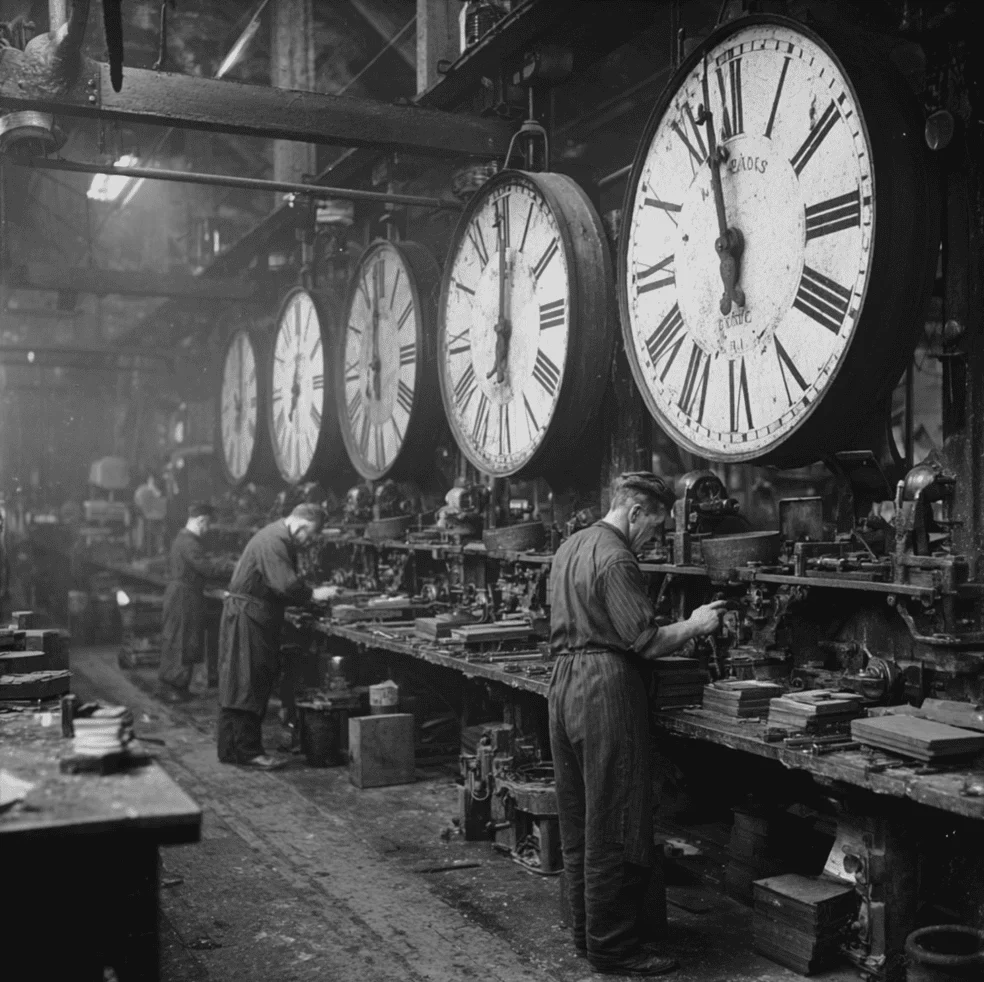
The farmer who stood in the meadow in the early 1800s lived less by a clock or schedule and more by the rhythms of nature, whereas what followed—and what Dostoevsky, and even more so ordinary men and women, felt in the decades to come—was that the sense of self had to become more gated and hardened to survive in a world where the land was becoming more of a fortress.
Yet in the harsh uprooting of pre-modern consciousness, individuality and dreams of changing the world, of the modern celebrity, of ‘you can be anything’ arose. And this is not a story of villains and saints. Humanity remained, and people still sought meaning where it could be found: in cinema, in rock and pop music, and in the belief that life can get better if you give your best per the story of how to do so.
This wasn’t a pure fairy tale, but with the benefit of hindsight it has become clear that dream was flawed—Elvis Presley, Avicii, Amy Winehouse, Chester Bennington, Whitney Houston and many more whose losses show the vertical is not what we thought. Yet this is said with respect, because they are not mere lessons, but human beings.
And to me that is part of a humanising future: the return to seeing one another as truly human. Perhaps that is what the world is sensing but cannot yet find a name for. The permeable soul is present, but after a time of being in the lights, the noise and the adrenaline of vertical aspirations, it is shy, trying to re-emerge and feel it is safe to do so.
The age before the liminal brought Beatlemania, the 1980s individualist peak as exemplified in Vice City, the story that technology was here to fix everything automatically, and even Lisztomania—where Hungarian musician Franz Liszt was met with a surprisingly early fandom in the 1860s.
While those experiences become integrated in what moves forward, the stream may be flowing towards a new landscape of experience in time—less a new ‘era’ and more a new way of relating to being. As for what follows—well, easy goes, but one finds cautious hope.
Some of the ways Gen Z shows a more permeable experience—with vibes, lo-fi content, and a sense of atmospheric qualities in how memes and media are used to express the self—suggest something beginning, but naturally it isn’t isolated to one generation. And if the lines blur in time, the idea of a generation gets murkier too.
History meets the present quite often for Gen Z, who often reject rigidity, and perhaps wider generational shifts have experienced this too. Indeed, it may be no surprise that the 2020s feel liminal, that the sense of a decade and linear time has eased, echoing the pre-modern experience of the frosted meadow.
We can’t know the specifics of the future, but the felt energy is somewhere in all of us. The gated clock has ticked through to a time where temporality is blurring and the sense of the rigid clock face shaping life and the self seems to gently shift—not without friction (the past decade has been friction in many ways)—but with hope somewhere in there, slowly emerging, quietly, gently, in search of safety in the open.
The world can’t go back in time, but it can reconnect with deep time. And in some sense, nostalgia is the idea that the past belongs to a different version of you or humanity, rather than being integrated into the present. And in there lies the sense that possibility—beyond what was recently assumed as the ceiling of how it feels to be human—expands to something more: not certainty, not proof, but an opening.
The permeable soul breathes in every human being, and maybe after several centuries of the surface chasing vertical escalators towards the promised land, the world may find—without failing to acknowledge the need for improving material conditions—that something warmer can flourish on this Earth: not utopia (that’s always been a dream, a fantasy), but still something more peaceful within and shared.
Something that takes us back to that frosted field at the turn of a prior century, because the field never left—it went quiet, and maybe in time it gently re-emerges. We won’t be without hopes and energy for what we do with our lives, but we might find there’s a place for more harmony.
Less needing to change the world personally in a big way or needing maximum likes on social media, and more excitement at the book that arrives in the post because of how extraordinary this is in historical context—more appreciation of how amazing this Earth is and what’s around us, and exploring the beautiful latent potential of the internet that the algorithms won’t show. Curiosity, connection and a deeper inner trust.
Change happens slowly, and then more gently with time on a wider scale. People know the world is heading somewhere new as the tide shifts with generational changes, and across the world more generally regardless.
By 2050, if we’re still around, we might be somewhere more different than current imagination allows. However, the future exists as a gentle energy and the past lives in integration—while for now, maybe the best thing is to figure out who we are and where we’re going, with warmth and love for ourselves and one another.
Life is tough—look out for yourself, truly—and perhaps in time, something more widely blossoms: not perfection, but a gentle evolution and deeper time. The deeper self, the ungated mind, may come out of its shell. There’s always hope—always has been, always will be. Take care.