
The Afghan women working project
This eight-part series interviews Afghan women who have escaped Taliban rule, giving them space to voice their experiences and, in their own words, share how they want Afghan women to be understood by the rest of the world.
I began working alongside these women in Bangladesh while teaching at the Asian University for Women (AUW). Through these encounters, I became interested in challenging the stereotypical understanding of Afghan women’s agency under Taliban rule, and the mystification of their lives and experiences.
The world often speaks about the Afghan woman as though she were an ancient ruin—sacred yet lost to time. However, the women I worked alongside were so far removed from the one-dimensional image presented to me through Western media. They were intellectually engaged, politically conscious and deeply invested in questions of feminism, social progress and their own futures.
Their perspectives reshaped my understanding of what it means to be an Afghan woman, both within Afghanistan and as expats, leaving it.
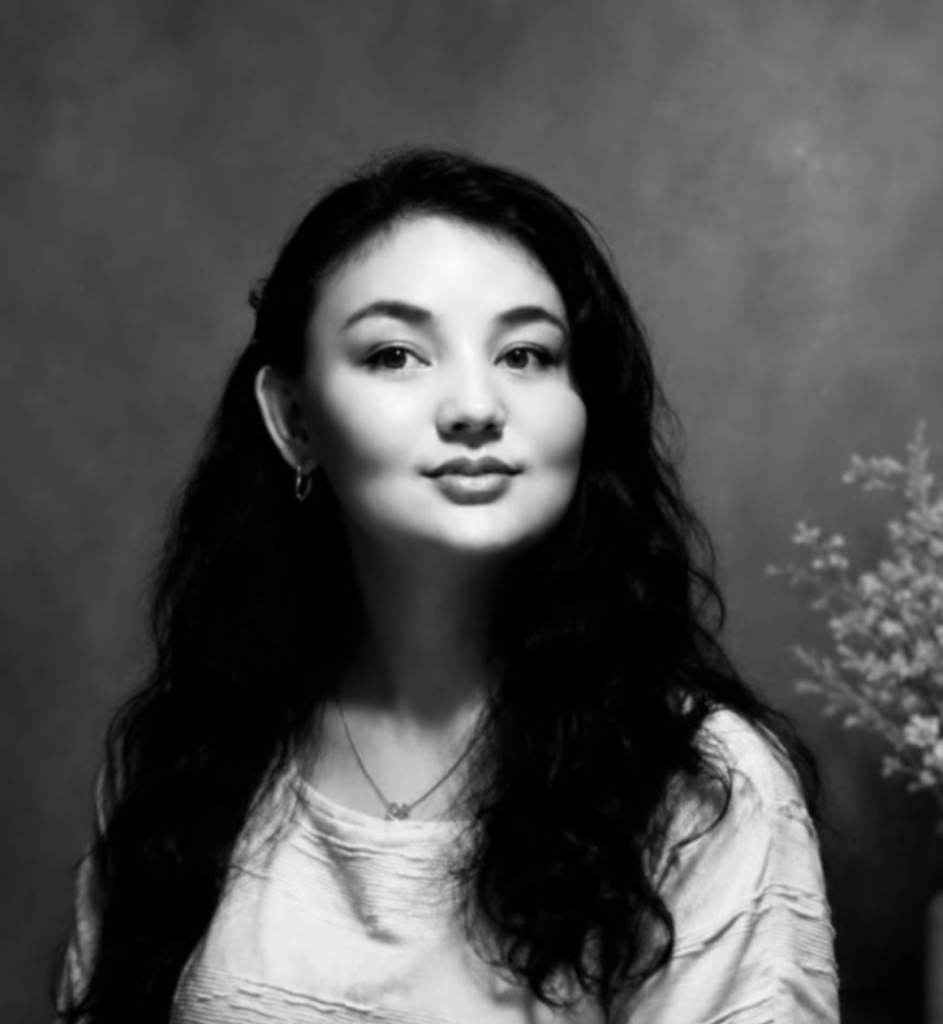
Part I — Masturah’s story
Please introduce yourself and tell us when you left Afghanistan. “My name is Masturah. After the fall of Afghanistan, I left the country in February 2022 to pursue a master’s degree in Bangladesh”.
What was your qualification or area of study/work before you left Afghanistan? Tell us about it. “I graduated with a bachelor’s degree in sociology in 2019 from Bamyan University. While I was a university student, I also worked with several media organisations, including Radio Bamyan, Sayara Media and Salam Watandar.
“Before the Taliban took control of Afghanistan, I was working as a local journalist at Radio Bamyan. At the same time, I worked with BBC Media Action as the central zone coordinator for the Jirga-e-Azad project.
“I truly loved my work. Besides journalism, I was involved in projects that focused primarily on women’s rights. One of our BBC Media Action projects was called Her Voice, Her Rights, which promoted women’s rights, including the right to education, the right to work, the right to make their own choices and the freedom of movement.
“As both a journalist and a women’s rights activist, I genuinely enjoyed what I was doing and the environment I worked in. I felt that I was growing professionally and moving closer to achieving my goals.
“My work and my responsibilities meant a great deal to me. I was making a positive impact on my community, advancing towards my personal and professional ambitions and, as an independent woman, I was financially able to support both myself and my family”.
Does your family still live in Afghanistan, and how do you stay in touch with them? “Yes. My family still lives in Afghanistan. We stay in contact through social media platforms such as WhatsApp, Facebook and Instagram”.
How did your family feel when you left Afghanistan to join AUW? Was it difficult to convince them to let you go? “When I received my admission to the Asian University for Women (AUW), my family was very happy for me.
“After the fall of Afghanistan, I remained in the country for about six months. Because I was a journalist and the Taliban were targeting women who were active in public life, I had to live in hiding in Kabul, far away from my family, who remained in Bamyan.
“Coming to Bangladesh was, in many ways, a way to escape the risk of being arrested by the Taliban. For that reason, my family fully supported my decision to leave and were relieved that I had the opportunity to continue my education in safety”.
What is something you want to say loudly about your experience leaving Afghanistan that the Western world doesn’t understand or rarely gives you the opportunity to talk about? “The world knows that after the Taliban took over Afghanistan, the country stopped functioning as a society where everyone has equal rights. Women’s rights have been almost completely erased.
“Nearly five years have passed, yet girls are still not allowed to attend secondary school or university. Women are not allowed to work, and they cannot even leave their homes without being accompanied by a male guardian.
“Perhaps the most heartbreaking reality is that today there is no independent institution inside Afghanistan that can genuinely defend women’s rights or stand beside women when they need protection”.
What do women’s rights mean to you, and how has the Taliban affected your relationship with both religion and politics? “To me, women’s rights mean recognising the humanity and dignity of women.
“Women have always contributed to society just as much as men, and often even more. Yet depriving women of their most basic rights, including education and freedom, shows that humanity has no value in the eyes of the Taliban.
“The Taliban use religion and Islamic law as political tools. In my opinion, this is not only wrong but also dangerous because it causes people to question religion itself.
“We all know that politics often involves competition, deception and the struggle for power. When religion becomes part of that political struggle, people may begin to associate religion with those same qualities.
“Today, the rules the Taliban impose on women in the name of Islam and Sharia have caused many women and young people to question their faith. Some begin to wonder: if religion is presented as something that deprives women and excludes half of society, then perhaps there must be something wrong with that religion itself.
“These doubts can eventually turn into alienation from religion and even resentment towards it”.
How did you find yourself again after leaving your home country? What makes you feel relaxed, understood or human? “Leaving my homeland, my family and the place where I had grown up, built my dreams and found my purpose was not easy at all.
“During my first months at AUW, I experienced severe depression. I worried constantly about my own future, my country, my people, my family and, above all, my three younger sisters, who were no longer allowed to go to school.
“The weight of all those worries became overwhelming, and even my family became concerned about my mental health.
“Eventually, I sought help from a psychologist. Through counselling with Ms Rezaei, I realised that my constant worrying alone would not change the situation in Afghanistan. Instead, I needed to make the best use of the opportunities I still had and fulfil my responsibility in whatever way I could.
“After that, I focused on my studies while continuing to build and expand online education programmes for girls in Afghanistan.
“Creating educational opportunities for Afghan girls gives me peace. It reminds me that, as a human being, I have a responsibility to stand beside girls who have been deprived of their right to education.
“Because designing and managing educational programmes requires professional skills, I first completed my master’s degree in education at AUW. Later, I realised that if I wanted to strengthen and sustainably expand these programmes, I also needed expertise in community development. That is why I pursued a second master’s degree in applied community development at Future Generations University.
“Today, continuing my education while working to support Afghan girls through education gives me both peace and a deep sense of humanity and purpose”.
Is there a story from your time in Afghanistan that you would like to share? “I have many memories, but there is one that has stayed with me because it is painful, deeply meaningful and reflects the reality of life under the Taliban.
“It happened during the first days after the Taliban took over Afghanistan. At that time, I had not yet moved to Kabul. For my own safety, BBC Media Action and Radio Bamyan instructed me not to stay in my own home. Since Bamyan is a small city where people know each other and finding someone’s address is easy, I stayed at my grandmother’s house.
“One day, my grandmother, my two younger aunts, my uncle’s wife, my uncle and I were all sitting together in one room, talking.
“My uncle and I have always had a very close relationship, and we often joke with each other. That day, he playfully hit me and one of my aunts with a pillow. We laughed, played back and joked together for a few minutes.
“But inside, I was devastated. It had only been a week since the Taliban had taken control, and I was still in shock.
“I finally told him, ‘I really don’t feel like joking today. Please stop’.
“Wanting to cheer me up, he jokingly replied, ‘If you don’t like it, go report me to the Women’s Affairs Department’.
“He meant it as nothing more than a joke.
“But the moment I heard those words, I burst into tears.
“My uncle, my grandmother and everyone else immediately tried to explain that he was only joking. My uncle repeatedly apologised and said, ‘I promise I’ll never joke with you like that again. Please don’t cry’.
“But in my heart, I was thinking, I’m not crying because of your joke. I’m crying because of the truth behind it.
“The Women’s Affairs Department no longer existed. There was nowhere a woman could go for protection. If a woman experienced violence, there was no institution, no government office and no authority left to defend her.
“That simple joke captured the painful reality of Afghanistan after the Taliban returned to power. It reminded me that women had suddenly lost every system that once existed to protect them”.