

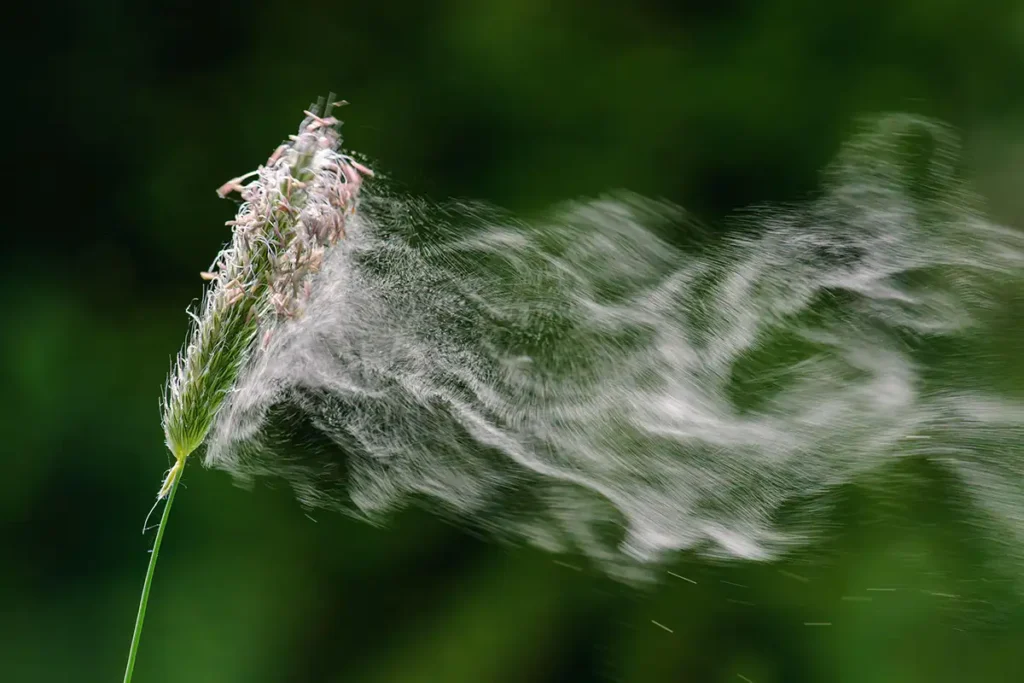
Climate change is not just reshaping the planet’s geography; it is rewriting the rules of human health. One of the many conditions it has exacerbated is hay fever.
For the millions who dread the arrival of spring, the symptoms are all too familiar: coughing, itchy eyes, a runny nose and relentless sneezing. But this is no longer just a seasonal annoyance. In the United Kingdom, the number of hay fever sufferers has trebled in the last 30 years.
As temperatures rise, plants are dispersing pollen for longer periods and in greater abundance. A study published in the Proceedings of the National Academy of Sciences analysed data from 60 locations in North America covering 821 years. It found that pollen seasons had lengthened by 20 days and pollen concentrations had risen by 21%.
Crucially, the study found the reasons were largely anthropogenic — a result of human activity. The human contribution was estimated at 19–35% for the period 1990–2018. William Anderegg, a co-author and scientist at the University of Utah, attested: “The health impacts are with us and likely to get worse”.
Similar trends have been observed in Europe. Research by government bodies in Switzerland noted that while hay fever struck almost nobody 100 years ago, it now affects around 20% of the population.
The mechanism is simple but potent. Blooming plants produce pollen when the temperature is above freezing, opening their buds to allow bats, birds and insects to fertilise them. Climate change and its associated higher temperatures mean plants have a wider window to reproduce. Furthermore, carbon dioxide, a greenhouse gas, acts as a fertiliser, causing plants to produce more pollen by converting the gas into sugar.
When this foreign material enters the body, the immune system mistakes the harmless pollen, fungal spores or mould for a dangerous invader. The body retaliates by producing histamine, resulting in the inflammation and mucous production that ruins summers.
Interestingly, while urban areas typically have lower pollen counts than the countryside, city dwellers often suffer worse symptoms. Traffic pollution interferes with the respiratory system, inflaming the airways. Pollution also stresses the plants themselves; struggling vegetation flowers less but produces pollen with increased potency.
Weather plays a critical role in this daily battle. Rain clears the air, meaning early, prolonged downpours can keep the pollen count low all day. However, afternoon showers have less impact. Wind is a double-edged sword: too little wind keeps pollen grounded, while too much disperses it far and wide.
Temperature thresholds are also key. For grass, 18 °C to 28 °C leads to a high pollen count on a dry day. For trees, the sweet spot is 13 °C to 15 °C. If temperatures exceed 28 °C, the pollen count drops, but prolonged heat — like the record-breaking June of 2023 — causes grasses to deplete rapidly, ending the season abnormally early.
For the 11% of British adults with severe hay fever, the consequences can go beyond a runny nose. Prolonged exposure can trigger severe eczema, where skin becomes dry and bumpy.
More alarmingly, for the 50% of sufferers who are also asthmatic, the condition can be lethal. Hay fever symptoms can trigger asthma attacks, and data from the Office for National Statistic shows deaths from asthma rose by 33% between 2008 and 2018 in England and Wales.
Despite common folklore, honey is not a cure. A study at the University of Connecticut found that neither pasteurised nor unpasteurised honey had any effect on symptoms compared to a placebo.
And finally, the name itself is a misnomer. Hay fever has no connection to hay. In the 1800s, it acquired the name because people believed freshly cut hay was the culprit. It was not until 1859 that British scientist Charles Blackley discovered the true cause: pollen.