
Carbon dioxide gets all the press, but methane is the silent killer of the climate crisis. Trapping heat 28 times more effectively than CO2, it is a major driver of global warming. Now, Denmark is making farmers pay for it.
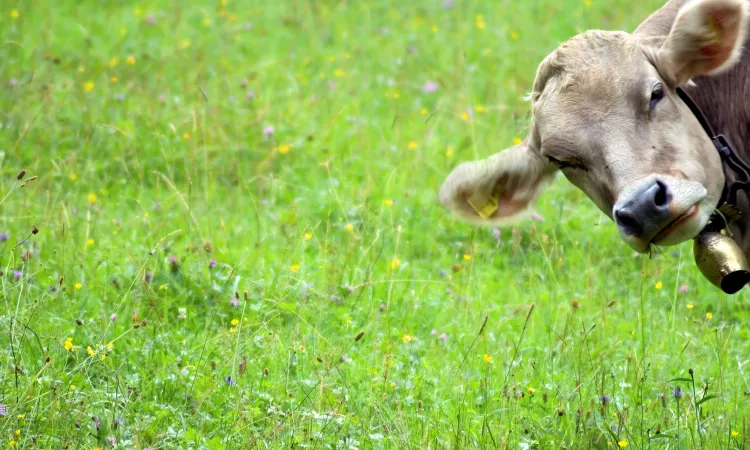
Denmark is set to become the first country in the world to tax cows, sheep and pigs for their gas. Contrary to popular belief, only 1% of this comes from the rear end; the vast majority is belched out.
The average Danish cow belches up 200 kg of methane a year. According to the green think tank Concito, that same animal produces 6 tonnes of carbon dioxide.
With more than 60% of its territory dedicated to agriculture, Denmark is one of the most cultivated nations on Earth. But that comes at a cost. Livestock accounts for 32% of human-caused methane emissions globally, and in Denmark, agriculture is the largest source of the gas.
Following months of tense negotiations between the centre-right government and farming groups, a historic deal was struck on 24 June 2024. Taxation Minister Jeppe Bruus called it “a big step” towards climate neutrality.
From 2030, farmers will face a levy of 300 Danish kroner (£34) per tonne of CO2 equivalent. By 2035, this will rise to 750 kroner. However, a 60% tax break means the effective starting cost will be 120 kroner (£13.60).
Foreign Minister Lars Løkke Rasmussen described the agreement as part of “the biggest transformation of the Danish landscape in recent times”.
Denmark is going where others fear to tread. New Zealand attempted a similar “burp tax”, due to come into effect in 2025. However, the plan was scrapped after a change of government and fierce backlash from the agriculture lobby, who claimed it would “rip the guts out of small-town New Zealand”.
Across Europe, farmers have been blocking roads with tractors and hurling eggs at parliaments, arguing that environmental targets are driving them to bankruptcy.
The Danish deal has split opinion. Bæredygtigt Landbrug, a farmers’ group, blasted the tax as “a scary experiment” that puts “a stick in the wheel of agriculture’s green investments”. Niels Peter Norring of the Danish Agriculture & Food Council fretted that the tax would simply “move jobs abroad”.
However, Peder Tuborgh, CEO of dairy giant Arla Foods, struck a more conciliatory tone, describing the move as broadly “positive” — provided that those who make an effort to reduce emissions are not penalised unfairly.
The government aims to reduce greenhouse gas emissions by 70% from 1990 levels by 2030. While scientists are racing to breed low-methane cattle and tweak animal diets to reduce belching, these technologies are still in their infancy.
To sweeten the pill, Denmark plans to invest 40 billion kroner (£4.5bn) in environmental measures. This includes a massive reforestation project aimed at converting 250,000 hectares of agricultural land back to nature by 2045.
While the tax still requires final parliamentary approval, it is widely expected to pass. As the EU struggles to push through nature restoration laws amidst voter pushback, Denmark is forging ahead alone.