
In the way it is being played in England and across the UK, contemporary politics has almost become something unreal to many people. The complaint of the sceptics and the wide disillusionment about the current premiership of Keir Starmer is that politics, politicians and promises mean nothing to many. For some, it is a game played by the same people in different uniforms for their own delight, cheered on by their supporters in the media, who understand the ropes but can no longer convincingly explain them to their distracted and divided audiences.
A number of British voters have become suspicious of all claims that politicians make about the significance of what they do. For them, if you want to know what a politician is up to, you should read his past and not his manifesto, and look intently at the picture of his future and not his photograph.
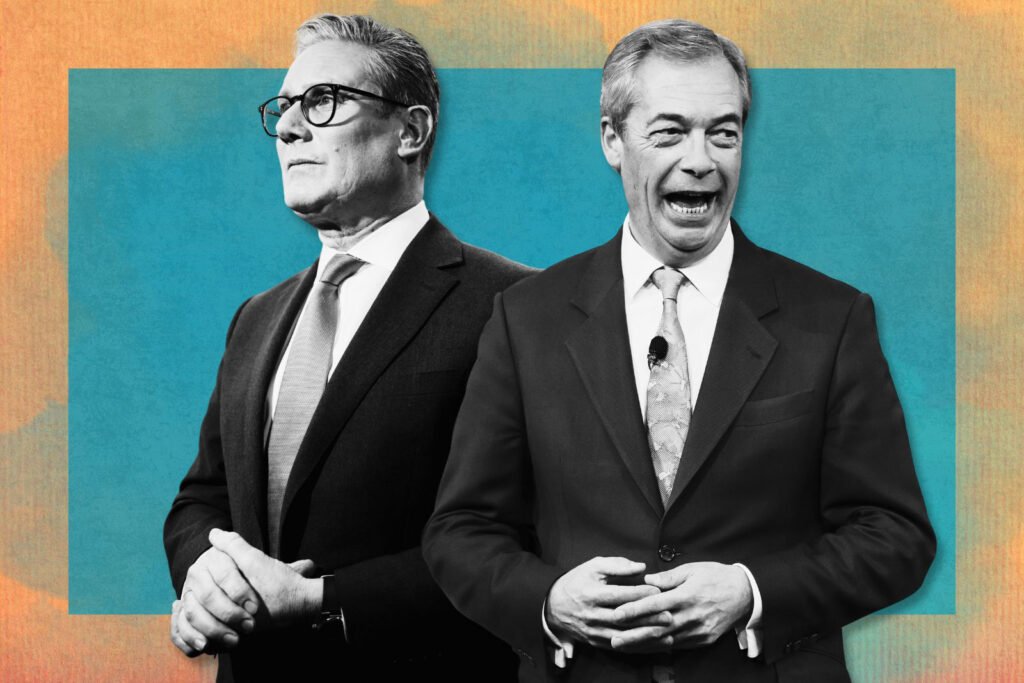
Of course, Nigel Farage is aware of this growing political apathy in the current government and is constantly labouring to make his own side of the game look appealing to the people, even though the people would prefer immediate political response and not an appeal to the patience they do not have.
With every opportunity that comes to him, both in parliament and public engagements, Farage has not ceased to ask critical questions about the “fate of Britain” in the new world order. He constantly talks about what his Reform UK can do whenever they can and boasts of leading in “150 successive opinion polls”, as he recently declared on one of his social media handles. But this redeemer’s posturing in the face of growing widespread political indifference globally often serves to make things worse.
This timeless impression has been reinforced over the past few months by the ongoing immigration debates. On the one hand, having immigration reform on top of its public agenda has provided Reform UK’s Farage with a perfect opportunity to illustrate how much politics still matters, and how foolish and self-destructive it would be for the electorate to assume that nothing is at stake in the choices they make and that all politicians are necessarily corrupt.
Recently on the floor of the parliament, Farage asked Keir Starmer “if he supports Reform’s West Northamptonshire Council issuing foreclosure notices to shut down three migrant hotels, following public concern over women’s and girls’ safety. Whose side is he on?”
The fixation on immigration—with the country having seen a torrent of protests and counter-protests across its towns and cities in the past few months—is so obvious a means by which to enhance both the power and prestige of national politicians as to make it easy to assume that this could be its primary purpose.
Moreover, the Labour government recently talked about what they “fear” regarding “the toxic division of reform and others on the right in politics, who are tearing our country apart.” According to Starmer, “the racist rhetoric I thought we had dealt with is returning to politics”. He stated that “it makes people feel scared and we have to stand up to that racism”, declaring that “to be British is to be proud of others.”
However, the possibility that some event may occur that will either galvanise the British electorate, antagonise them or simply unsettle them, explains much of the uncertainty and complexity that currently defines British politics. We are, everyone, waiting for something to happen. Politicians know that their fate depends to a large extent on events they can readily imagine but cannot genuinely expect, and whose impact on their own futures is largely beyond their own control. After all, they are all too human.
Starmer, Farage and the Conservative’s Kemi Badenoch are also, unsurprisingly, torn in how they think about these events. They know that a sceptical public is likely to remain sceptical in the absence of some terrible confirmation of the politicians’ worst fears and predicted doom. But, I presume, they should also know that no sane politician could wish for catastrophic confirmation of dangers they have been warning against.
The kind of shock to the British system that these politicians need to remind the people that politics still matters is also the kind of shock that no politician can easily want, and all of them must fear, knowing that it is impossible to be sure how the British electorate and history will ultimately apportion the blame.
Listening to politicians boast of their own indispensability before a sceptical and often distracted public simply reinforces the age-long impression that politics is a self-important, self-referential, self-indulgent activity. Politics is all of these things, no matter how much politicians try to pretend otherwise—which is the hallmark of national patriotism.