

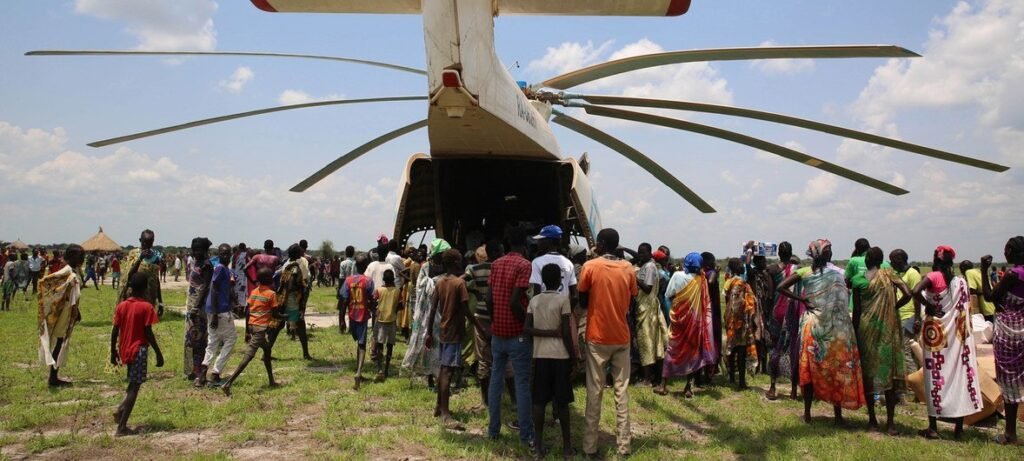
Marked by natural disasters, famine, mass migration and internal conflict, the last two years in South Sudan have been some of the darkest in its short history as an independent nation.
In a country where some 9 million people are in need of humanitarian aid, aid workers are carrying out life-saving work on the frontlines. But their bravery comes at a price; over the last three years, South Sudan has seen the highest number of fatal attacks on aid workers ever recorded, and in the past decade, South Sudan has become the deadliest place for humanitarian workers, with more workers killed, wounded or kidnapped than anywhere else in the world.
What is often left out of the conversation, however, is the disproportionate risk posed to national aid workers compared to their international counterparts. Between 2011 and 2023, a striking 94% of the humanitarian workers killed in South Sudan were locals, who are three times more likely to be harmed than international aid workers. Yet, these workers rarely receive the same level of media attention as their international counterparts. Jagan Chapagain, Secretary-General of the International Federation of the Red Cross, claims that when a local aid worker is harmed compared to an international worker, the difference in attention from both the media and INGOs is staggering—”a 1 to 500 ratio.”
This disparity in the risk of harm is not a coincidence—attention is not the only thing that local aid workers are lacking on the ground in South Sudan. The provision of funding for basic security measures, such as travel management and secure accommodation, is significantly higher for international aid workers, leaving national workers at a much greater risk of harm, according to new research from The New Humanitarian.
National aid workers are more likely to come to harm in South Sudan than international workers regardless, due to the political and financial implications of the role for people born in the country. In South Sudan, a country where the average household spends just $10 per month, a mid-level national aid worker can earn over $1,000 per month. As a result, local aid workers are a new emerging middle class, occupying the most “opulent part of the political economy”, according to Joshua Craze, a researcher from a Geneva-based think tank. This puts local workers at significant risk of being the victim of a “revenge killing”.
Revenge killings in South Sudan have historically been aimed at wealthy farmers and their livestock. However, as the country has evolved, the targets of this form of violence have come to include any and all individuals who are seen to possess wealth and social mobility disproportionate to that of the collective. This includes aid workers, particularly those working for larger international organisations, who are perceived to be “betraying their own”. In the politically tense and volatile environment of South Sudan, where wealth disparity is significant and access to resources is limited, local aid workers represent a lucky minority, making them a prime target for these sorts of attacks. Despite the frequency of these attacks, many humanitarian organisations fail to include them in official fatality counts if the killings occur outside of a working context. As a result, a significant number of local aid worker deaths may go unrecorded.
This oversight not only denies those who lose their lives while working to help others the appropriate recognition, but also reflects a lack of understanding among larger humanitarian organisations about the unique risks faced by local aid workers.
“When I go home [from work] at the end of the day, everyone knows who I am, and who I work for,” “I don’t get to take off my vest. I don’t get to go back to a guarded compound, like the internationals.” – South Sudanese Aid Worker
The risk posed to local aid workers does not just come from their own communities; gang violence, which is a big problem in many areas of South Sudan, has also disproportionately impacted local aid workers and their abilities to deliver aid. In 2016, a group of local aid workers were raped by an armed gang, due to their alleged alliance with another gang to whom they had provided aid. The lack of security made available to local aid workers makes incidents like these fairly common. A similar event occurred in 2021, whereby a convoy of aid workers were attacked and one was killed by an armed gang in Unity State in an incident that left many injured and delayed the delivery of critical aid by several days.
Despite this continued trend of increased risk to local aid workers, it seems that nobody is paying attention – In 2016, a major push was made by the five largest humanitarian donors and six largest UN agencies to “localise” humanitarian aid, recognising the efficacy and sustainability of local aid work over international interventions. The strategy aimed to increase the capacity of local organisations and reduce their reliance on international NGOs. Following the development of this initiative, the number of local NGOs operating in South Sudan doubled, with large international NGOs increasingly sub-contracting work in the zones considered riskiest to operate in.
In the years following the implementation of the strategy, attacks on local aid workers increased dramatically, mainly due to the lack of appropriate investment alongside the new localised approach; aid sector security experts suggest that funding for security equipment like armoured vehicles, radios and human resources like security managers is far below the necessary levels to ensure the safety of national aid workers in South Sudan.
This disconnect between international NGOs and the population further fuels tensions in an already fraught environment. The lack of locally driven development, cultural insensitivities, lack of investment and poor management perpetuate an expectation of division and distrust between local workers and those receiving aid.
Violence against local aid workers cannot be ignored any longer. With the conflict in South Sudan showing no signs of slowing, the risks they face will continue to increase until decisive action is taken.
A comprehensive review of the way local aid workers are managed and protected is essential in ensuring their safety and recognising their efforts as equal to that of their international counterparts. Increased security measures, equitable pay and equal resources are among some of the most basic requirements that should be met, should the policy of localisation continue.
Dut Majokdit, former chairperson for the Relief and Rehabilitation Commission for South Sudan, has called for enhanced security arrangements to combat gang violence in and around aid delivery zones; a step that is crucial in safeguarding national aid workers and preventing further incidents like those seen in 2020 and 2021. However, a broader shift is required. Humanitarian agencies must make an effort to gain a comprehensive understanding of the complex and culturally specific risks faced by local workers. This includes ensuring that policies regarding hiring, security and the management of aid are approached with sensitivity towards the communities they aim to support.
The first step in addressing these inequalities must be to acknowledge the unique challenges faced by local aid workers specifically. Without this fundamental understanding that national and international aid workers have entirely different experiences in delivering aid, the relevant action simply cannot be taken to prevent further violence.
It is time for international NGOs and agencies to prioritise the safety, dignity and livelihoods of the local aid workers risking their lives to deliver aid in South Sudan. On a wider scale, all humanitarian-adjacent organisations must work to recognise the merit, but also the risk specific to national aid workers, whether it be in South Sudan or anywhere else. Only then can we begin to ensure that local aid workers are receiving the treatment they so desperately deserve.