
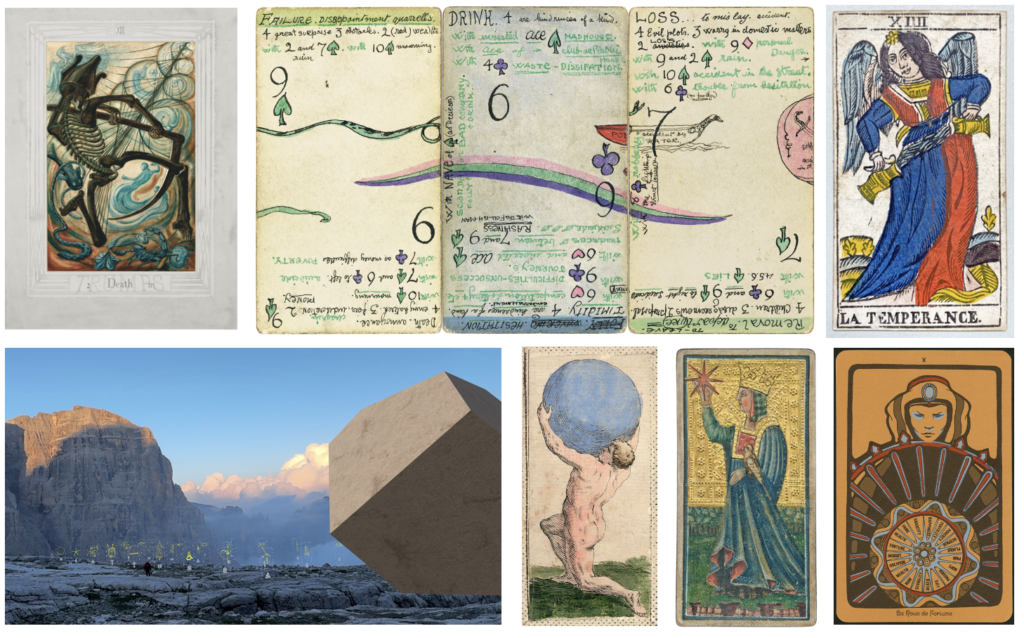
Tarot cards are everywhere in contemporary culture — but where do they come from, and what is at stake in the different forms they have taken? Few sets of symbols have travelled as widely or been put to such a diverse range of uses.
The exhibition presents a series of key moments in tarot’s long history, exploring the cards’ origins as a recreational game in Renaissance Italy and the profound transformations they have undergone in the hands of artists, mystics and writers.
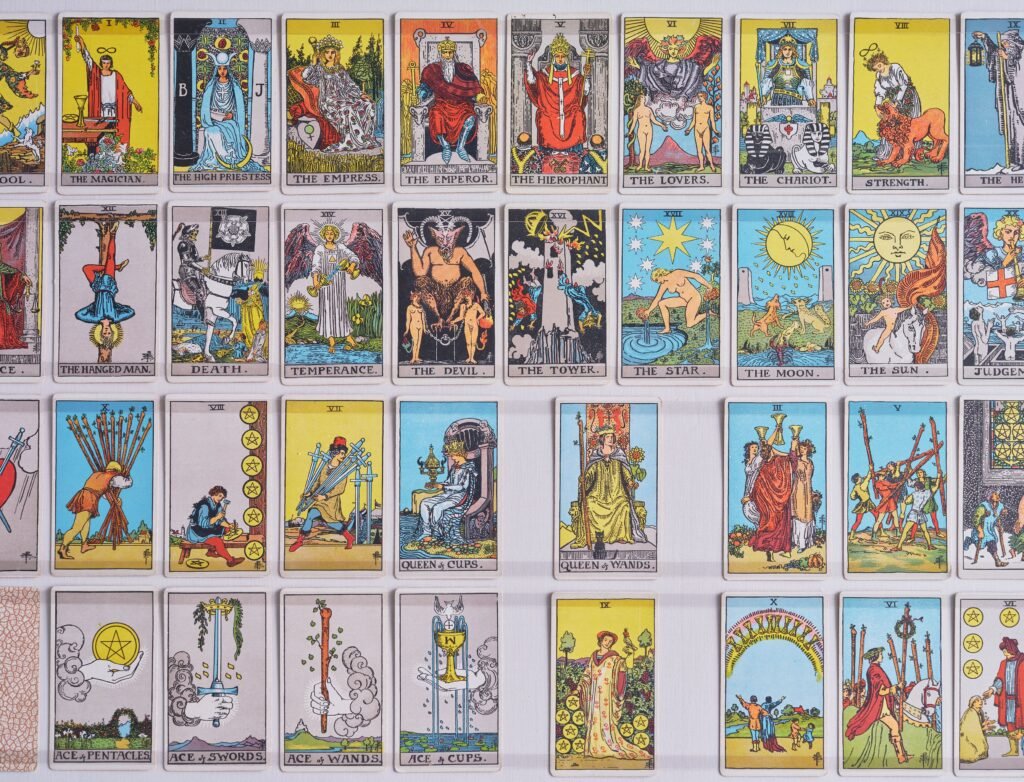
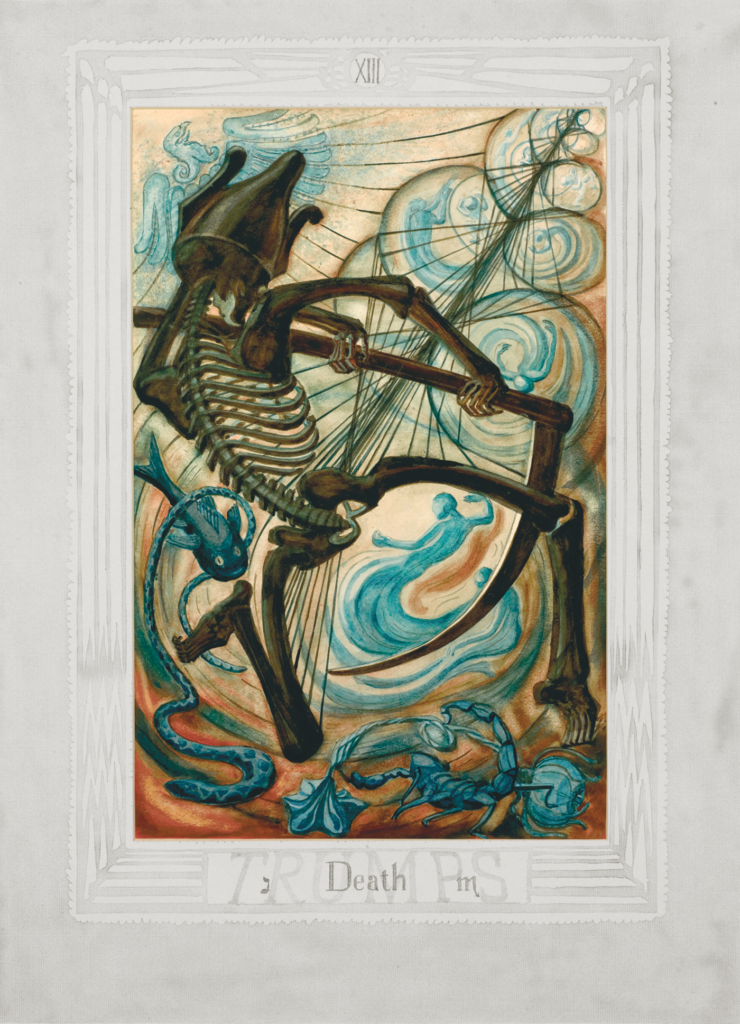
The Warburg Institute provides the setting for the UK’s first historical overview of tarot, bringing together significant works that will be shown publicly for the first time. The Institute’s founder, Aby Warburg (1866–1929), was among the first modern scholars to study tarot, exploring its relationship with astrology and iconography. The exhibition will also display treasures from the Institute’s collection, including Frieda Harris’s paintings for the Thoth Tarot, created with occultist Aleister Crowley during the 1930s and 1940s.
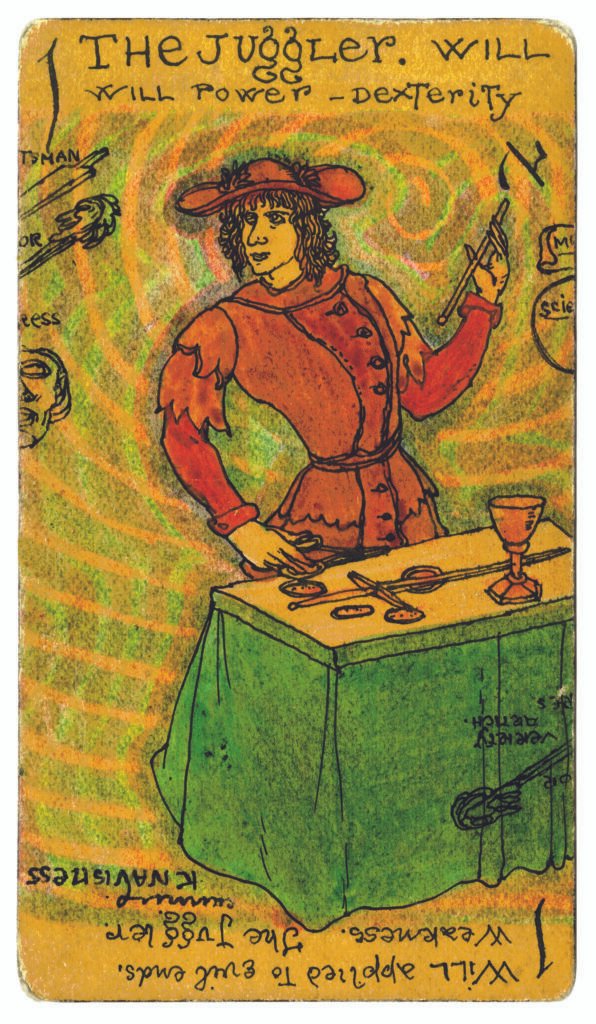
Arranged chronologically, the exhibition traces tarot’s evolution from a 15th-century trick-taking card game to its later role as a tool for divination and occult philosophy. It also explores tarot’s influence during the British occult revival, examining how artists such as Pamela Colman Smith, co-creator of the Rider–Waite–Smith deck, drew upon historical imagery while establishing conventions that continue to shape tarot today.
The exhibition concludes with a Tarotkammer — a cabinet of curiosities featuring contemporary tarot decks displayed within Edmund de Waal’s Library of Exile. Together, these works demonstrate how tarot continues to evolve as both an artistic medium and a tool for exploring alternative futures and ways of thinking.
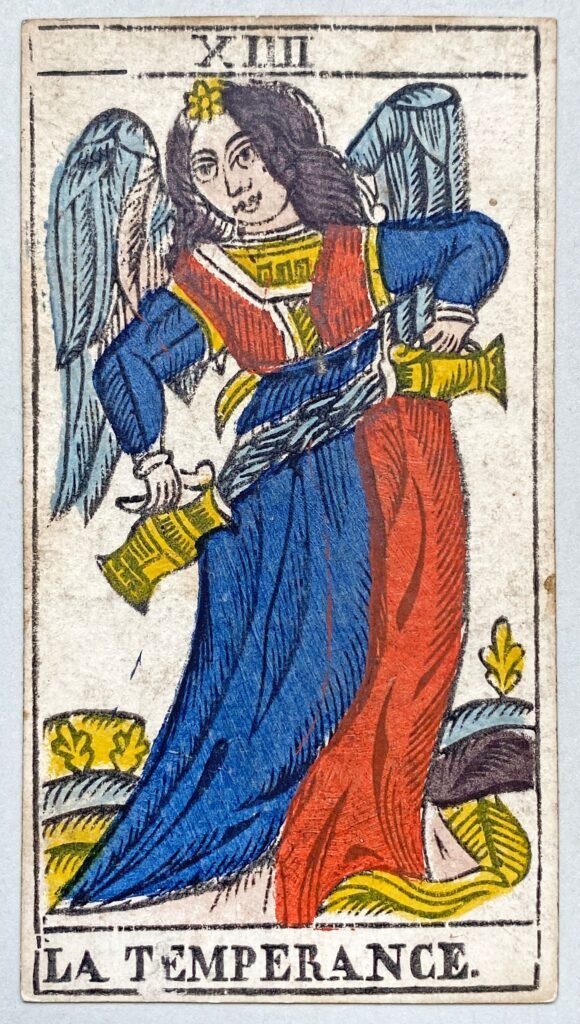

Highlights include:
- Mid-15th-century Visconti tarot cards from northern Italy — the earliest surviving examples of tarot.
- Playing cards discovered during excavations at Milan’s Castello Sforzesco, including one dating from the period when Leonardo da Vinci worked there.
- Prints from the so-called Mantegna Tarocchi, once believed to be Andrea Mantegna’s tarot designs.
- Etteilla’s Livre de Thot cards from 18th-century France — the first tarot cards designed specifically for fortune telling.
- Frieda Harris’s original paintings for Aleister Crowley’s Thoth Tarot, exhibited in England for the first time since the artist’s death in 1962.
- Austin Osman Spare’s hand-painted tarot deck from around 1906, recently rediscovered after more than 70 years in the collections of The Magic Circle.
- Selections from Suzanne Treister’s new HEXEN 5.0 tarot deck, exploring technology, belief systems and possible futures.
- The Tarotkammer, featuring contemporary decks by artists including Courtney Alexander, Katie Anderson, Ugo Dossi, Sharon Gal, Invasorix, King Khan and Michael Eaton, Plastique Fantastique, John Walter, Candida Powell-Williams and Anna Zett.
Professor Bill Sherman, Director of the Warburg Institute, said:
“Everyone knows that tarot is everywhere right now. But few have had the opportunity to see its long history, covering more than five centuries of cultural and countercultural work. We at the Warburg are thrilled to be hosting this historic show.”