
The ethical dimensions of artificial intelligence (AI) image colourisation were recently brought to public attention when several historical images were altered using digital algorithms. Irish artist Matt Loughrey digitally colourised and added smiles to photos of tortured prisoners from Security Prison 21 in Phnom Penh, Cambodia, which was used by the Khmer Rouge from 1975–1979. His photos were published in Vice and prompted outrage on social media.
Vice removed the altered photos from their website and apologised to the families of the victims and the communities in Cambodia. Meanwhile, the Toronto Star’s Heather Mallick described them as “thoughtless, ahistorical and self-congratulatory” and proclaimed that we must stop trusting photography.
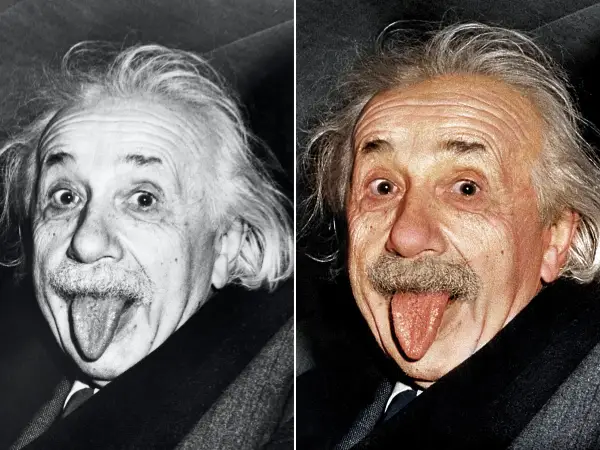
AI colourisation refers to the use of digital algorithms to substitute colours into a black-and-white photograph by making an “informed guess” based on the greyscale root. When data scientist Samuel Goree tested DeOldify, an AI colourisation app, to convert a greyscale copy of Alfred T. Palmer’s 1943 photograph Operating a hand drill at Vultee Nashville, the result produced an image in which the Black female subject’s skin was lighter.
Interventions like these are not unique among the history of photographic manipulation — the Cottingley Fairies photographs taken by Elsie Wright and Frances Griffiths in 1917 are a prime example. But alongside sophisticated internet tools like deepfakes, the use of algorithms to alter photographs has provoked renewed anxiety about the authenticity of photography in the digital era.
A history of manipulation
The use of colourisation to create revisionist histories of atrocity and synthetic skin tones is concerning, but it does not mark the first time colourisation has caused controversy. In 1992, the clothing brand United Colors of Benetton sparked outrage when it repurposed a colourised photograph of David Kirby, who had just died of AIDS-related complications, and his family for its advertising campaign.
“The face of AIDS” was the name given to the photo in the iconic spread in LIFE magazine. Photographs like these were meant, in part, to encourage sympathy and relatability towards sufferers of the most stigmatised illness around. When the black-and-white photo was selected for Benetton’s ad campaign, executives made the decision to colourise it. This was done using a technique developed during the early years of photographic production called hand-colouring, which required setting pigment down on the image and removing it with cotton around a toothpick.
The two issues that galvanise this strange campaign are its realism and its dignity. Opposition to colourisation often points to the artifice of the practice, but for the Benetton executives, the problem with the Kirby photograph was not that it looked too real, but that its realism seemed incomplete. The colourist, Ann Rhoney, described it as creating an “oil painting”. The act of making a photograph more real by turning it into a painting appears to reverse long-standing assumptions about the art practices that are closest to reality.
Defining dignity
However, Rhoney’s self-stated objective was not to make the photograph more real, but to both “capture and create Kirby’s dignity”. Kirby’s father supported the effort, while gay rights organisations called for a boycott of Benetton. Marina Amaral, a Photoshop colourist working to colourise registration photos from Auschwitz for Faces of Auschwitz, claims her work helps to restore the victims’ “dignity and humanity”, while Cambodia’s culture ministry said Loughrey’s images affected “the dignity of the victims”.
Disagreements about dignity tend to mirror those about photography and colourisation: for some, dignity is inherent to an original; for others, dignity is something you add. And the examples are abundant. Peter Jackson’s decision to colourise historical footage from the First World War for his 2018 film They Shall Not Grow Old drew criticism from historian Luke McKernan for making “the past record all the more distant for rejecting what is honest about it”.
The new vandalism
Colourisation became routinely controversial in the 1980s when computers replaced hand colourists and studios began colourising a host of classic films to appeal to larger audiences. Objections to the practice ranged from poor quality, the commercial forces behind the practice and the omission of the qualities of black and white, to the implicit contempt for artists’ visions, a preference for the originals and a disregard for history.
Gene Siskel and Roger Ebert famously called the practice “Hollywood’s New Vandalism”. Philosopher Yuriko Saito suggested that disagreements over the value of colourisation often turn on an implicit belief in whether a work of art belongs to the artist or to the public. In the context of historical images, the question becomes: to whom does history belong?
The algorithm has become a new way of capturing reality automatically, and it demands a heightened ethical engagement with photos. Controversies around colourisation reflect our desire to destroy, repair and dignify. We do not yet know what a photograph can do, but we will continue to find out.