
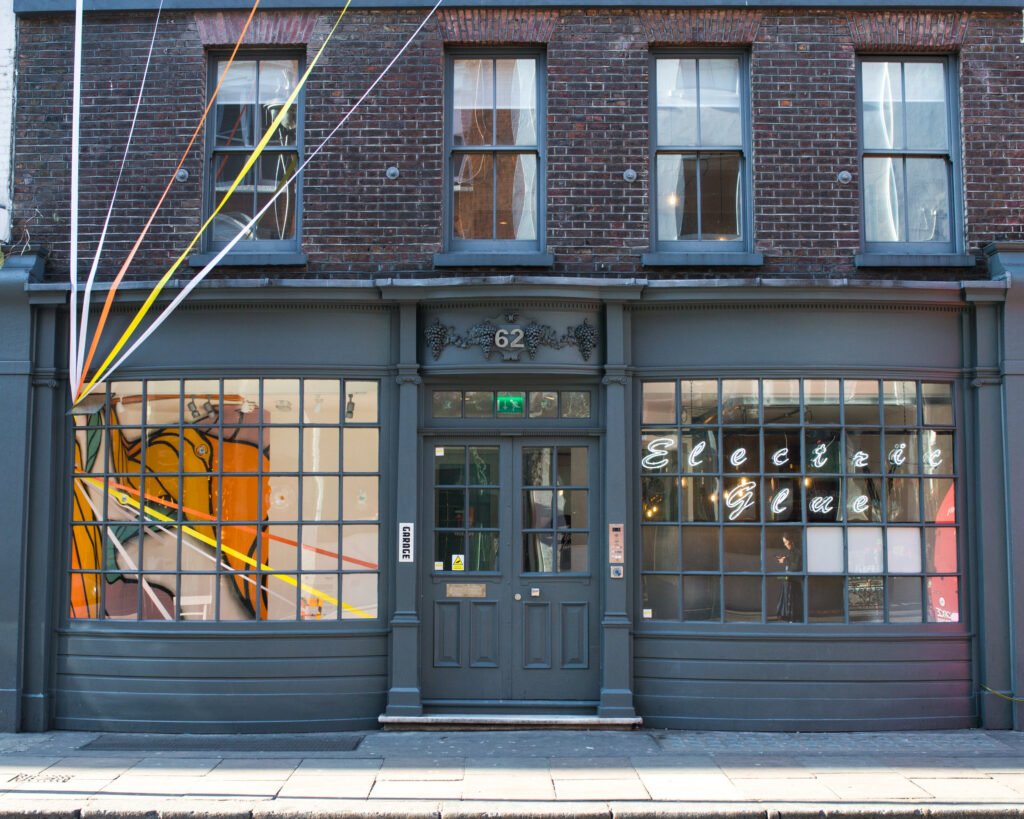
“Remember, size is no guarantee of strength. We may be the smallest gallery in Soho, but we intend it to carry big ideas.”
Philip Levine
Philip established The Smallest Gallery in Soho in 2016. He has been working in the creative and cultural industries for the last two decades as a producer. This has ranged from exhibitions, events, publishing and talks to creating his own unique artwork under the title “Headism”. He has gained an MA in Culture, Policy and Management at City, University of London. Being from London, his passion is knowing “who and what” is up and coming in cultural trends and being involved within them.
Andreia Costa
Andreia also established The Smallest Gallery in Soho in 2016. She is an associate architect at Jamie Fobert Architects. She studied in the Faculty of Architecture at the University of Porto and practised for three years in her native Portugal. Before moving to the UK, Andreia decided to explore her contemporary art interest by working in Serralves Museum of Contemporary Art as an architecture and art lecturer. In 2010, she joined Jamie Fobert Architects, where she has been involved in several projects, including Selfridges and Tate exhibitions.
Q: Could you tell us about the focus of your projects and what has been the most impactful for you as curators?
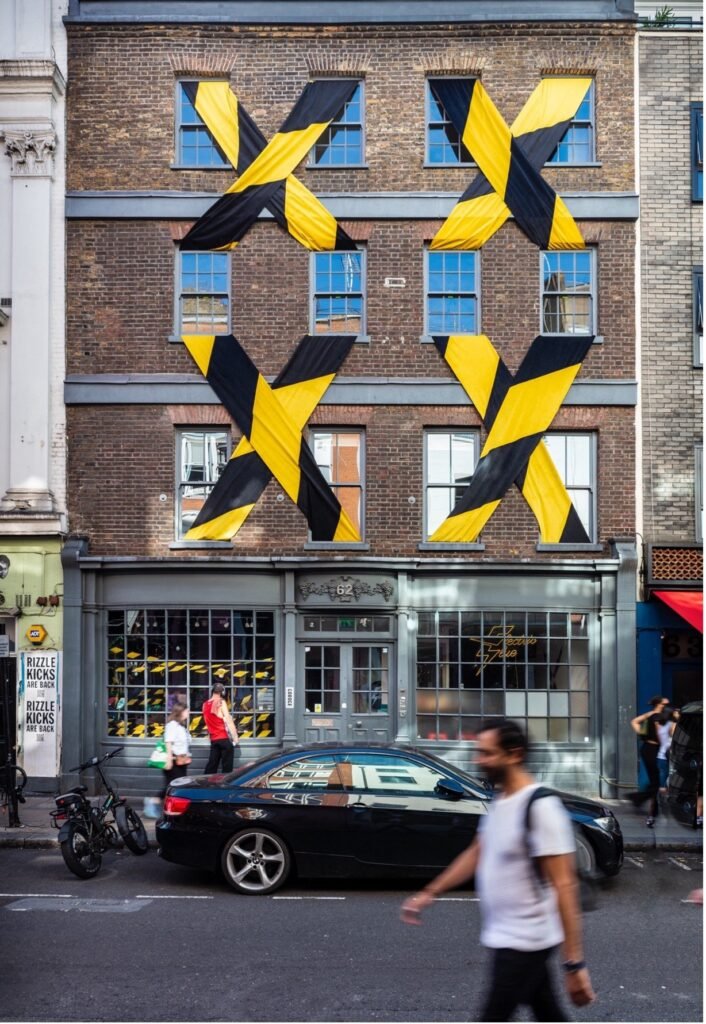
Philip Levine and Andreia Costa: “That is a great question and also a difficult one because we work with so many exciting artists every month. It is hard to single anyone out. We tend to focus on site-specific projects, inspiring artists to consider the unique aspects of our space. It is not a typical ‘white box’ gallery — we are in Soho, and that is very important to us.”
“Some artists work in mediums that would not fit within our space, so they either create something new or modify an existing piece to fit the space. That is part of the challenge, but it also allows for creativity to bloom in ways you would not expect. We also encourage them to engage with the cultural environment of Soho and allow that to influence their artistic process.”
Q: It sounds like the location itself plays a major role in how you curate exhibitions.
Philip Levine and Andreia Costa: “Absolutely. The success of our projects often comes down to how well we integrate all these elements: the space, the neighbourhood and the artist’s vision. Some of these projects take a couple of months to develop, while others can take over a year. But it is not just the result that we enjoy; it is the process too.”
Q: Are there any specific projects or artists that have stood out to you, particularly during significant moments?
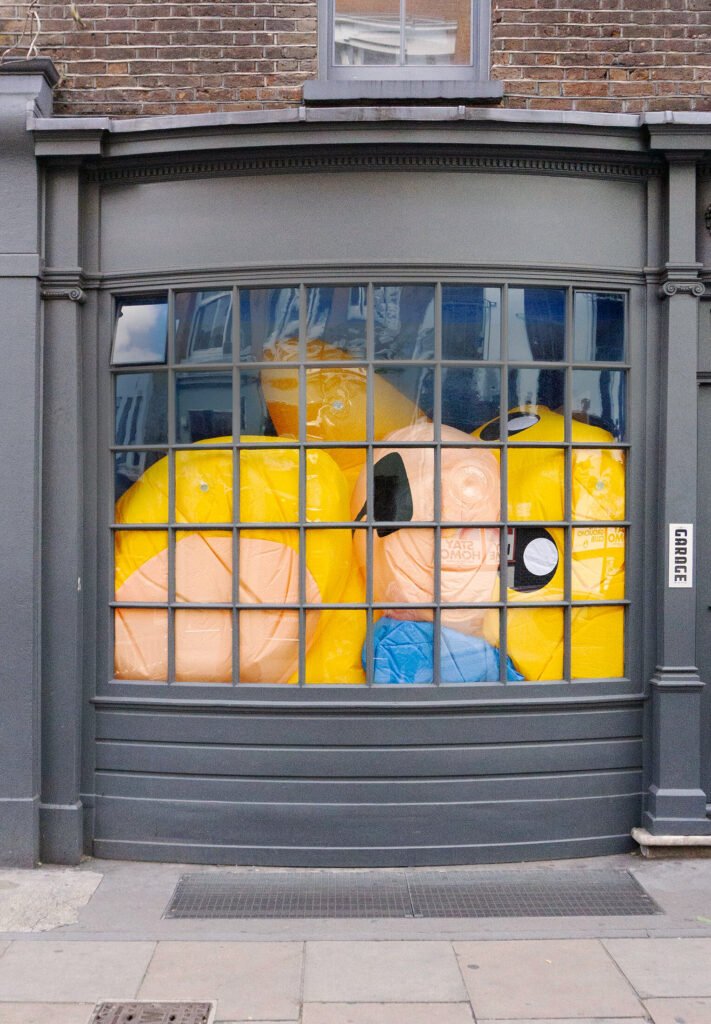
Philip Levine and Andreia Costa: “Yes, one of the most memorable was during COVID. We were working with an artist, James Taylor, who had an idea to create something massive within the space. At the time, everything was shut down, and James proposed creating a gigantic inflatable.”
“We worked with a company that specialised in these large inflatables — they were not doing much during the pandemic, so they let us have this massive ten-foot teddy bear. It was a striking piece because it played off the symbolism of teddy bears during the pandemic — the way people used them as signs of hope and comfort. The whole process was really quick and poignant, given the mood at the time. It allowed us to continue creating even while everything else was on pause.”
“It was one of the few creative spaces people could still visit during that initial lockdown period. Soho was empty, and yet people could still engage with the art from outside. It was a real statement about the times.”
Q: You’ve also done other socially responsive projects, right?
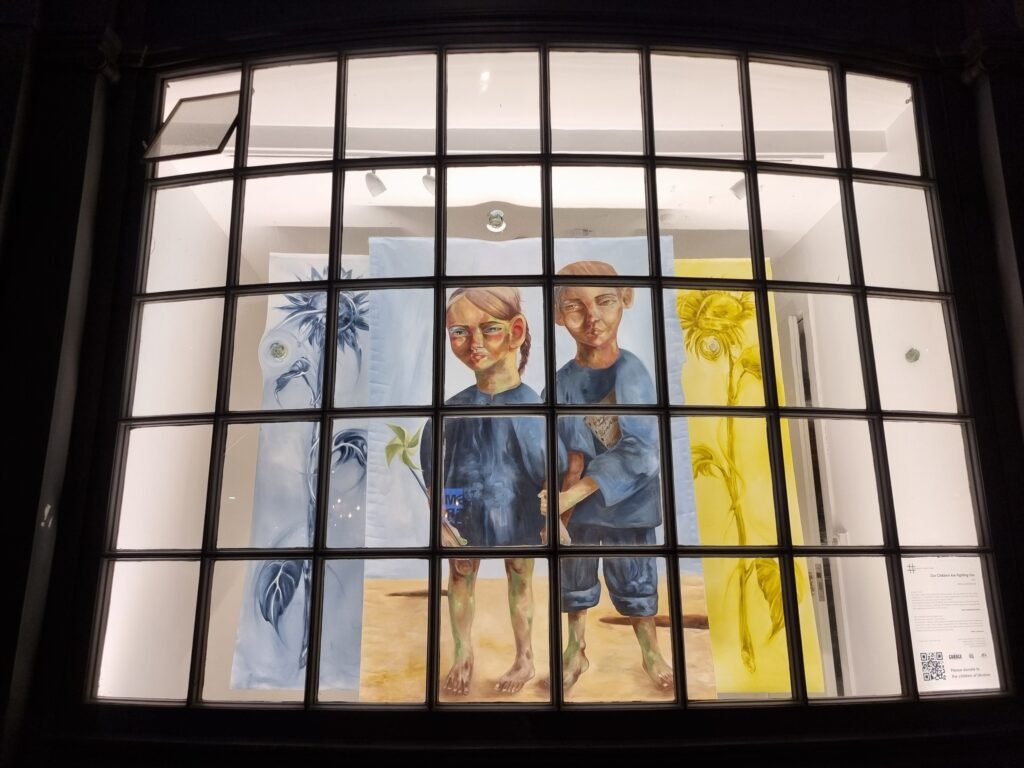
Philip Levine and Andreia Costa: “Yes, we did a very emotional piece for Grenfell. It is one of those moments that really impacted all of us. We collaborated with poets like Musa Okwongo and worked with Hannah Dickens, who produces window signs. The idea was to create protest billboards featuring the poem, and we placed them in fire buckets, which was a direct reflection of the tragedy. It was a way to express the collective discomfort and anger we all felt at the time. It was more reflective than anything — a way to channel those feelings through art.”
“We often get asked what kind of change the creative industries can bring, and while we cannot always be agents of direct change, art can be a powerful reflection of society’s mood. That is something we always strive for in our work.”
Q: How much freedom do you have in curating exhibitions, especially in such a dynamic space like Soho?
Philip Levine and Andreia Costa: “We are fortunate in that respect. We do not have the same revenue constraints as a traditional gallery, so we have more freedom to play and experiment. For example, we recently worked with Strider Patton, who used ribbons to cover the entire building, and Molly Grad, who extended her show and used fabrics that spilled out of the windows. It is a lot of fun when you can push the boundaries and turn the whole building into part of the art.”
Q: That sounds like a unique way to blend street art with contemporary art. Is that a focus for you?
Philip Levine and Andreia Costa: “Yes, we try to bridge those two worlds — contemporary art and street art — and create a dialogue between them. Our space in Soho is the perfect platform for that. It allows us to merge different forms of artistic expression and really challenge the boundaries of what a gallery can be.”