
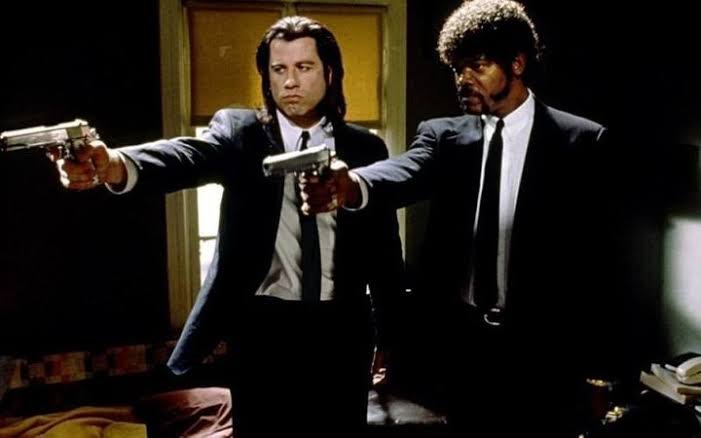
There is something inherently human about our obsession with violence. From gladiators battling it out before excited amphitheatres to streaming platforms soaked with true crime documentaries, courtroom frenzies and psychologically distorted antiheroes, society has always strove to refurbish brutality into narrative.
Stories, after all, are often constructed as tools through which we examine grief, justice and the darkest sides of human behaviour. Some forms of violence are awarded context, complexity and humanity, while others are flattened into spectacle. Several perpetrators become tragic studies of loneliness, alienation and suffering; others remain irredeemable monsters.
Few victims are mourned publicly, while the rest vanish into statistics, headlines or unnamed bodies. The issue is not that society chooses to humanise violence — but rather who is considered worthy of humanisation in the first place.
The humanisation of the perpetrator
Audiences increasingly dismiss simplistic notions of “good” and “evil”, favouring narratives that explore trauma, social failure and psychological fragmentation. Villains are no longer solely just villains; they are products of shattered corrupt systems and neglected childhoods.
Audiences are encouraged to see the world through their eyes, in order to grasp their mortification and fury. The camera lingers during moments of vulnerability; extreme close-ups force viewers into emotional proximity. This results in the villain becoming someone broken rather than inherently wicked.
Older narratives positioned villains as inherently corrupt or doomed by destiny; contemporary storytelling often aligns violence within social failure itself — inequality, alienation, humiliation, exclusion. This makes violence feel alarmingly relatable. In this sense, many modern antiheroes operate less as the so-called “bad guys” and more as vessels for suppressed desires of being seen and heard after prolonged neglect.
To engross violence through stories it allows spectators to examine darker niches without destroying their own moral self-image. In psychology, this instinct is tied to self-positivity bias — the tendency to maintain the belief that we ourselves are fundamentally good.
Actual perpetrators remind us that cruelty is not theatrical, but ordinary. Yet fiction softens this confrontation by wrapping violence in stylisation, symbolism and narrative structure. Even true crime, despite presenting itself as documentary realism, frequently adopts the style of fiction — suspense arcs, tragic backstories, charismatic offenders and satisfying resolutions. The perpetrator becomes narratively compelling, while the victim often remains static.
Who is granted and who is denied complexity?
Dominant cultural institutions have traditionally centred point of views that are male, white and socially legible, making certain individuals appear inherently more understandable than others. When violence is committed by those who fit these frameworks, it is often interpreted as the collapse of someone who “could have been good” under extraordinary pressures.
Media coverage frequently isolates abuse into singular “incidents”, reducing manipulation and mental torment into brief moments of physical injury. Violence becomes visible only once it leaves bruises. Survivors become associated mainly with suffering itself rather than personhood beyond it.
The hierarchy of victims theory
Society is typically more comfortable with stories of suffering that end in absolution or moral clarity. Trauma that remains unresolved unsettles audiences because it opposes closure. This is particularly true for cases of sexual assault, which often carry social stigma as survivors are frequently bombarded with disbelief and shame.
Unlike the idealised victim — innocent, vulnerable, morally pure — many real survivors struggle to conform to what is considered acceptable scripts of victimhood. Women of colour, migrants, sex workers, homeless individuals frequently exist outside the domain of distinguishable innocence, which strips their pain of inherent value.
The solution
Yet the solution is not to relinquish complexity or demand morally simplistic storytelling. To refuse all attempts at understanding violence would merely replace one form of distortion with another. Human beings are complex, and violence hardly materialises on its own, they’re multiple factors that contribute to its emergence.
A society that humanises some forms of suffering while condensing others reveals its political and cultural hierarchies.
We insist that every human being is complex, possess different principles and context; yet we repeatedly fail to apply this principle equally. And until that imbalance is addressed, our stories will continue to reveal not merely what we fear, but whose humanity we are willing to see.