
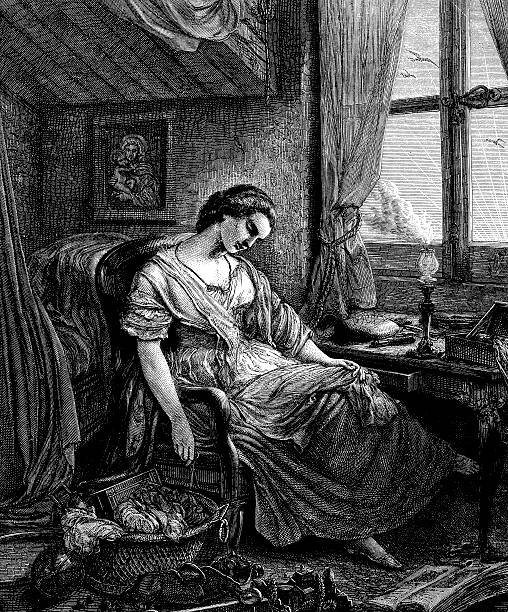
Lately, I’ve noticed a pattern in the novels I gravitate toward: the women at the centre of them are exhausted. Not poetically exhausted, but clinically, emotionally and sometimes strategically depleted. They’re overworked, undernourished, overstimulated or simply done with pretending life is manageable. But strangely, I find them compelling. Ottessa Moshfegh’s narrator in My Year of Rest and Relaxation sedates herself into a year-long hibernation, barely eating, barely socialising, barely awake. By all accounts, her life is a slow-motion car crash, but I found myself weirdly moved, even motivated, by her refusal to participate. Then there’s Colleen Hoover’s Verity, where the protagonist drifts through grief and financial collapse with a numbness that would normally terrify me, yet somehow I finished the book feeling energised by her detachment.
So I started wondering, when did being burnt out become aspirational? When did being tired, hungry and creatively unravelled in a cold apartment start to feel like an artistic ideal rather than a nightmare? And why am I—why are we—so drawn to fictional women falling apart?
Firstly, I think part of the strange allure comes down to where these stories take place. So many of the novels built around collapsing women are set in cities that practically vibrate with aspiration: London, New York. These are places people move to in pursuit of “becoming something”, even if that something ends up being miserable. There’s a fantasy in suffering somewhere glamorous. It is easier to romanticise burnout when the backdrop is the thick, glittering skyline of Manhattan or the soft grey sprawl of London in the rain. When I read Raven Leilani’s Luster, I didn’t envy the protagonist’s instability, her hunger or her loneliness, but I did envy the world she inhabited—the brittle beauty of being young and lost in a city that feels bigger than any problem she could possibly have. It is almost as if the geography softens the collapse; yes, she’s overwhelmed, but she’s overwhelmed in a place I dream of being overwhelmed in. The location cushions the fall, making it feel poetic instead of simply bleak.
Secondly, the exhaustion we keep reading about almost always belongs to a woman, and that feels significant. Women have spent centuries being the stable centre of chaos. Fictional women, historically, were allowed to be anything as long as they were composed. So there is something liberating about reading stories where the female disintegrates instead of dutifully functioning. Think of Sylvia Plath’s The Bell Jar, where the protagonist’s unravelling becomes a rebellion against the suffocating expectations of womanhood. These characters let us admire something we rarely say out loud: we are tired. Deeply tired. Fiction gives us permission to see that tiredness not as failure, but as honesty. When a fictional woman finally drops the performance, it feels like we’re allowed to drop it too.
Lastly, there’s something deeply satisfying about watching the slow death of the “girlboss” archetype. For years we were told that the height of empowerment was efficiency: colour-coded calendars, 5am alarms, iced coffee as a personality trait. These characters aren’t chasing success; they’re trying to survive themselves. They are all quietly rejecting the pressure to optimise their lives and making us feel like it’s okay to just live. Through them, we are allowed to imagine a version of womanhood that doesn’t require constant striving.
Maybe that is why we keep returning to these exhausted women in fiction. It isn’t that we want their suffering; it’s that we want their refusal. Their unwillingness to perform resilience. Their permission to step out of the relentless pace expected of modern life. Burnout has become an aesthetic only because real burnout has become a near-universal condition. We’re not glamorising collapse so much as trying to understand it, soften it and make it survivable.
The literary exhausted woman is not a role model. She’s a mirror: a slightly distorted, beautifully written reflection of the pressures we carry and the fantasies we hold. Maybe that’s the appeal—not the tiredness itself, but the radical idea that we don’t have to keep going at full speed. That sometimes falling apart, or admitting we’re close to it, is the most honest thing we can do.