

In social and cultural analysis, the rise of online misogyny is often framed as the result of controversial figures maliciously planting their seeds of deceit and idealistic personas. Yet, numerous young boys are being sucked into the whirlpool of the “alpha male” — from yachts and sportscars, to any girl at their fingertips from the murmur of their name, to the so-called “gym bro” who insists it’s the real deal.
But don’t be swept in by the tide too! The manosphere did not appear overnight through a singular viral video that racked millions of views. What we are witnessing is not the creation of a new crisis, but the exposure of an older one.
The real concern is not simply the presence of extreme online communities, but the elbow room they occupy in the lives of young men searching for identity, belonging and direction. It is here—in the vagueness around what it means to be a man in a society that is rapidly evolving—that the foundations of toxic masculinity have become increasingly visible.
The issue is not that young boys are looking for answers. The issue is who is giving them.
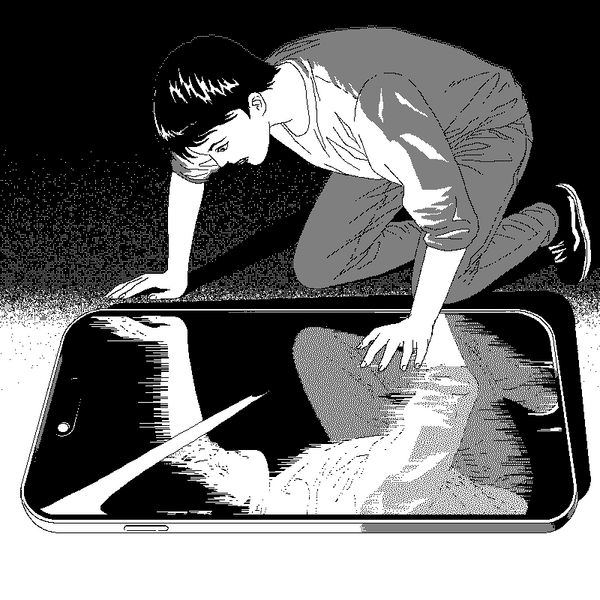
A crisis hiding behind a screen
For many young men, masculinity has become a question without a clear answer.
For generations, societal norms offered a somewhat straightforward definition of manhood—provide, protect, suppress emotion and demonstrate strength. But as cultural standards have shifted, many of the traditional aspects affiliated with male identity have become increasingly unstable, like a house of cards in a strong breeze.
Financial security has fallen due to wage stagnation and a significant drop in workforce participation from 87% in 1948 to 68% in recent years. Career pathways have become less predictable. Relationships and family structures have evolved with an increase of breadwinning women. Gender roles have become more equal, but social standards surrounding masculinity have not always adapted at the same pace.
It’s crucial to understand that toxic masculinity is not the belief that men themselves are harmful. Rather, it refers to the rigid expectations that overwhelm and pressure men to reject vulnerability, avoid emotional expression and prove their worth through power, status or control.
And the consequences are clearer now more than ever. Men are significantly more likely than women to die by suicide in the UK, accounting for around three-quarters of suicide deaths. Research has repeatedly linked rigid masculine expectations—particularly the belief that emotional struggle represents weakness—with reduced help-seeking and untreated mental health difficulties.
Mara Grunau, executive director at the Centre for Suicide Prevention in Canada, highlights it’s how we talk to our children and how we encourage them to communicate about themselves too—“Mothers talk way more to their girl children than their boy children… and they share and identify feelings” more, she says. “We almost expect women to be emotional”.
The broader picture of modern masculinity
To grasp why certain online movements and chatgroups appeal to young men, it is necessary to look beyond the presumption that they are simply being manipulated.
The most successful online influencers do not create insecurity; they identify it. They take existing frustrations and provide a simple comprehensive explanation for them. In a world where identity feels steadily more complex, these communities offer a clear hierarchy. There are winners and losers. There are dominant men and unsuccessful men.
Andrew Tate became one of the most recognisable figures within this environment precisely because he understood this digital landscape. His videos combined luxury, confidence, financial advice and traditional masculinity into a highly shareable formula. The #AndrewTate hashtag has accumulated between 11 and 14 billion views on TikTok, exposing millions of users to his content—including those who may never have actively searched for it.
In an interview with the BBC in 2023, when pushed on whether his controversial views on women harmed young people, the influencer claimed he was a “force for good”, and that he was “acting under the instruction of God to do good things”.
In response to negative influence on social media and vast legal cases, former prime minister Keir Starmer pledged over £1 billion to combat violence against women and girls, specifically allocating funds to empower teachers to address misogyny and prevent radicalisation in schools.
Beyond Andrew Tate — a catalyst to a never-ending ecosystem
Like many communities, the manosphere—a network of websites—shares its ideas with its own secret language and cultural references. This encompasses coded terminology for hate speeches and other harmful lies with constant head nodding in the direction of “male privilege”, “rape culture” and “men’s rights”.
The infamous Red Pill movement, the focal point of the manosphere, is a perfect example of male superiority with frequent discussions of masturbation, fantasies of sexual assault (SA) and workout tips. The name stems from The Matrix, in which Laurence Fishburne offers Keanu Reeves an ultimatum—the blue pill—“the story ends, you wake up in your bed and believe whatever you want to believe” vs the red pill—“you stay in Wonderland and I show you how deep the rabbit hole goes”.
In an interview with The Guardian, the head of Red Pill Morpheus Manfred, whose community has approximately 140,000 members, said, “We wanted a place where men could discuss masculine topics without facing the same public shaming outcry that happens on social media sites”, and that ultimately the aim is to understand women so that “you can stop being so darn frustrated by them”.
Similarly, incel communities have turned romantic rejection and feelings of depression (which 75% of incels as found in a 2022 study published in Evolutionary Psychological Science appear to suffer with) into an ideology of blame, banding together over topics like an appearance-based hierarchy, the concept that women are too sexually selective and a dislike of feminism.
Despite its crossroads with misogyny, the person who coined the term “incel” was actually a woman. Alana first mainstreamed the term in the 1990s through a web page called Alana’s Involuntary Celibacy Project. The term “incel” was used regularly with her supporters as they talked about their own personal experiences of shyness and social awkwardness.
However, as the term spread, it began to take a darker, more violent meaning.
“With a term like ‘incel’, and with any term of identity, the definition lies in how people use it to describe themselves and others”, Brette Steele, senior director for Preventing Targeted Violence at the McCain Institute, said during an interview with CNN.
When vulnerability becomes resentment
The greatest misunderstanding circled around toxic masculinity is that it exists because men are naturally aggressive. Instead, it exists because masculinity often teaches boys that some emotions are unacceptable.
In fact, one of the most common gender expectations inflicted on boys and young men is the concept of keeping away anything deemed feminine. Through lads banter and derogatory expressions such as “you fight like a girl”, “you cry like a girl” and the many “your mother” jokes, young boys are guided to dissociate themselves from anything affiliated with femininity.
The “Man of Steel” mentality is just a mask. A fragile façade. But every hero has to take off their cape eventually, and underneath that shrivelled and dusty cape is someone who, like everyone else, has emotions and insecurities. Embrace it, don’t turn it off. Once you understand that your ability to cry doesn’t damage your ego, but rather strengthens it, you will foster not only stronger connections with others but also with yourself.
As Emma Watson argued in her United Nations speech on gender equality, “Both men and women should feel free to be sensitive. Both men and women should feel free to be strong. It is time that we all perceive gender on a spectrum instead of two sets of opposing ideals”.
The cost of ignoring the conversation
The rise of toxic masculinity is often portrayed as a problem created by social media. But social media is only the amplifier.
The challenge now is not solely to confront harmful ideas when they appear. It is to understand why they appeared in the first place.