

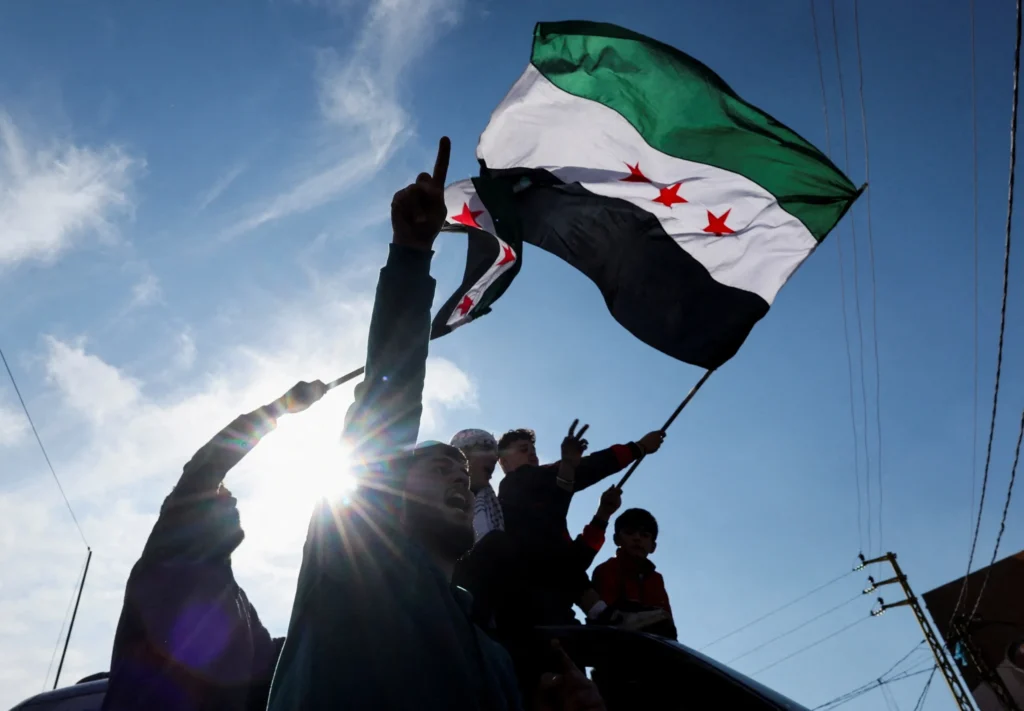
For more than a decade, Syria has been a battleground for competing interests, both domestic and foreign, with its people bearing the brunt of immense suffering. Bashar al-Assad, once seen by supporters as a stabilising force, has now been deposed after years of civil war, economic collapse and unrelenting pressure from inside and outside the country. The long-standing authoritarian regime that controlled Syria since the 1970s has crumbled, leaving a vacuum that could either pave the way for a democratic transformation or plunge the nation deeper into chaos.
As Syrians cautiously celebrate the end of Assad’s rule, the world is watching closely to see how this pivotal moment will shape the nation’s future. What does a free Syria look like? And what challenges must Syrians overcome to rebuild their country from the ashes of war and dictatorship?
The fall of Assad — a turning point in Syrian history
Bashar al-Assad’s ousting marks a monumental shift in Syria’s history. It is the culmination of years of resistance, brutal conflict and unyielding international scrutiny. The turning point came after a convergence of factors: a crumbling economy, discontent within Assad’s inner circle, intensified domestic protests and mounting pressure from global powers.
Despite maintaining a tight grip on power for more than two decades, Assad’s regime began to falter under the weight of unrelenting sanctions and an economy that had all but collapsed. Inflation soared to unprecedented levels, and food and fuel shortages became the norm for millions of Syrians. Even Assad’s allies, such as Russia and Iran, grew weary of propping up a government that seemed increasingly unsustainable.
The final blow came when factions within Syria’s military began to defect en masse, joining opposition groups that had been fighting for years to topple the regime. The defection of key generals and the loss of control over Damascus sparked the beginning of the end. On 28 November 2024, Assad fled the country, reportedly seeking asylum in Russia. Hours later, opposition leaders declared the end of his rule and called for a national dialogue to chart Syria’s future.
The human cost of Assad’s rule
Assad’s departure has brought a sense of relief to many, but the scars of his rule run deep. From the outset of the Syrian civil war in 2011, the Assad regime was accused of widespread human rights abuses, including the use of chemical weapons, indiscriminate bombing of civilian areas and arbitrary detentions.
According to the Syrian Observatory for Human Rights, more than 500,000 people lost their lives in the conflict, and millions more were displaced. Today, nearly 6.8 million Syrians live as refugees outside their homeland, while another 6 million are internally displaced.
The humanitarian crisis extends beyond mere numbers. The social fabric of Syria has been torn apart, with sectarian divisions and animosity threatening to undermine any efforts at reconciliation. Cities like Aleppo, Raqqa and Homs lie in ruins, stark reminders of the war’s devastation. While Assad’s departure may signal the end of an era, the monumental task of rebuilding Syria is only just beginning.
Foreign influence and the path to sovereignty
One of the key challenges for Syria’s post-Assad transition is the role of foreign actors. Over the years, Syria became a geopolitical chessboard for regional and global powers, including Russia, Iran, Turkey and the US. These countries, each with their own interests, have left an indelible mark on the conflict.
Russian airstrikes and Iranian militias propped up Assad’s forces, while Turkish incursions targeted Kurdish groups in northern Syria. Meanwhile, the US and its allies focused on defeating Isis, inadvertently leaving other elements of the conflict unresolved. Now, with Assad gone, the question of foreign influence looms large. Analysts warn that without a unified leadership and a clear road map for governance, foreign powers may exploit Syria’s vulnerabilities, delaying its path to recovery.
A vision for a free Syria
The prospect of a free and democratic Syria is both exhilarating and daunting. At the heart of a free Syria is the idea of inclusive governance. Opposition leaders have called for a transitional government that represents all segments of Syrian society, including Arabs, Kurds, Christians and other minority groups.
Decentralisation of power: This could help address the concerns of regions like Rojava, where Kurdish groups have long sought autonomy.
Economic recovery: International aid and investment will be critical in rebuilding infrastructure and reviving industries.
Education and civil society: A free Syria must prioritise education, independent media and a vibrant civil society to empower its citizens and build a culture of accountability.
The road ahead — challenges and opportunities
While the vision of a free Syria is inspiring, the road ahead is fraught with challenges. The power vacuum left by Assad’s departure could lead to infighting among opposition groups, as was seen in Libya after the fall of Muammar Gaddafi. Without a clear and unified leadership, Syria risks descending into further chaos.
Another challenge is the reintegration of displaced Syrians. Millions of refugees face immense obstacles in returning home, from destroyed infrastructure to security concerns. Yet their return is essential for rebuilding the nation and fostering a sense of unity. International support will be critical in navigating these challenges, but Syrians must take ownership of their future, ensuring that foreign assistance does not come at the cost of sovereignty.
A new dawn for Syria?
The fall of Bashar al-Assad is a moment of immense significance, not just for Syria but for the entire Middle East. It marks the end of an era defined by authoritarianism and violence, offering a glimmer of hope for a better future. Yet the road to a free Syria will be long and difficult, requiring unity, resilience and a commitment to democratic ideals.
For Syrians, the dream of “freedom” has always been about more than just the absence of dictatorship. It is about reclaiming their dignity, their identity and their place in the world. As they embark on this new chapter, the international community must stand by their side, not as benefactors but as partners in a shared vision of peace and prosperity.